
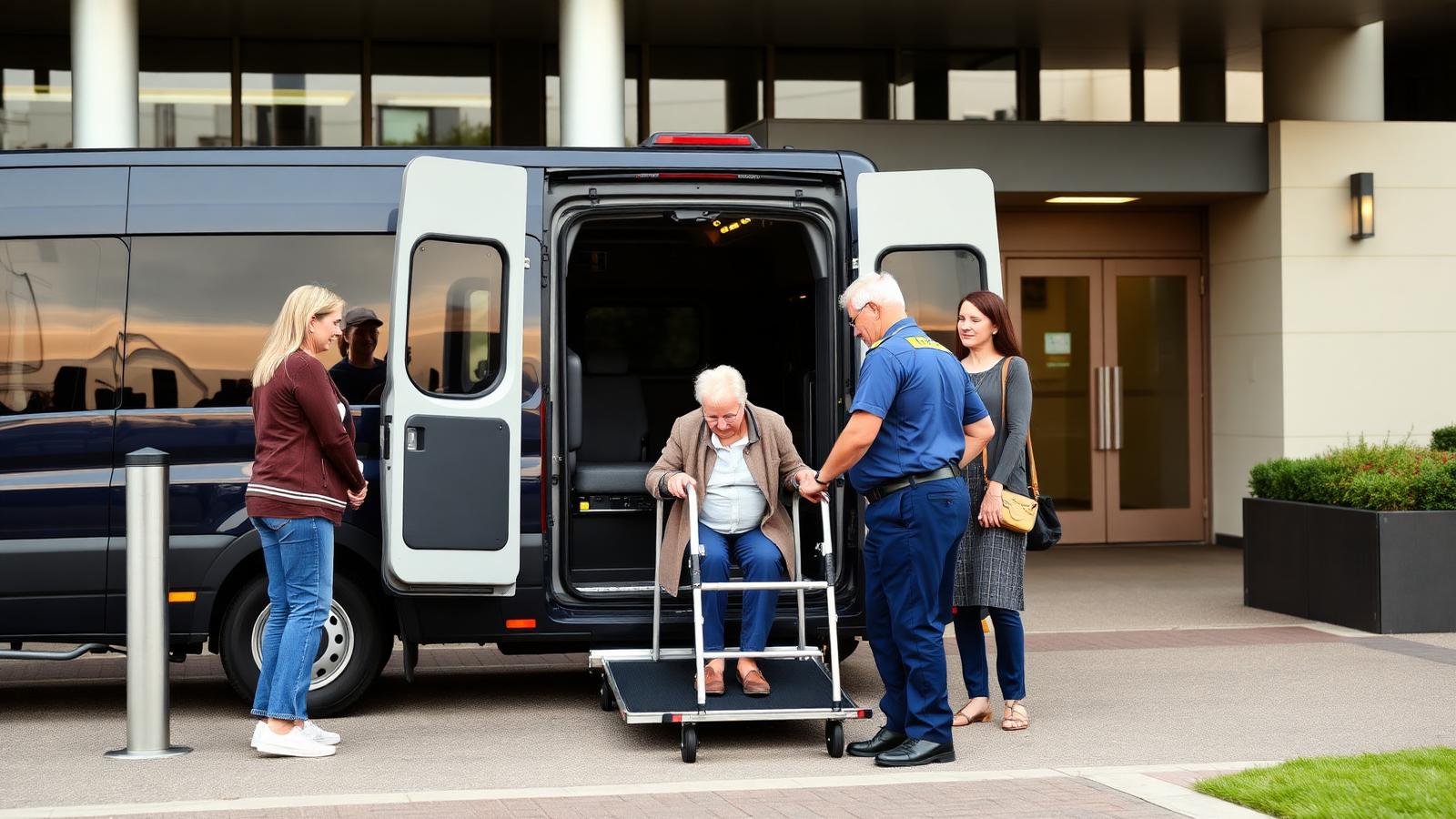
Ambulances and Medical Transport
This page explains what to do in an emergency, what to do while waiting for an ambulance, and where to look for non-emergency transport to hospital or medical appointments.
This includes severe difficulty breathing, suspected stroke, choking, unconsciousness, heavy bleeding, a seizure that will not stop, serious chest pain or a major accident.
Do not wait for a volunteer driver, taxi or private ambulance in a life-threatening emergency.
Call 999 — life-threatening emergencyWhile you are waiting for an ambulance
Stay with the person and follow the instructions given by the 999 call handler.
- Call 999 again if the person's condition becomes worse or changes.
- Call again if your location changes.
- Do not call back only to ask how long the ambulance will be.
- Tell 999 if an ambulance is no longer required or safe alternative transport has been arranged.
- Have information about medicines, allergies and medical conditions ready.
- Unlock the door if it is safe to do so and keep pets away.
- Do not move the person unless the call handler tells you to.
If you need urgent medical help but it is not an emergency
Contact NHS 111 if you need medical help quickly but the situation does not appear to be life-threatening. NHS 111 can assess what help is needed and direct you to the right service.
You can telephone 111. Support may be available through an interpreter, text relay or British Sign Language service. Services and arrangements differ across England, Scotland, Wales and Northern Ireland.
NHS non-emergency patient transport
Some people may qualify for free NHS non-emergency patient transport to hospital or another healthcare appointment.
You may qualify if:
- you need medical help during the journey
- you have serious difficulty walking or travelling safely
- your medical condition means ordinary transport is unsuitable
- you are the parent or guardian of a child who needs patient transport
Eligibility is assessed locally. Ask the hospital appointment team, the service that referred you, or your GP surgery. Try to ask as early as possible because transport normally needs to be booked in advance.
Community and volunteer transport
Some councils, charities and community groups provide transport for older people, disabled people and those who cannot use ordinary public transport.
These services are not ambulances and cannot deal with medical emergencies. They normally need to be booked in advance. Some are free, while others charge a small fee or mileage cost.
To find local help:
- search your council's website for "community transport"
- ask your GP surgery or hospital appointment team
- ask a social prescriber or local Age UK service
- check whether an escort or wheelchair-accessible vehicle is available
Private ambulances and medical transport
Private companies may provide planned transport to hospitals, care homes, appointments or another address. These services normally charge, and the price can vary.
Private transport must not be treated as a replacement for calling 999 in a life-threatening emergency.
Questions to ask before booking private transport
Before booking, ask:
- what the full price will be
- whether the vehicle is suitable for the person's needs
- whether trained medical staff will travel with them
- whether wheelchairs, oxygen or other equipment can be accommodated
- whether the provider is properly registered, regulated and insured
- what happens if the person becomes unwell during the journey
In England, ambulance and patient transport providers carrying out regulated healthcare activities may be registered with the Care Quality Commission. People elsewhere in the UK should check with the health regulator for their nation.
Help with hospital travel costs
People receiving certain benefits or living on a low income may be able to claim back reasonable travel costs for some NHS appointments through the Healthcare Travel Costs Scheme.
The rules depend on the appointment, referral and personal circumstances. Keep tickets and receipts and ask the hospital before travelling if you are unsure.
Sixpence Support UK does not provide or arrange ambulances or medical transport. This page offers general information and does not replace advice from 999, NHS 111 or a healthcare professional.
If someone's condition becomes life-threatening, call 999 immediately.
Sources and official information
Official sources used on this page
Information reviewed: July 2026
- [1] NHS. When to call 999 · 2024
- [2] NHS. When to use 111 · 2024
- [3] NHS 111. NHS 111 online · 2024
- [4] NHS Wales. NHS 111 Wales · 2024
- [5] NHS. How to organise transport to and from hospital · 2024
- [6] GOV.UK. Find your local council · 2024
- [7] Care Quality Commission. Check a care provider · 2024
- [8] NHS. Healthcare Travel Costs Scheme (HTCS) · 2024