
Assistance Dogs
What assistance dogs do, how to apply, what registration and proof really mean in the UK, and your rights in shops, taxis, housing and at work.
Working dogs, not ordinary pets
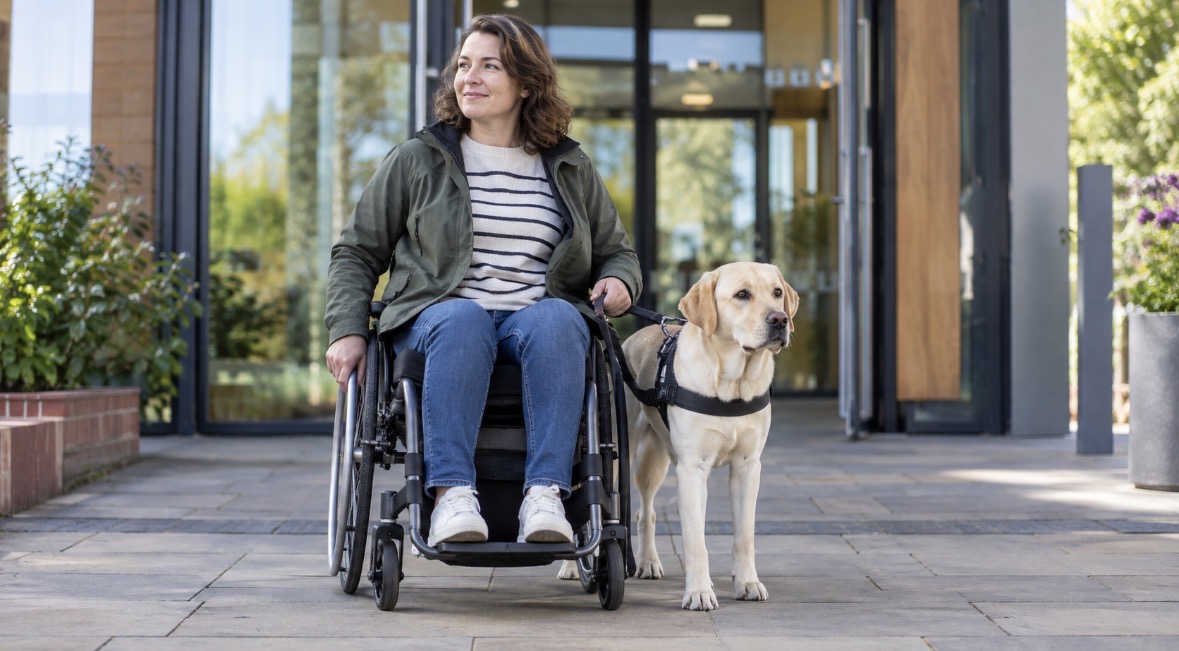
An assistance dog is highly trained to carry out tasks or alerts that help a disabled person with everyday life, safety or independence. They are working animals rather than ordinary pets.
Tasks vary widely: guiding a blind person, alerting a deaf person to sounds, picking up dropped items, fetching help, or responding to a medical warning sign. A dog should be trained both to do those tasks and to behave calmly and safely in public.
Eligibility, costs and waiting times vary between organisations. No council, NHS service or charity is obliged to provide or fund an assistance dog.
If you are refused access because of your assistance dog
- Stay calm and safe. Ask politely to speak to a manager or the operator.
- Explain that your dog is an assistance dog supporting your disability, not a pet.
- Note the date, time, place, staff name and what was said.
- Complain in writing to the business, and to the licensing authority if it involves a taxi or minicab.
- Get free advice before taking any legal step.
Three things people are often told wrongly
- There is no official government registration or certification system in the UK.
- Owners are not automatically required by law to carry an identification card or use a particular jacket or harness.
- Not every assistance dog is trained by an Assistance Dogs UK member organisation.
Open the sections that apply to you
All sections below start closed. Tap a heading to open it.
What is an assistance dog?
A dog trained to perform specific tasks or alerts connected with a person’s disability, and to behave safely and unobtrusively in public places.
- The tasks are linked to the person’s disability.
- Training covers behaviour, hygiene and public settings.
- The dog works while out, so it should not be distracted or petted.
- It is an aid supporting a disabled person, not simply a pet.
Different types of assistance dog
- Guide dogs for blind and partially sighted people.
- Hearing dogs for deaf people.
- Dogs supporting physical disability, mobility or dexterity tasks.
- Medical alert and medical response dogs.
- Autism assistance dogs, often supporting a child and family.
- Psychiatric assistance dogs trained to perform disability-related tasks.
Who may benefit from an assistance dog?
A dog may help where specific trained tasks would reduce risk or increase independence. It is a long-term commitment to a living animal and does not suit everyone.
- Clear, repeatable tasks would make daily life safer or easier.
- The home and routine suit a working dog.
- Daily care, exercise, grooming and vet costs can be managed.
- Nobody in the household is at risk from having a dog.
How to apply through a specialist organisation
Each organisation runs its own application process, so read its criteria before applying.
- Check the disability, age and location criteria first.
- Apply using the organisation’s own form or enquiry line.
- Expect questions about your daily life, home and support.
- Medical or professional evidence is often requested.
- Home visits and assessments usually follow.
Assistance Dogs UK member organisations
Assistance Dogs UK is a coalition of member organisations. Its members train dogs to agreed standards, but membership is not a legal register and other trainers exist.
- Guide Dogs (opens in a new tab)
- Hearing Dogs for Deaf People (opens in a new tab)
- Canine Partners (opens in a new tab)
- Dogs for Good (opens in a new tab)
- Assistance Dogs UK – full member list (opens in a new tab)
Waiting lists, assessments and matching
Demand is high and waits can be long, sometimes years. Some organisations close applications when lists are full.
- Assessment looks at your needs, home and daily routine.
- Dogs are matched to a person, not chosen from a list.
- Training together usually follows the match.
- Ask for realistic timescales and keep in touch with the organisation.
Nobody can promise you a dog or a date.
Costs and possible financial support
Many organisations provide a trained dog at no cost or a low cost to the person, but the owner still pays day-to-day costs.
- Food, insurance, routine vet care and equipment.
- Owner-training routes can cost a great deal more.
- Some charities offer grants or help with veterinary costs.
- Ask each organisation what it does and does not cover.
Owner-trained and independently trained assistance dogs
Not every assistance dog comes from an Assistance Dogs UK member. Some people train their own dog or use an independent trainer.
- Training must still reach a high standard of tasks and public behaviour.
- Check a trainer’s qualifications, insurance and references.
- Be cautious of anyone selling quick certification or paperwork.
- Keep your own records of training and veterinary care.
Registration, identification and proof
There is no official government registration or certification system for assistance dogs in the UK. Owners are not automatically required by law to carry an identification card or to use a particular jacket or harness.
- Cards and jackets sold online are not official proof.
- Many owners still carry something to make conversations easier.
- Some businesses may ask; they should not demand official paperwork.
Assistance dogs and emotional-support dogs
Emotional-support dogs provide comfort through their presence but are not the same as highly trained assistance dogs.
- Assistance dogs perform trained tasks or alerts.
- Psychiatric assistance dogs trained to perform disability-related tasks are different from emotional-support dogs.
- Access rights are not the same, so check before relying on them.
Access to shops, services and public places
In England, Scotland and Wales, businesses and service providers have duties under the Equality Act 2010, including making reasonable adjustments for disabled people. Northern Ireland has separate disability-discrimination legislation.
- A “no dogs” rule usually should not be applied to an assistance dog.
- Staff should not ask a disabled person to wait outside.
- Businesses can ask the Equality and Human Rights Commission guidance for help.
Taxis, minicabs and public transport
Taxi and minicab drivers and operators must not refuse somebody because of their disability or assistance dog, except where a driver holds an applicable official medical exemption.
- No extra charge should be made for the dog.
- An exempt driver should display the official notice.
- Report refusals to the licensing council.
- Air travel and international travel can have additional documentation and operator requirements, so check directly before booking.
Housing, rented accommodation and workplaces
Landlords, housing providers and employers also have duties to make reasonable adjustments for disabled people.
- A blanket “no pets” term may need to be adjusted for an assistance dog.
- Explain in writing what the dog does for you.
- At work, ask about adjustments such as space, breaks and toileting areas.
- Keep copies of requests and replies.
Care Act needs assessments and other support
An adult social-care needs assessment may identify eligible care and support needs, but it does not guarantee funding for an assistance dog.
- Explain how your disability affects daily living and safety.
- Ask about equipment, care and community support as well.
- You can ask for a written record of the decision.
What to do after an access refusal
- Write down the details while they are fresh.
- Complain to the business using its own complaints process.
- For taxis and minicabs, complain to the licensing council.
- Ask a disability adviser or law centre about your options.
- Keep everything in writing and note any reply dates.
Caring for an assistance dog
- Regular veterinary care, vaccinations and parasite treatment.
- Suitable food, grooming and rest away from work.
- Time off harness to play and be a dog.
- Ongoing practice of trained tasks.
- A plan for who helps if you are unwell or in hospital.
Further UK information and organisations
- EHRC – Assistance dogs: a guide for all businesses (opens in a new tab)
- Assistance Dogs UK (opens in a new tab)
- Assistance Dogs UK – Registration and proof (opens in a new tab)
- GOV.UK – Taxis and minicabs for disabled people (opens in a new tab)
- GOV.UK – Apply for a needs assessment (opens in a new tab)
- Guide Dogs, Hearing Dogs for Deaf People, Canine Partners, Dogs for Good (open in a new tab)
Important information
Sixpence Support UK provides general information and links to other organisations. We cannot guarantee that an assistance dog, training, practical help or funding will be available. Contact each organisation directly to check its current services, eligibility rules and waiting times.