
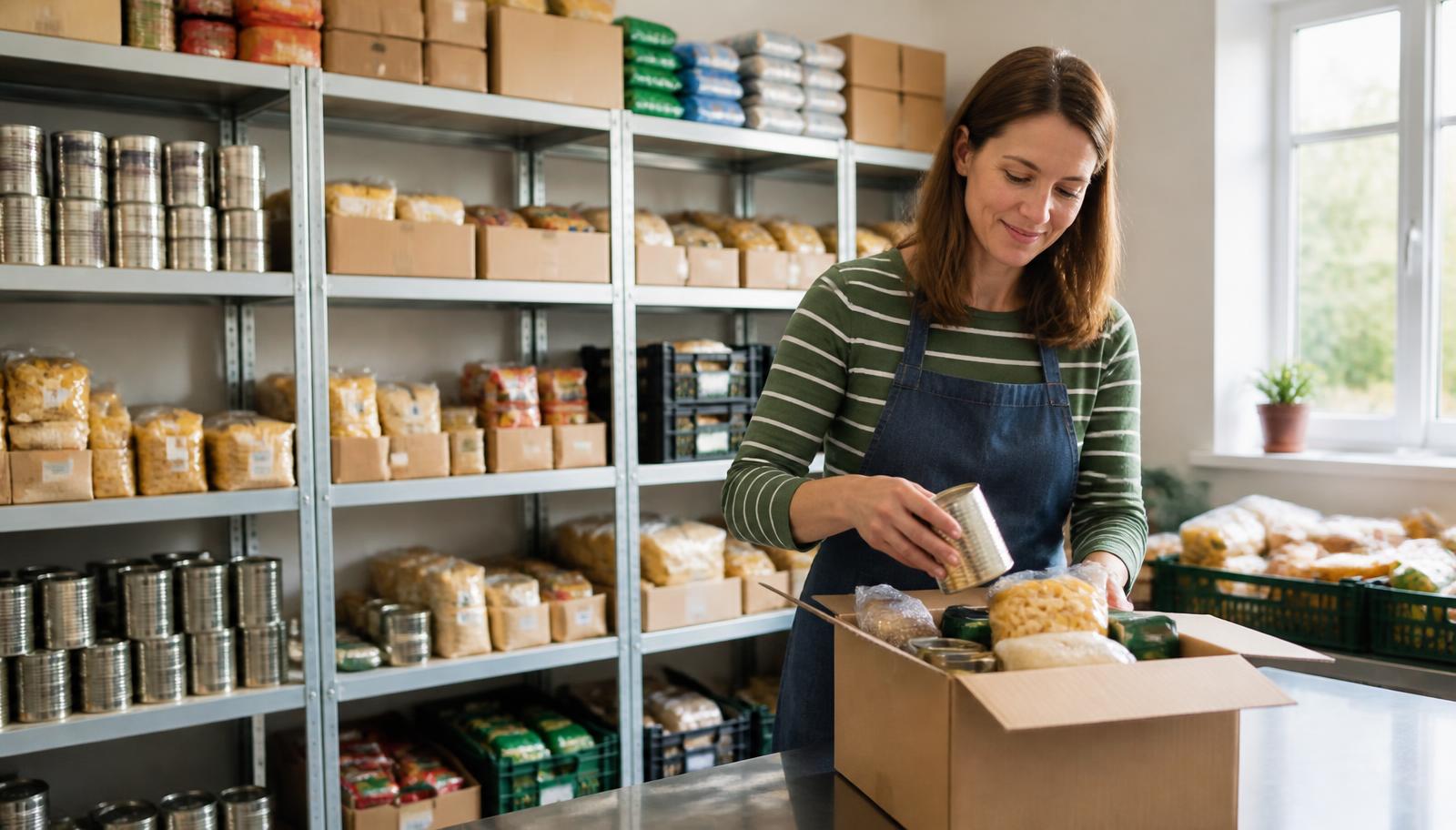
Food Banks and Emergency Food Help
Food banks and other community organisations can sometimes provide emergency groceries or meals. Some need a referral or voucher, while others allow people to approach them directly. Arrangements differ between organisations and between areas, so it is always worth checking first.
Anybody can need help with food
People use food banks and community food projects for many different reasons: low income, a benefit delay or change, illness, disability, job loss, debt, family breakdown, an unexpected expense, or high housing and energy costs. Needing help with food is not a personal failure.
This page explains how food banks and other food support usually work in the UK, whether you might need a referral, what a parcel may contain and how to find help near you. It cannot promise that food will always be available, because organisations depend on donations, volunteers and local arrangements.
Sixpence Support UK does not issue food-bank vouchers, arrange food parcels or make emergency payments. We provide information and point you to the organisations that can help.
If you have no food today
If you have little or no food today, contact your local council, Citizens Advice or a local food bank and explain clearly that you need emergency help. Do not wait until you have completely run out.
NHS Healthy Start may help if you are more than 10 weeks pregnant or responsible for a child under four and you meet the eligibility rules.
Some food banks need a referral from an organisation such as Citizens Advice, a GP surgery, a health visitor, a school, a housing officer, a social worker or the local council. Others have different arrangements, so always check before travelling.
If a child, a vulnerable adult or somebody with serious health needs is going without essential food or fluids, contact your council’s emergency duty or safeguarding service for immediate guidance.
Call 999 if somebody is seriously unwell, unconscious, severely confused or in immediate danger. Please do not call 999 simply because a food parcel is needed — use the routes above instead, or contact NHS 111 if you are worried about someone’s health.
What is a food bank?
A food bank is a community organisation that gives out emergency food, usually as a parcel of items that keep well. Many are run by churches, charities or local volunteer groups. Some are part of the Trussell community and others are fully independent.
- Food is usually intended as short-term emergency support, not a long-term food supply.
- What is available depends on donations, storage and local demand.
- Some organisations may ask about household size, dietary requirements and cooking facilities so the parcel is suitable.
- Most parcels are collected, although a few providers may arrange delivery in limited circumstances.
- Rules about how often you can return differ from one organisation to another.
- Independent food banks may work quite differently from food banks in the Trussell community.
Do I need a referral or voucher?
Some food banks use referral vouchers. A referring organisation talks through your situation and issues a voucher or e-referral that you take or show to the food bank.
- Referrals commonly come from Citizens Advice, a GP surgery, a health visitor, a school, a housing officer, a social worker or the local council.
- A referral is not a payment and should not normally cost you anything.
- Other food banks, pantries and community projects allow people to come directly, sometimes with proof of address or a short conversation.
- Always telephone, email or check the website first so you know what is needed.
What might be included?
Parcels usually contain food that keeps well without a fridge. Nothing is guaranteed, but a parcel may include:
- tinned food such as beans, vegetables, fish, meat, soup or fruit
- pasta, rice or cereal
- long-life milk
- sauces and basic cooking ingredients
- tea, coffee or other drinks
- toiletries or sanitary products when available
- baby supplies where the organisation stocks them
Stock varies from week to week, so please do not expect particular brands or products.
What to tell the food bank
Mentioning the following helps volunteers give you food you can actually use safely:
- any allergies
- diabetes or another medical dietary need
- religious or cultural requirements
- a vegetarian or vegan diet
- whether you have a fridge, freezer, cooker, microwave or kettle — and whether you have electricity or gas credit
- mobility problems that make collecting a parcel difficult
- babies, children or pets in the household
- how many people the food needs to feed
Finding local help
- Search using your postcode on a food-bank finder or your council’s website.
- Check whether a referral or voucher is required.
- Telephone or email before travelling if you can.
- Ask about opening times and whether identification or proof of address is needed.
- Explain your household size and any urgent dietary needs.
- Ask whether delivery or help with collection is possible if you are disabled, unwell or housebound.
- Take suitable bags or a trolley if you are asked to.
- Ask about benefits or debt advice at the same time if the underlying money problem is continuing.
Sixpence Support UK does not hold a live list of local food banks and does not arrange parcels. Use the official finders and your council’s own pages for current local information.
Other sources of food support
Availability, eligibility and any charges vary a great deal between areas. It is worth asking your council, library, GP surgery or a local advice service what exists near you.
- Independent food banks — run locally rather than as part of a national network. Referral rules, opening times and stock differ. The Independent Food Aid Network supports many of them.
- Community pantries and social supermarkets — members usually pay a small weekly amount and choose a set number of items, which can cost much less than a shop.
- Community fridges — shared fridges where surplus food is offered free to anyone, often with fresh items that must be used quickly.
- Community kitchens and free-meal services — cooked meals at a church, community centre or day project, sometimes free and sometimes for a small donation.
- School breakfast clubs and holiday food support — many schools and councils run breakfast clubs and holiday activity and food programmes during school holidays.
- Free school meals — check eligibility and apply through GOV.UK free school meals or your council; separate arrangements apply in Scotland, Wales and Northern Ireland.
- NHS Healthy Start — help with buying certain healthy food, milk and infant formula for eligible families (see below).
- Local council emergency or welfare assistance — many councils can offer food vouchers, fuel help or essential items in a crisis. Find your council on GOV.UK.
- Support for people experiencing homelessness — day centres, outreach teams and hostels often provide meals as well as advice. Shelter has guidance on emergency help.
- Meals on Wheels or community meal services — some councils and charities deliver hot or frozen meals to older or disabled people, usually for a charge.
Help for pregnant people and young children
NHS Healthy Start may help eligible people who are more than 10 weeks pregnant, or responsible for a child under four, to buy specified healthy food, milk and infant formula using a prepaid card. Eligibility usually depends on the benefits you receive.
Payment amounts and rules can change, so check the official website rather than relying on figures repeated elsewhere. In Scotland, the equivalent scheme is Best Start Foods.
- More than 2.6 million
Emergency food parcels distributed by food banks in the Trussell community across the UK during 2025.
- 1,632,193
Parcels provided for families with children during 2025.
- 1,671
Trussell food-bank locations operating across 289 UK local-authority areas during 2025.
These figures cover food banks in the Trussell community, not every independent food bank or food-support organisation in the UK. A food parcel is not the same as one individual person, because somebody may receive support more than once.
Food safety and dietary needs
- Check packaging, storage instructions and use-by dates before eating anything.
- Tell the provider about allergies before you accept food.
- Do not eat food if the packaging is damaged or you are unsure whether it is safe.
- Ask for a suitable alternative where one is possible.
- Contact a healthcare professional if a lack of food is affecting diabetes, pregnancy, frailty, an eating disorder or another medical condition.
- Food banks cannot guarantee a medically specialised diet, so keep your GP, midwife, dietitian or specialist nurse informed.
Benefits and money advice
Emergency food deals with today’s problem, but it may not resolve what caused it. If money is short every month, a benefits check or debt advice can make a lasting difference — many people are entitled to support they are not receiving.
Avoiding scams
- A genuine food-bank referral will never require your bank passwords or card PIN.
- Be cautious if somebody demands an upfront fee to give you a food parcel or to make a benefit application for you.
- Do not send identity documents through an unverified social-media account.
- Verify any organisation through its official website or through your local council before sharing personal details.
Sources and further information
- Trussell — Find a food bank
- Trussell — End of year statistics (2025)
- Citizens Advice — Using a food bank
- GOV.UK — Find your local council
- NHS — Healthy Start
- GOV.UK — Apply for free school meals
- Shelter — Benefits and money help
- Independent Food Aid Network
This information is for general guidance and does not replace advice from a qualified adviser or healthcare professional. Sixpence Support UK does not award benefits, issue food-bank vouchers or provide emergency payments, and we do not ask you to send us financial, medical or identification documents. Local arrangements change, so please check with the organisation itself.
- [1] Trussell. Find a food bank · 2026
- [2] Trussell. End of year statistics (2025) · 2025
- [3] Citizens Advice. Using a food bank · 2026
- [4] GOV.UK. Find your local council · 2026
- [5] NHS. Healthy Start · 2026
- [6] mygov.scot. Best Start Foods · 2026
- [7] GOV.UK. Apply for free school meals · 2026
- [8] Shelter England. Benefits and money help · 2026
- [9] Independent Food Aid Network. Independent food aid in the UK · 2026
- [10] Turn2us. Benefits Calculator · 2026
- [11] Turn2us. Grants Search · 2026