
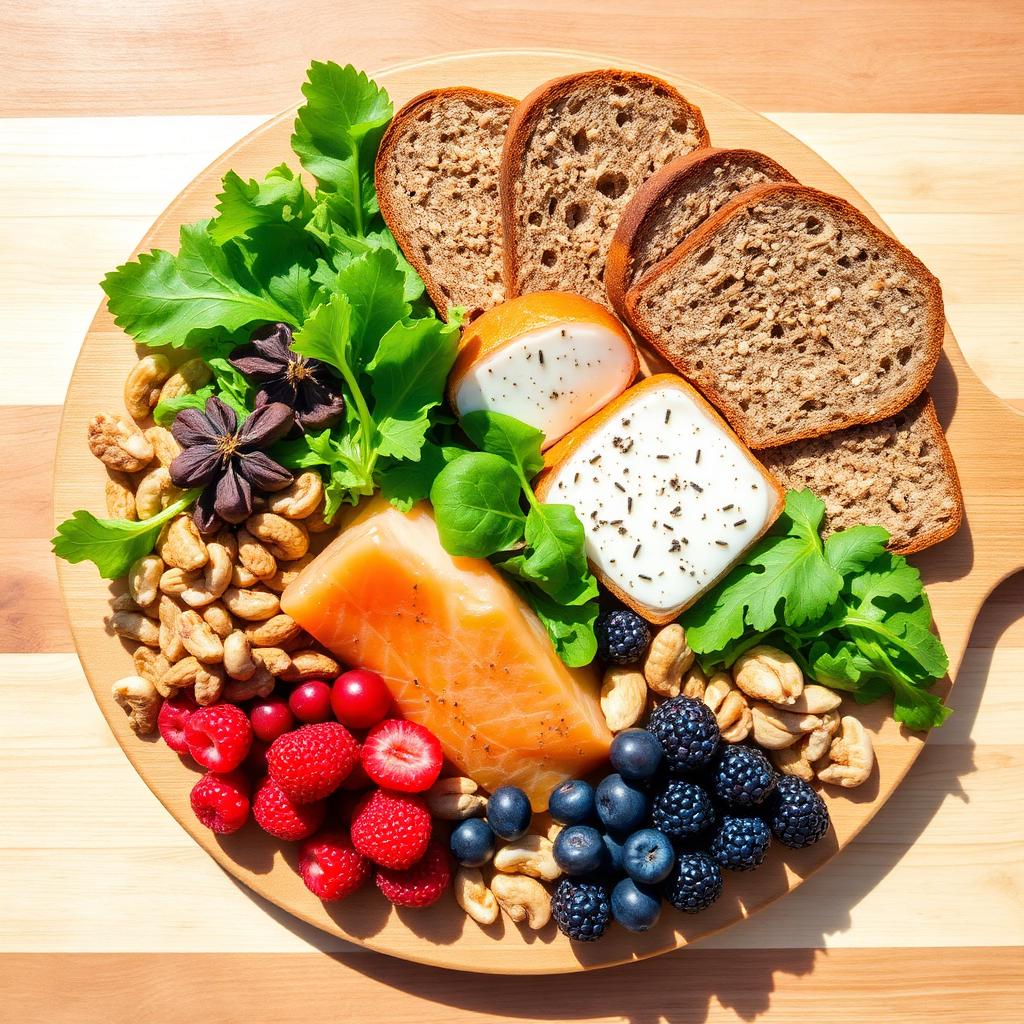
Nutrition & Diet
Diet is the single largest modifiable driver of ill health in the UK. The Eatwell Guide, SACN reports and the NDNS show where the British plate actually sits — and where it should.
- 64%
of adults in England are overweight or living with obesity (BMI ≥ 25).
Source: NHS Digital, Health Survey for England 2022 (published 2024)
- ≈ 8.4 g
of salt per day is consumed on average by UK adults — well above the 6 g target.
Source: NDNS, Assessment of salt intake from urinary sodium in adults, England, 2018–19 (PHE)
- 5%
of daily energy is the SACN upper limit for free sugars; UK adults consume around 9–12%.
Source: SACN 2015
- ≈ 30%
lower risk of major cardiovascular events with a Mediterranean diet vs. low-fat control.
Source: PREDIMED trial, New England Journal of Medicine, 2018
The guidanceWhat the Eatwell Guide actually says
The UK's official healthy-eating model, the Eatwell Guide, recommends that adults base meals on starchy carbohydrates (ideally wholegrain), eat at least 5 portions of a variety of fruit and vegetables a day, choose some beans, pulses, fish, eggs and other proteins (including two portions of fish per week, one oily), have some dairy or fortified dairy alternatives, and use small amounts of unsaturated oils.[1]PHE/NHS, Eatwell Guide
Population targets sit alongside this: SACN recommends free sugars provide no more than 5% of total daily energy, fibre intake of 30 g/day for adults, and salt intake of no more than 6 g/day.[2]SACN 2015[5]SACN 2003
What Britain actually eatsThe gap between guidance and the NDNS
The National Diet and Nutrition Survey (NDNS), the UK's rolling dietary surveillance programme, consistently shows that British adults exceed recommendations for saturated fat, free sugars and salt, and fall short on fibre, oily fish, fruit and vegetables. Only around a third of adults meet the 5-a-day target.[4]NDNS
ObesityA whole-population shift in body weight
The Health Survey for England 2022 reported that 64% of adults were overweight or living with obesity (BMI ≥ 25), including 26% with obesity (BMI ≥ 30). Roughly 1 in 10 reception-age children and 1 in 5 year-6 children in England live with obesity.[3]HSE 2022
Excess weight is a primary driver of type 2 diabetes, cardiovascular disease, several cancers and musculoskeletal disease, and is estimated by OHID to cost the NHS around £6 billion a year.[4]OHID
SaltA textbook public-health win
Ultra-processed foodAn emerging UK-relevant risk factor
A 2024 umbrella review in The BMJ synthesised 45 meta-analyses covering nearly 10 million participants. Higher exposure to ultra-processed foods was associated with increased risk of all-cause mortality, cardiovascular mortality, type 2 diabetes, depression and adverse mental health outcomes.[6]BMJ 2024
UK adults derive over half of dietary energy from ultra-processed foods — one of the highest shares in Europe — and intake is concentrated in lower-income groups, where it tracks with worse diet quality overall.[4]NDNS
Patterns over nutrientsMediterranean-style diets and outcomes
The PREDIMED randomised trial (n = 7,447 high-risk adults, follow-up ≈4.8 years) found a ~30% reduction in major cardiovascular events in participants assigned to a Mediterranean diet supplemented with extra-virgin olive oil or nuts, compared with a reduced-fat control. NICE and the British Heart Foundation cite Mediterranean-style eating as the dietary pattern with the strongest cardiovascular outcome data.[7]PREDIMED, NEJM 2018
Trusted organisationsTrusted organisations and further support
These UK organisations publish independent nutrition information, professional standards and official food guidance.
- British Nutrition Foundation — charity translating nutrition science into practical information for the public and schools.
- British Dietetic Association — this is the professional body for dietitians, not a helpline, and publishes free food fact sheets.
- Food Standards Agency — this is the government regulator for food safety, not a charity, and publishes official food safety advice.
Go straight to these organisations
These are separate organisations, not NHS services. Please take telephone numbers and opening hours from their own current pages. Each button opens in a new tab.
These organisations are independent of Sixpence Support UK. Their inclusion is for information and signposting and does not imply a partnership or endorsement.
- [1] Public Health England (now OHID) / NHS. The Eatwell Guide · 2018
- [2] Scientific Advisory Committee on Nutrition (SACN). Carbohydrates and Health report · 2015
- [3] NHS Digital. Health Survey for England 2022 — Adult overweight and obesity · 2023
- [4] Office for Health Improvement & Disparities (OHID). National Diet and Nutrition Survey (NDNS) rolling programme · 2024
- [5] Action on Salt / SACN. Salt and Health — SACN report · 2003
- [6] Lane et al., The BMJ. Ultra-processed food exposure and adverse health outcomes: umbrella review of epidemiological meta-analyses · 2024
- [7] Estruch et al., New England Journal of Medicine. Primary Prevention of Cardiovascular Disease with a Mediterranean Diet (PREDIMED) · 2018