
A quick exit does not remove this page from your browser history. Use a safer device if you believe your phone or internet use is being monitored.
Temporary Pet Fostering and Domestic Abuse
Free, confidential fostering services can care for a pet while its owner moves to safety, and temporary fostering may also help during a hospital stay, housing crisis or other emergency.
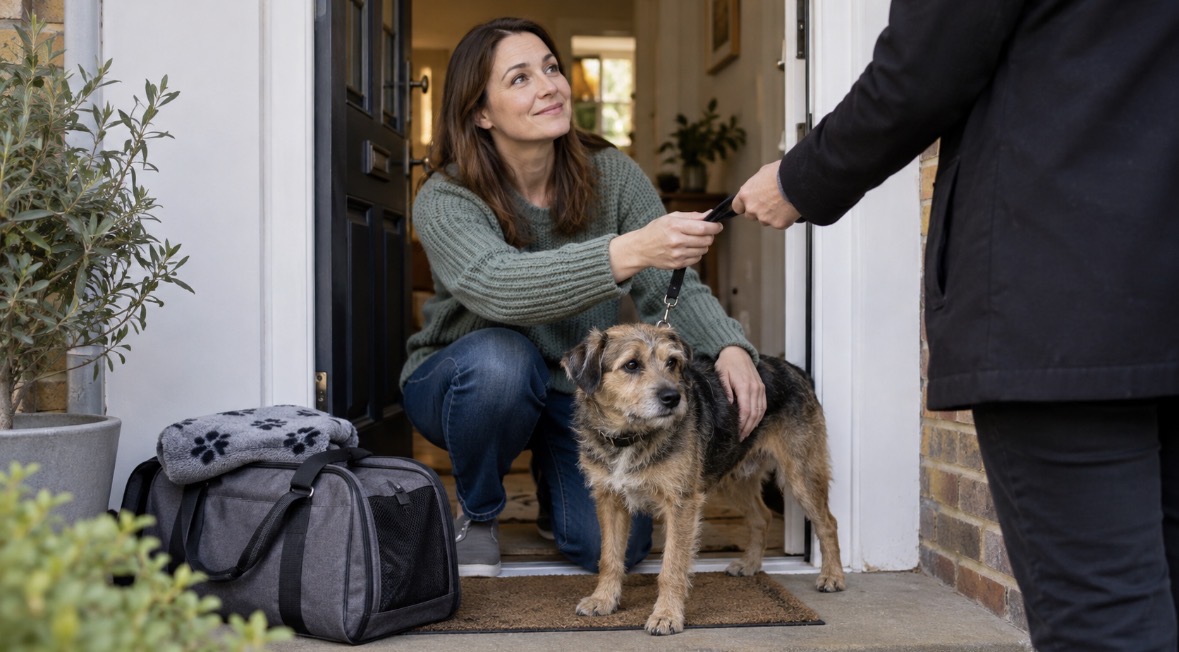
Nobody should have to choose between safety and a pet
Someone experiencing domestic abuse may delay leaving because they are frightened about what could happen to their pet. Specialist confidential fostering services may be able to care for a pet temporarily while its owner moves to safety. Temporary fostering may also be available during a hospital stay, housing crisis or other emergency, but availability and eligibility vary.
A temporary fostering arrangement is not the same as permanently surrendering or rehoming a pet. The aim is for the owner and the animal to be reunited when it is safe to do so.
Are you or your pet in immediate danger?
- Call 999 if there is an immediate danger to a person or animal.
- If calling from a mobile and it is unsafe to speak, listen to the operator. Cough or tap if possible and press 55 when prompted.
- Do not confront an abusive person or announce plans to leave if doing so could increase the danger.
- Contact a domestic-abuse service to make a safe plan for yourself, any children and your pets.
- Do not post your location or fostering request publicly on social media.
The number above covers England. Separate services for Wales, Scotland and Northern Ireland are listed further down this page.
The two main specialist fostering services
- Dogs Trust Freedom is a free, confidential, specialist fostering service for dogs belonging to people escaping domestic abuse.
- Cats Protection Lifeline provides free and confidential temporary fostering for cats whose families are fleeing domestic abuse.
- Coverage, space and eligibility must be checked directly with each service.
- The location of a specialist foster carer is normally kept confidential.
Fostering, safety and practical steps
The sections below open one at a time. Read only what you need, and close the page using the Quick exit button if you have to.
Getting help in an emergency
If you or your pet are in immediate danger, call 999. If it is unsafe to speak, listen to the operator, cough or tap if you can, and press 55 when prompted so the call is passed to the police.
- Ring a domestic-abuse helpline to make a safety plan before you leave.
- Tell them you have pets and say what animals they are.
- Ask whether refuge or emergency accommodation can take pets, and whether fostering can be arranged at the same time.
- Do not delay your own safety while waiting for pet arrangements.
Temporary fostering for dogs
Dogs Trust Freedom is a free, confidential, specialist fostering service for dogs belonging to people escaping domestic abuse. Volunteer foster carers look after the dog until the owner is in a safe, settled home.
- The service is free to the owner and confidential.
- Coverage and available spaces vary, so contact the service directly.
- The dog remains the owner’s dog throughout.
- The foster carer’s address is normally kept confidential.
Temporary fostering for cats
Cats Protection Lifeline provides free and confidential temporary fostering for cats whose families are fleeing domestic abuse. Referrals are often made through a domestic-abuse service, and there is also information on how to contact Lifeline.
Help with other animals
Specialist services concentrate mainly on dogs and cats. For rabbits, guinea pigs, birds, reptiles, horses or other animals, ask a domestic-abuse service, a local animal welfare organisation, a rescue centre or your veterinary practice what may be possible in your area.
- Explain what animals you have, their number, size and any health needs.
- Ask about temporary boarding as well as fostering.
- Never hand an animal to an unknown person found through social media or a selling site.
Fostering during hospital stays or another crisis
Temporary fostering, boarding or volunteer help may also be available during an unexpected hospital stay, a housing crisis, a fire or another emergency. Ask early, because arrangements take time.
How confidential fostering normally works
- You contact the service, or a support worker refers you.
- The service checks whether it covers your area and has space.
- Details of the pet, its health and its routine are recorded.
- Collection or handover is arranged at a place that feels safe.
- The pet stays with a checked foster carer whose location is normally kept confidential.
- You are given a way to receive news about your pet.
- When you have safe, settled accommodation, arrangements are made for the pet to come home.
This is temporary care. It is not the same as permanently surrendering or rehoming a pet.
Questions to ask before agreeing to fostering
Before using any other fostering service, ask about identity checks, insurance, veterinary consent, costs, confidentiality, contact arrangements, emergencies and how the pet will be returned.
- Who will look after my pet, and are they checked?
- Is my information and my pet’s location kept confidential?
- Who pays for food, insurance and veterinary treatment?
- Who can consent to veterinary treatment in an emergency?
- How and how often will I hear about my pet?
- How long can the arrangement last, and how is my pet returned to me?
- What happens if the foster carer can no longer continue?
Never hand a pet to an unknown person found through social media.
Preparing essential information about your pet
Where safe, prepare details of the pet’s microchip, veterinary practice, medication, food, behaviour, routines and emergency contacts. A short written note is enough.
- Name, age, breed, colour and microchip number.
- Veterinary practice name and telephone number.
- Any medication, doses and when it is given.
- Usual food, how much and how often.
- Behaviour around people, children and other animals.
- Daily routine, walks, sleeping place and anything that frightens them.
- A safe contact number or email for you.
Do not collect documents or belongings if doing so would create additional danger.
Staying safe online and protecting your location
- Do not post your location, your plans or a fostering request publicly on social media.
- Use a safer device, such as a friend’s phone or a library computer.
- Check who can see your accounts, photographs and location sharing.
- Remember that a quick exit does not clear your browser history.
- Ask a domestic-abuse worker for help with device and account safety.
Domestic-abuse helplines across the UK
- England: National Domestic Abuse Helpline, 0808 2000 247 — nationaldahelpline.org.uk
- Wales: Live Fear Free — gov.wales
- Scotland: Domestic Abuse and Forced Marriage Helpline — sdafmh.org.uk
- Northern Ireland: Domestic and Sexual Abuse Helpline — nidirect.gov.uk
The England number is only for England. Please use the service for your own nation.
Trusted links and important information
Dogs Trust Freedom and Cats Protection Lifeline both describe their services as free and confidential temporary fostering for people escaping domestic abuse. Coverage, space and eligibility must be checked directly.
- Dogs Trust Freedom (opens in a new tab)
- Cats Protection Lifeline (opens in a new tab)
- Access Cats Protection Lifeline (opens in a new tab)
- National Domestic Abuse Helpline – England (opens in a new tab)
- Live Fear Free – Wales (opens in a new tab)
- Domestic Abuse and Forced Marriage Helpline – Scotland (opens in a new tab)
- Domestic and Sexual Abuse Helpline – Northern Ireland (opens in a new tab)
- Silent Solution information (opens in a new tab)
Fostering is temporary, not giving up your pet
Asking for fostering help does not mean losing your pet and it does not mean you have failed. Specialist services exist so that people can reach safety knowing their animal is being cared for. Ask a domestic-abuse worker or the fostering service to explain exactly how and when your pet will come back to you.
Important information
Sixpence Support UK provides general information and links to specialist organisations. We do not arrange fostering, emergency accommodation or personal protection. Availability, coverage and eligibility must be confirmed directly with each service.