
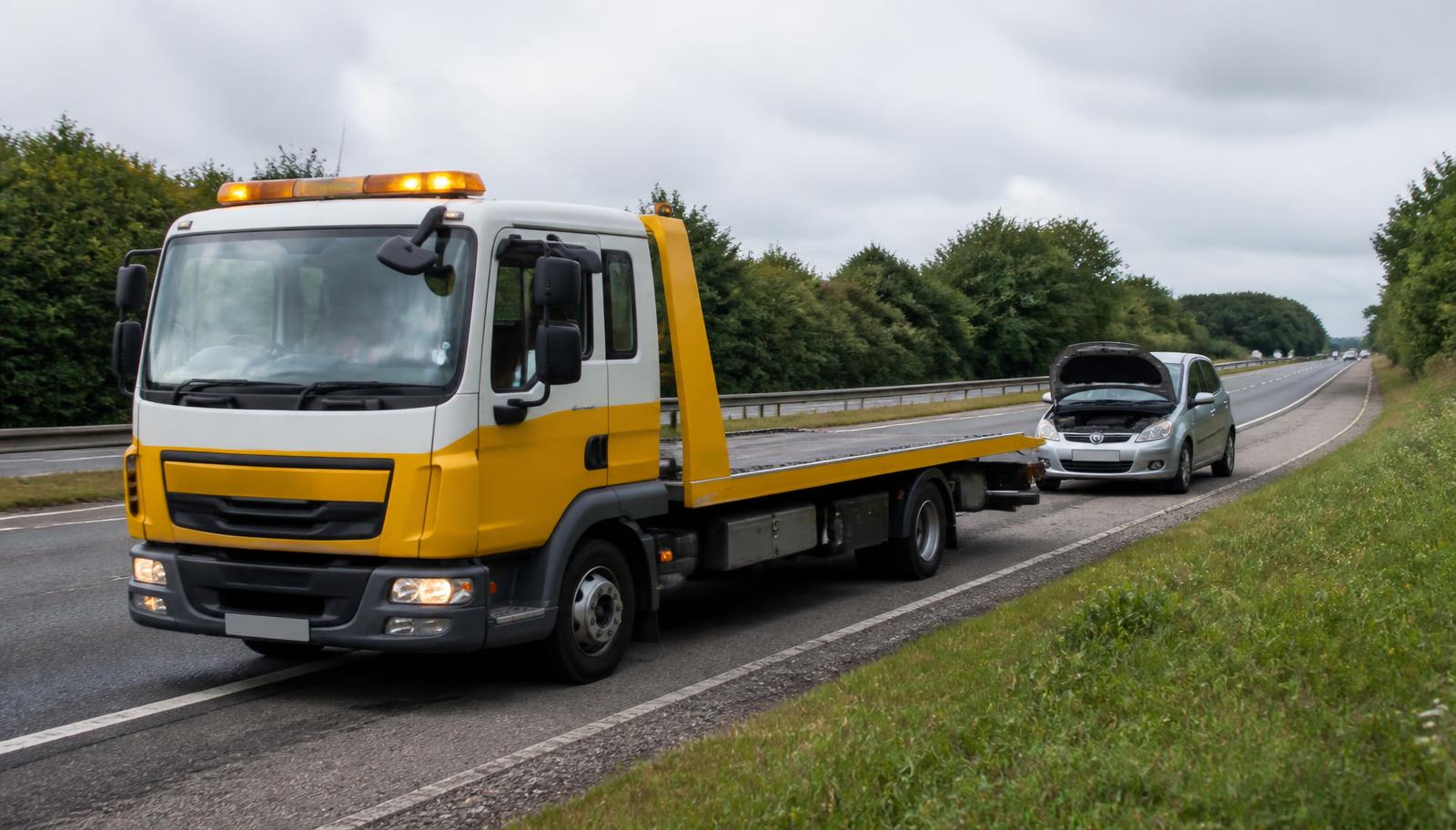
Vehicle Breakdowns, Recovery and Roadside Help
What to do when a vehicle stops working, how to stay safe at the roadside, how recovery works and what it may cost.
A breakdown can happen to any vehicle, at any age and on any road. It is stressful, and it can also be dangerous if the vehicle stops in a place where traffic is moving quickly. This page explains what to do first, how to get help, what recovery usually involves and what to check before agreeing to pay anyone.
Broken down in a dangerous place?
If your vehicle stops in a live motorway lane or somewhere you could be hit by traffic, switch on your hazard lights and call 999 immediately.
If you cannot leave the vehicle safely, keep your seat belt on and remain inside while calling 999. If it is safe to leave, get out from the side furthest from traffic and wait behind a safety barrier where possible.
Never place a warning triangle on a motorway.
The order that matters
- People first, then the vehicle. A car can be repaired or replaced.
- Make yourself visible: hazard lights on, sidelights on in poor light.
- Get away from moving traffic if you safely can.
- Then call for help and give your exact location.
1. What to do when your vehicle breaks down
Switch on your hazard warning lights straight away so other drivers can see that something is wrong.
If the vehicle is still moving, try to get it somewhere safer — a lay-by, a side road, a car park or as far to the left as you can. On a road with a hard shoulder or an emergency area, aim for that and stop as far left as possible.
Once stopped, turn the steering wheel to the left so that if the vehicle is nudged it moves away from the carriageway, put the handbrake on, stop the engine and, in poor visibility or at night, leave your sidelights on.
Then decide honestly whether it is safe to get out. If traffic is passing close by, or you cannot reach a safe place behind a barrier, staying belted inside with your hazard lights on is often safer. If you do get out, use the door furthest from traffic, take everyone with you (including children), and stand behind a barrier or well up the verge — never between your vehicle and oncoming traffic, and never in front of the vehicle.
Leave animals inside the vehicle unless there is an emergency; a frightened dog beside a road is a serious risk to itself and to drivers.
Your personal safety comes before protecting the vehicle. Do not go back for belongings, do not try to push the vehicle on a fast road, and do not attempt roadside repairs where traffic is passing at speed. Full official guidance is in The Highway Code, rules 274 to 287.
2. Breaking down on a motorway or high-speed road
Motorways and fast dual carriageways are the most dangerous places to break down, because traffic is heavy and closing speeds are high.
Emergency areas are marked orange or yellow surfaced bays set back from the traffic, with a blue sign showing an orange SOS telephone symbol. Use one if you can reach it. Stop as far left as possible, leave hazard lights on and, if it is safe, leave by the left-hand door and use the free emergency telephone there — it tells the control room exactly where you are.
A hard shoulder is for emergencies only. Stop as far left as you can, wheels turned left, then move behind the safety barrier if you can do so safely.
A live lane is any lane traffic is using, including a converted hard shoulder on a smart motorway. If you stop in a live lane and cannot get to safety, keep your seat belt fastened, keep everyone inside, switch on your hazard lights and call 999. Ask for the lane to be closed. Do not stand outside the vehicle in a live lane.
Marker posts and signs help others find you. Small posts along the edge of the road carry a number and a letter — read it out when you call. Driver location signs (blue with white lettering) give the road number, direction and distance, which is the fastest way to describe where you are.
Call 999 when anyone is in danger, when you are in a live lane, when you cannot get to a place of safety, or when a child, animal or vulnerable passenger is at risk. Otherwise contact National Highways (0300 123 5000 in England) or your breakdown provider using the number on your policy or membership card.
Nothing on this page asks you to leave your vehicle when leaving would put you in greater danger. If in doubt, stay belted in, hazards on, and phone 999.
3. Getting roadside assistance or vehicle recovery
Breakdown help usually comes in one of these forms:
- Roadside repair — a patrol attends and tries to fix the fault where the vehicle is, or to make it safe to drive a short distance.
- Towing to a garage — the vehicle is taken to a nearby garage for the repair, often the closest one that can deal with the fault.
- Local recovery — the vehicle is moved a limited distance, commonly around ten miles, which is all that some basic cover includes.
- National recovery — the vehicle, and normally the driver and passengers, are taken to a chosen destination anywhere in the country.
- Home start — help when the vehicle will not start at or near your home. Basic roadside cover often excludes this.
- Onward travel — help continuing your journey while the vehicle is repaired, such as a hire car, train fare or a night's accommodation.
Before you agree to anything, and while it is still safe to ask questions, try to confirm:
- Where exactly the vehicle will be taken, and whether it can be left there safely.
- What the total price will be, including mileage and any waiting time.
- Whether you and your passengers can travel with the vehicle.
- How long the wait is likely to be, so you can plan for children, medication or warmth.
Ask for the price and destination in writing or by text where you can. If you are in danger, deal with safety first and sort out the details afterwards.
4. If you do not have breakdown cover
You can still get help. A local recovery or garage recovery company will normally attend without a membership, but you will usually have to pay for the call-out and the recovery yourself.
Before accepting, ask for:
- the total call-out charge;
- the recovery cost and any mileage rate;
- any extra charge for evenings, weekends, bank holidays or a winch;
- the exact destination the vehicle will be taken to;
- how payment is taken, and whether a card payment is possible.
Check your other policies first. Some motor insurance policies, bank accounts, credit cards and new-car warranties already include breakdown assistance that you may have forgotten about.
Be careful with an operator you did not call
If a recovery vehicle simply turns up and you did not request it, you do not have to accept the service. Do not hand over your keys or documents, and do not sign anything you have not read. Ask who instructed them, get a price in writing, and if you are unsure, phone 999 (if you are in danger), the police non-emergency number 101, or your own provider and arrange help yourself.
5. Common breakdown problems
- Flat battery — the most common cause of a call-out, especially in cold weather or after short journeys. Symptoms include a slow, laboured start, dim lights or nothing at all. Jump starting can damage modern electronics if done incorrectly, so it is usually better to let a patrol do it.
- Punctures and tyre damage — pull over as soon as it is safe. Never change a wheel on a motorway hard shoulder or beside moving traffic; call for help instead. Many cars now carry a tyre sealant kit rather than a spare wheel.
- Overheating — stop as soon as it is safe and switch the engine off. Do not open the radiator or coolant cap on a hot engine; the escaping steam can cause serious burns.
- Warning lights — a red light generally means stop as soon as it is safe. An amber light usually means get the vehicle checked soon. Your handbook explains the symbols for your own vehicle.
- Running out of fuel — get off the carriageway if you can. A patrol can often bring a small amount of fuel, but on a motorway this may be treated as an avoidable call-out and charged.
- Lost or locked-in keys — tell the provider whether a child, an animal or medication is shut inside, because that makes it urgent. If a child or animal is at risk in heat, call 999.
- Wrong fuel — do not start the engine. If you have already started it, stop as soon as it is safe. Draining the system is a specialist job; starting the engine usually makes the repair far more expensive.
Whatever the fault, do not attempt repairs beside fast-moving traffic. Wait for a trained patrol.
6. Electric and hybrid vehicles
Electric and hybrid vehicles break down for many of the same reasons as petrol and diesel ones — tyres, 12-volt batteries and warning faults are all common. There are some differences worth knowing.
- An empty drive battery cannot be topped up like a fuel can. The vehicle normally has to be recovered to a charge point, a garage or your home. Some providers carry a mobile charger that adds a small range.
- Charging faults may be with the vehicle, the cable or the charge point. Try a different cable or a different charger before assuming the car is at fault, and report a broken public charger to its operator.
- Recovery is different. Many electric and hybrid vehicles must not be towed with driven wheels on the road, because turning the wheels can drive the motor and cause damage. They usually need a flatbed or wheel skates.
Say clearly when you call that the vehicle is electric or hybrid, and give the make and model, so the right equipment is sent. Do not let anyone tow it on a rope or a conventional lift unless the manufacturer's handbook allows it.
7. Help for disabled and older motorists
Recovery providers can usually make adjustments, but only if they know what is needed. Say it at the beginning of the call, not after the recovery vehicle arrives — the vehicle and crew sent out depend on the information given.
Mention anything relevant, including:
- Wheelchairs and mobility equipment in or attached to the vehicle, and whether a wheelchair needs to travel with you.
- Assistance dogs or other animals travelling with you, so transport can carry them.
- A passenger who cannot climb into a standard recovery vehicle, or who cannot stand or wait outside.
- Medication or essential medical equipment, including anything needing power, cooling or a fixed time of day.
- Accessible onward transport — a taxi or hire vehicle that takes a wheelchair, or a route that avoids steps.
- Communication needs — for example if you are deaf or hard of hearing, cannot use the phone easily, need a text message instead of a call, or need information repeated simply.
- Conditions that make waiting risky, such as needing warmth, a toilet, food at set times or help in a crowd.
If your vehicle is on the Motability Scheme, breakdown assistance is normally included and is arranged through the Scheme's own breakdown service rather than a policy you bought yourself. Use the number on your Motability paperwork or in the vehicle, and see Motability Scheme. Our vehicle checks section below may also be useful when a fault keeps returning.
8. Choosing breakdown cover
Cover is sold at very different levels, and the cheapest is not always poor value — it depends on the driving you do. Compare:
- Roadside assistance — how far from home it applies, and whether there is a minimum distance before you are covered.
- Home start — whether help at or near your home is included.
- Towing distance — the number of miles included before extra charges start.
- National recovery — whether the vehicle and passengers can be taken to any UK destination.
- Onward travel — hire car, accommodation or public transport while the vehicle is repaired.
- European cover — whether it is included, seasonal or a paid extra, and how many days it lasts.
- Vehicle age and type limits — some policies exclude older vehicles, high mileage, vans, motorhomes, trailers or caravans.
- Personal or vehicle cover — personal cover follows you in any vehicle you drive or travel in; vehicle cover applies only to the named vehicle, whoever is driving.
- Call-out limits — the number of claims allowed each year.
- Electric vehicle recovery — including mobile charging and flatbed recovery.
- Renewal price — introductory prices often rise sharply in year two, so check the renewal figure before you commit.
Sixpence Support UK does not recommend or endorse any breakdown company. Compare the policy documents and choose what fits your own circumstances.
9. After a road collision
A collision is not a breakdown, and the steps are different. If a crash has happened:
- Stop. You must stop by law, even if the damage seems minor.
- Check for injuries — yourself, passengers and anyone else involved. Switch on hazard lights.
- Call 999 if anyone is injured or trapped, if the road is blocked or dangerous, if anyone has driven off, or if you believe someone is under the influence or has behaved criminally.
- Exchange details — your name and address, and the vehicle owner's name, address and registration number. You must give these to anyone with reasonable grounds to ask.
- Take photographs of the vehicles, positions, road layout and damage — only if it is safe to do so and you are away from traffic.
- Report it to the police within 24 hours if you could not exchange details at the scene.
- Contact your insurer as soon as you can, even if you do not intend to claim.
Do not admit blame at the roadside, and do not agree to use a repairer or recovery firm suggested by a stranger before speaking to your own insurer.
10. Complaints and unexpected recovery charges
If a bill is much larger than you expected, or the vehicle was taken somewhere you did not agree to:
- Ask for an itemised invoice showing the call-out charge, mileage, labour, storage and VAT separately.
- Keep your evidence — photographs, text messages, call logs, any paperwork you signed and the times involved.
- Complain to the company first, in writing, saying what you were told, what you were charged and what you want put right. Ask for their complaints procedure.
- Check whether your payment provider can help. Card and bank payment protections sometimes apply; ask your bank what applies to your payment.
- Get consumer advice from Citizens Advice, who can explain your rights and the next steps.
- If the recovery was arranged through an insurance or breakdown policy, use that provider's own complaints process, which may lead to the Financial Ombudsman Service.
We cannot promise that a complaint will lead to a refund, and nothing on this page is a statement of the legal outcome in your case. Storage charges can build up daily, so act quickly.
Useful checks and official help
These links open on official websites in a new tab.
Disclaimer
Sixpence Support UK provides general information in plain English. It is not a replacement for the emergency services, professional mechanical advice, legal advice, or the terms of your own insurance or breakdown policy. In an emergency, call 999. Always check what your own policy covers, and follow the manufacturer's handbook for your vehicle.
- [1] GOV.UK. The Highway Code: breakdowns and incidents (rules 274 to 287)
- [2] National Highways. Driving on motorways
- [3] GOV.UK. Check for a vehicle safety recall
- [4] GOV.UK. Check the MOT history of a vehicle
- [5] Citizens Advice. Free, independent consumer advice
- [6] GOV.UK. Report a road obstruction or hazard
- [7] Motability Scheme. Breakdown assistance for Scheme customers
- [8] GOV.UK. Reporting a road traffic accident