
Traditional Chinese Medicine and Complementary Therapies
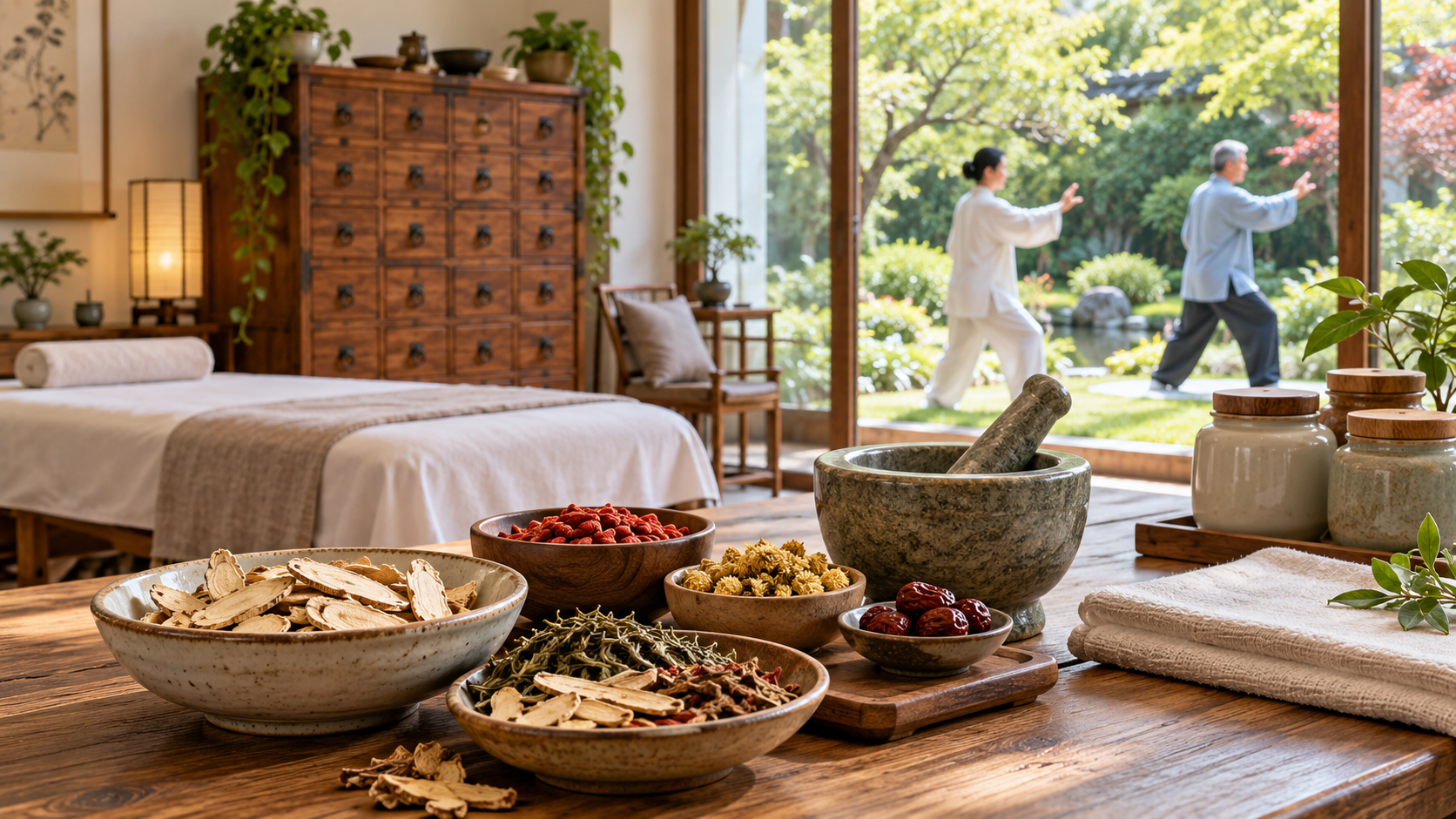
Curious about traditional Chinese medicine? This page explains common approaches, questions to ask and where to find reliable information before deciding whether a treatment is suitable for you. Sixpence Support UK provides this information free of charge. Practitioners and treatment providers may charge.
The image is illustrative; the ingredients shown are not recommended remedies.
What does it include?
Traditional Chinese medicine includes different approaches, such as acupuncture, herbal preparations and movement practices including tai chi. They should be considered individually: a long history of use does not establish that every treatment works or is safe.
Acupuncture
Acupuncture uses fine needles inserted into the skin. It may be offered for particular conditions; suitability and evidence depend on the condition and treatment. Ask your GP whether it is appropriate for you. Before treatment, tell the practitioner about your medicines and health conditions, particularly blood thinners, bleeding problems or skin infections.
Chinese herbal medicines
Herbal preparations may be sold as powders, capsules, teas or liquids. “Natural” does not mean harmless. Herbal products can interact with medicines, and some Chinese medicine products have been found to contain undeclared medicines or contaminants. Do not use an online seller's promises as proof of safety or effectiveness.
Important safety information
- Check with a pharmacist before taking a herbal product alongside any medicine, including medicines bought without a prescription. Do not stop prescribed treatment without discussing it with your doctor.
- The NHS advises against herbal medicines during pregnancy or breastfeeding and for people with kidney or liver problems, and does not recommend them for children.
- Tell healthcare professionals about all herbal products and supplements you use, including before surgery. Take the packaging or ingredient list with you.
- Do not buy unlicensed herbal medicines online. Ask a pharmacist about registration and suitability; a registration mark should never be presented as proof that a product will cure a condition.
- Persistent, worsening or unexplained symptoms need medical assessment.
Tai chi and gentle movement
Tai chi involves slow, controlled movements. If you want to try a class, ask about beginner sessions, seated options and accessibility. Choose movements suited to your abilities; speak to your healthcare team if a health condition makes you unsure about exercising. Do not present tai chi as a cure.
Questions to ask a practitioner
- What training, professional membership and insurance do you have?
- What evidence supports this treatment for my particular condition?
- What risks, side effects and medicine interactions should I know about?
- For acupuncture, do you use sterile, single-use needles?
- What is the total price, and can I stop without being pressured into a package?
- Can you provide an ingredient list for any product?
- Is the venue accessible, and can you make adjustments for disability?
Professional membership is not a guarantee that a treatment is effective. Avoid anyone promising guaranteed cures or advising you to abandon medical care.
Reliable information
- NHS — Herbal medicines and complementary therapies
Safety, medicine interactions and NHS guidance.
- Guy's and St Thomas' NHS Foundation Trust — Herbal remedies and dietary supplements
Information about herbal products. The Trust advises against traditional Chinese medicine because of evidence and contamination concerns; this is not an endorsement of treatment.
Our role
Sixpence Support UK offers general information and signposting. We do not supply remedies, prescribe treatments or endorse practitioners. This page does not replace individual advice from a GP or pharmacist.
Information checked: 3 October 2026.