
Solar Panels for Homes, Sheds, Garages and Gardens
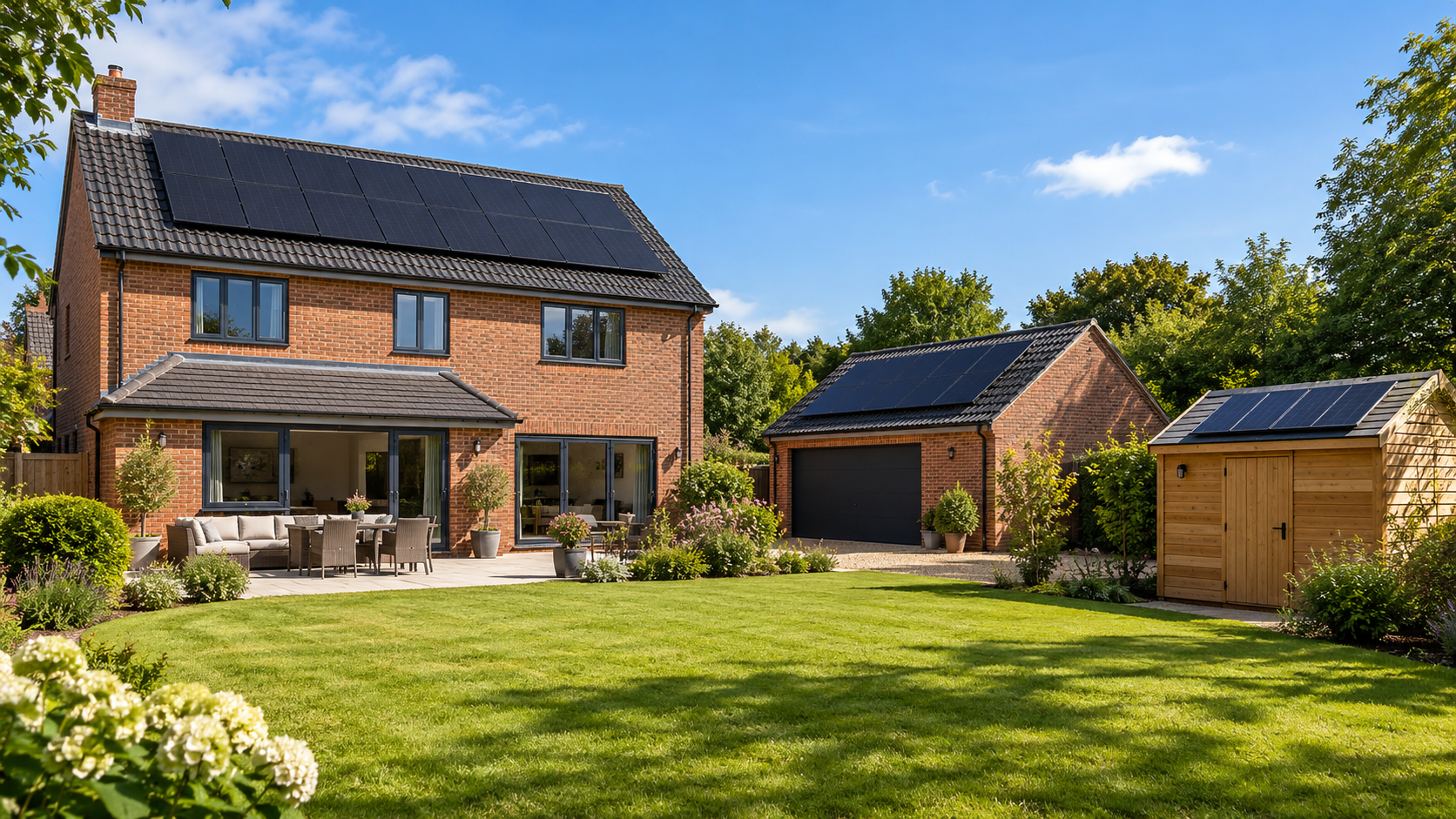
Thinking about solar panels for your home, garage, shed or garden office? This free guide explains the main options, what to compare and where to find reliable help. The best system depends on your roof, budget, electricity use and whether you need mains-connected or independent power.
AI-generated illustrative image, not an actual installation testimonial.
1. Where can solar panels go?
- Homes: roof-mounted panels generate electricity for household use.
- Garages: a suitable garage roof can provide an alternative when the house roof is shaded or unsuitable.
- Sheds and workshops: smaller systems can support lighting and charging; larger equipment needs careful sizing.
- Garden offices and summerhouses: match the system to computers, lighting and seasonal use.
- Gardens and land: ground-mounted panels need suitable space and permission checks.
- Caravans, motorhomes and camping: compatible portable or fixed systems can provide power away from mains.
Check roof strength, shading, secure mounting and safe cable routes before choosing equipment. Panels are not suitable for every roof.
2. Which panels are worth comparing?
This is a comparison shortlist based on manufacturers’ published information, not an independently tested ranking or a Sixpence Support UK endorsement. Model specifications, UK availability and warranty terms vary.
- AIKO Neostar: a high-efficiency rooftop range worth comparing where usable roof space is limited. Example Neostar 3S60 manufacturer specification: up to 25% efficiency, a 25-year product warranty and a 30-year performance warranty. This particular panel’s size must suit the roof. Confirm the exact model and warranty terms with the installer.
- LONGi Hi-MO X10: a back-contact rooftop range with published product and performance warranties; check the exact UK model, dimensions and warranty documentation with the installer.
- Jinko Tiger Neo: another residential range to include in installer quotations; compare the exact model, installed price, dimensions and warranty.
- Renogy: off-grid solar kits for sheds, workshops and leisure use. Check what the kit actually includes: a battery, controller, inverter, mountings and cables may need purchasing separately.
- EcoFlow: portable solar panels paired with a compatible power station for camping or occasional use. Portable folding panels are different from permanent rooftop systems.
Higher efficiency means more rated output from a given panel area. It does not guarantee the lowest total cost or the best annual generation on your property.
3. What will it power?
Make a list of appliances, their wattage and hours of use. Lighting, phone charging and a laptop need much less energy than heaters, kettles and large tools. Batteries must cover the intended use and an inverter must handle appliance starting loads.
A small shed kit should not be sold as a solution for running electric heating all winter. UK winter generation is much lower than summer, and shading reduces output.
4. Mains-connected or off-grid?
A mains-connected system works with your property’s electrical supply and may export surplus electricity under an eligible tariff. An off-grid system operates separately and commonly needs battery storage, a charge controller and, for mains appliances, a suitable inverter.
Have a competent installer assess fixed electrical work and any connection from an outbuilding to the home.
5. Costs and realistic savings
Access, scaffolding, roof work, electrical work, system size and batteries can change the total. A domestic solar installation price is not necessarily a solar-plus-battery package or a quote for your home.
Savings depend on location, shading, generation, how much electricity you use yourself, tariffs and export arrangements. Request a written estimate with assumptions and an itemised total. Do not rely on promises of fixed savings or a guaranteed payback period.
Energy Saving Trust — current solar costs and guidance6. Do I need a battery?
A battery stores some surplus solar electricity for later use. It adds cost and is not essential for every household. Compare usable capacity, warranty, expected use and replacement costs.
Standard solar installations generally do not supply electricity during a power cut: backup requires specifically designed equipment and installation. Ask the installer exactly what continues to work.
7. Choosing a trustworthy installer
Use the official MCS installer directory for household renewable systems and check consumer-code membership such as RECC. Get at least 3 written quotes.
- Ask for the exact panel and inverter models, forecast annual generation, panel layout and shading assessment.
- Check the full installed cost, workmanship cover, product and performance warranties, deposit protection and aftercare.
- Ask who handles any required network paperwork.
A product warranty covers specified defects; a performance warranty concerns output under its terms. Neither automatically covers every labour, access or replacement cost. Avoid pressure to sign immediately.
8. Permission and export payments
Before ordering, check requirements for your nation — England, Scotland, Wales or Northern Ireland — local authority, property type and installation. Listed buildings, conservation areas, ground-mounted arrays and rented or leasehold properties can need additional checks or consent.
Ask the installer about distribution network requirements. Export-payment eligibility and rates vary; use current official guidance and supplier terms rather than assuming any installation qualifies.
9. Questions before you buy
- Is my roof structurally suitable, and how much shade is there?
- What is included in the quote, and what annual generation is forecast?
- Do I need a battery, and can I expand later?
- What happens in a power cut?
- Who handles faults?
- What consents and network paperwork are needed?
10. Useful official and manufacturer links
Manufacturer links are provided for information. They are not affiliate recommendations or independent test results. Confirm the exact model, UK availability and terms directly.