
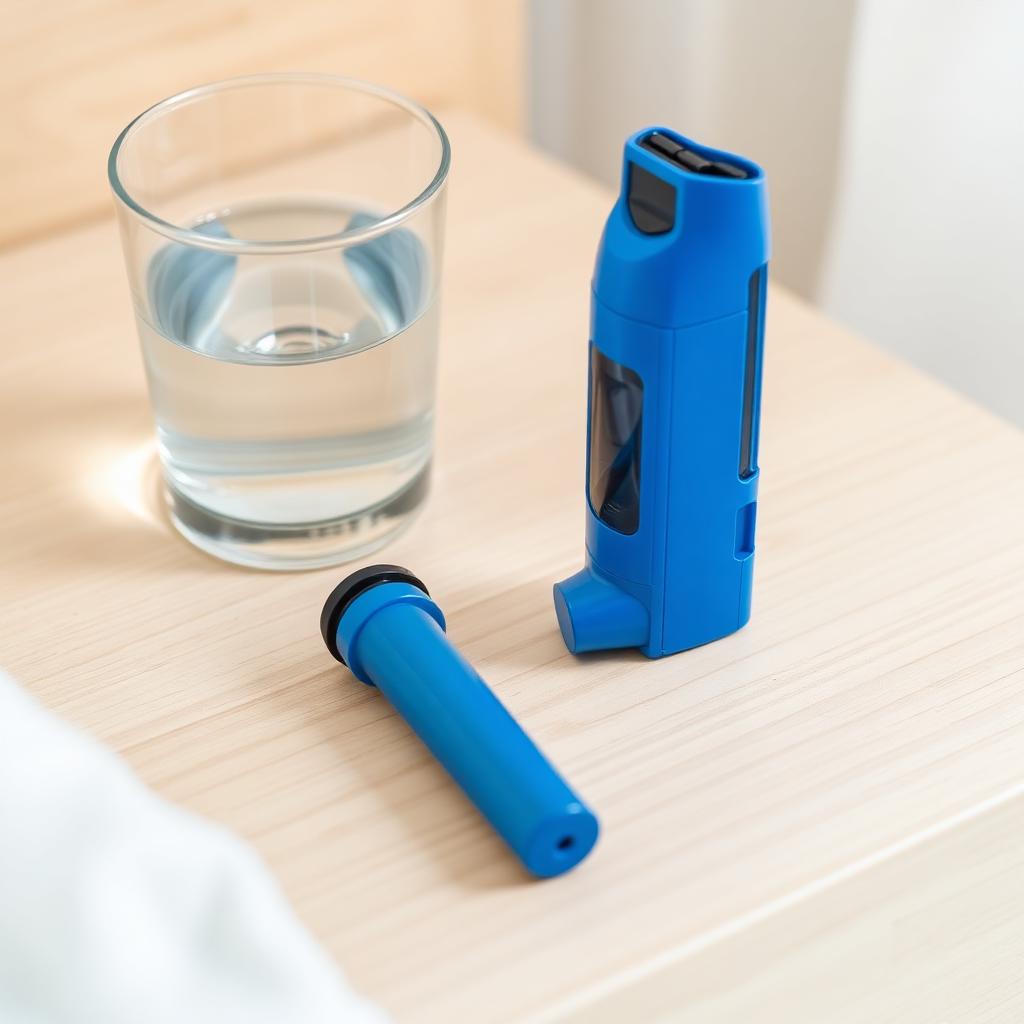
Asthma: Symptoms, Treatment and Staying Well
Asthma affects the airways and can range from mild and occasional to serious and life-threatening. This page explains the symptoms, the warning signs of an asthma attack, how asthma is diagnosed, how treatment works and what helps in everyday life.
What this page covers
Asthma is a common long-term condition affecting the airways. Most people with asthma can live full, active lives when the condition is properly assessed, treated and reviewed.[1]NHS — Asthma
This page is general information only. It cannot diagnose asthma, tell you which inhaler you should use, or replace your own asthma action plan. Please do not stop, swap or change any prescribed asthma medicine because of something you have read online — speak to your GP, asthma nurse, pharmacist or specialist first.
Asthma attack — what to do
An asthma attack can become serious quickly. Warning signs include:
- wheezing, coughing or chest tightness getting worse
- being too breathless to speak in full sentences, eat or sleep
- breathing faster, or struggling to catch your breath
- a reliever inhaler not helping, or being needed again very soon
- peak-flow readings dropping, if you normally monitor them
- lips or fingers looking blue or grey, drowsiness, confusion or exhaustion
Follow your personal asthma action plan and use your prescribed reliever exactly as your plan and your prescriber have instructed. Plans differ — some people are prescribed a separate reliever, others use an anti-inflammatory reliever (AIR) or maintenance and reliever therapy (MART) — so we do not publish a single universal dose here.[5]NHS — using salbutamol inhalers
Call 999 for an ambulance if symptoms are severe, getting worse, or not improving after using your reliever as instructed in your asthma action plan. Also call 999 if you are having an asthma attack and do not have an inhaler. Do not drive yourself to A&E. Follow the advice given by the 999 call handler.[2]NHS — asthma attack
If you are unwell but it is not an emergency, call NHS 111. Always seek follow-up after an asthma attack, even if you feel better afterwards.
Key points
- Asthma affects the airways and varies a great deal from person to person.
- Symptoms often come and go, and can be worse at night or early in the morning.
- Diagnosis should involve professional assessment and objective testing where possible.
- Everyone with asthma should have a personal asthma action plan.
- Needing a reliever more often can be a sign asthma is not well controlled.
- Never stop or change asthma medicines without professional advice.
What asthma is
In asthma, the airways that carry air in and out of the lungs are more sensitive than usual. When they react to something — an infection, cold air, an allergen or another trigger — the lining becomes inflamed and swollen, the muscles around the airways tighten, and sticky mucus can build up. The airways narrow, so breathing becomes harder and noisier.[1]NHS
Asthma is not the same for everyone. Some people have occasional mild symptoms only when they have a cold or exercise in cold air. Others have symptoms most days, or have severe asthma that needs specialist care. The same person can also change over time: asthma can settle for long periods and then flare.
Because severity varies, treatment is personal. Two people with asthma may be prescribed completely different inhalers and different plans, and that is normal.
Common symptoms
- Wheezing — a whistling sound when breathing, often when breathing out.
- Coughing — often dry, and frequently worse at night or after exercise.
- Breathlessness — feeling short of breath or unable to get enough air.
- Chest tightness — a heavy, gripping or squeezing feeling in the chest.
These symptoms often follow a pattern. They may be worse at night or in the early morning, worse at certain times of year (for example during pollen seasons), or clearly worse after a particular trigger such as a cold, cold air, animals or exercise.[1]NHS
A recurring pattern like this is worth writing down and taking to a GP or asthma nurse — it helps with assessment far more than trying to describe symptoms from memory.
When to contact a GP, asthma nurse or NHS 111
Contact your GP surgery or asthma nurse if:
- you have new or recurring asthma-like symptoms that have not been assessed
- you are waking at night because of coughing, wheezing or breathlessness
- symptoms are limiting work, school, exercise, sleep or normal daily activities
- you are needing your reliever inhaler more often than usual
- your treatment does not seem to be working as expected
- you have had an asthma attack and need a follow-up review
Use NHS 111 if you need advice urgently and the surgery is closed, and 999 in an emergency as described above.
How asthma is diagnosed
Asthma should not be confirmed from symptoms alone. NICE, the British Thoracic Society and SIGN recommend a combination of clinical history and objective tests, because other conditions can cause very similar symptoms.[3]NICE NG245
Clinical history
A clinician will ask about the pattern of symptoms, what makes them better or worse, hay fever and eczema, family history, smoking and vaping, work exposures and pets. This shapes which tests are used.
FeNO testing
FeNO measures nitric oxide in your breath, which can indicate a type of airway inflammation often seen in asthma. You simply breathe out steadily into a handheld device.
Spirometry and bronchodilator reversibility
Spirometry measures how much air you can blow out and how quickly. If it shows narrowed airways, the test may be repeated after a bronchodilator to see whether the airways open up (reversibility).
Peak-flow monitoring
Where clinically appropriate, you may be asked to record peak-flow readings at home over a period of time. Variation across the day or between days can support a diagnosis and is also useful later for monitoring.
Blood eosinophil testing
A blood test can measure eosinophils, a type of white blood cell linked to the inflammation seen in some asthma. It is one piece of the picture rather than a stand-alone answer.
If the diagnosis is still unclear
Tests can be normal when asthma is settled, and results are not always clear-cut. In that situation you may be asked to repeat testing when symptomatic, be given a monitored trial of treatment, or be referred for specialist assessment. Asking “what is the plan if this test is normal?” is reasonable.
Common triggers
Triggers differ from person to person, and most people have more than one. Learning your own pattern is more useful than avoiding everything.
- Colds and chest infections — one of the most common causes of flare-ups.
- Pollen, house-dust mites and animals, including pets and some workplaces or farms.
- Damp and mould in the home.
- Tobacco smoke, including second-hand smoke.
- Vaping and exposure to vapour from others.
- Air pollution, traffic fumes, smoke from fires and strong chemical smells.
- Cold air and sudden weather changes, including thunderstorms.
- Exercise, especially in cold, dry air.
- Stress and strong emotions, including laughing hard or crying.
- Workplace substances such as flour dust, wood dust, isocyanates, solvents and cleaning products.
- Some medicines can affect certain people — tell any prescriber or pharmacist that you have asthma.
Avoiding a trigger is sensible where it is realistic and harmless to do so. But you should not give up exercise, hobbies, work or normal family life to avoid symptoms — that is usually a sign asthma control needs reviewing, not a sign to withdraw. Speak to your GP or asthma nurse instead.
Treatment explained in plain English
Asthma treatment aims to calm airway inflammation, keep symptoms away and prevent attacks — not simply to relieve symptoms once they start.
Preventer inhalers
Preventers usually contain an inhaled corticosteroid. They reduce the underlying inflammation in the airways and are taken regularly, even when you feel well. They do not give instant relief.
Reliever inhalers
Relievers open the airways quickly during symptoms. Needing a reliever often is an important warning sign that asthma is not well controlled and should prompt a review.
Combination inhalers, AIR and MART
A combination inhaler contains an inhaled corticosteroid together with a long-acting bronchodilator such as formoterol. In AIR (anti-inflammatory reliever), a combination inhaler is used as needed for symptoms, so treatment of inflammation happens at the same time as relief. In MART (maintenance and reliever therapy), the same combination inhaler is used both regularly and as needed for symptoms.[3]NICE NG245
Which approach is right — and how it is used — is an individual prescribing decision. We do not publish doses or regimens here.
What NG245 changed
The 2024 joint NICE, BTS and SIGN guideline (NG245) updated recommendations on diagnosis, monitoring and chronic asthma management in a single national guideline. It moved treatment for many people towards inhaled corticosteroid–containing regimens used as AIR or MART, rather than relying on a short-acting bronchodilator alone, because treating the underlying inflammation is central to reducing risk.[4]NICE NG245 — update information
Guidelines change, and moving people to a new regimen happens through clinical review. If you are still on an older regimen, that is a conversation to have at your next asthma review — not a reason to change anything yourself.
Your own treatment depends on your age, your symptoms, your diagnosis and the specific inhaler device you have been prescribed. Do not stop, swap, share or alter asthma medicines — including buying alternatives online — without speaking to your GP, asthma nurse, pharmacist or specialist.
Inhaler technique and spacers
An inhaler only works if the medicine reaches the airways. Poor technique is common and can look exactly like “the inhaler is not working”, sometimes leading to unnecessary changes in treatment.
- Ask a pharmacist, GP or asthma nurse to watch you use your inhaler and check your technique — at least once a year, and whenever your device changes.
- Devices work differently. Pressurised aerosol inhalers, dry-powder inhalers and breath-actuated inhalers each need a different breathing technique, so advice for one device may be wrong for another.
- A spacer is a plastic chamber used with some aerosol inhalers. It can make the medicine easier to take, especially for children or during symptoms, when a spacer has been recommended for you.
- Follow the cleaning and storage instructions in the leaflet supplied with your own inhaler and spacer, and check the expiry date and dose counter.
- Order repeat prescriptions in good time so you never run out, and keep a reliever with you if your plan says to. Ask your pharmacy about returning old or unused inhalers for safe disposal.
Personal asthma action plan
A personal asthma action plan is a short written plan, agreed with your GP or asthma nurse, that tells you exactly what to do day to day and what to do when things get worse. Everyone with asthma should have one, including children.[6]Asthma + Lung UK
A good plan usually covers:
- your usual treatment and how to take it
- your personal triggers and what helps
- what worsening symptoms look like for you, and what to do about them
- what to do in an asthma attack, including when to call 999
- contact details for your GP surgery, asthma nurse or specialist team
- peak-flow readings and what your numbers mean, if you monitor them
Keep a copy where you can find it quickly — on your phone, on the fridge, and with school, college or work if relevant. Your plan should be reviewed after any asthma attack and at every regular asthma review.
Reviews and signs asthma may not be controlled
Asthma is a long-term condition and needs regular review, even when you feel well. You should normally be offered an annual asthma review, and an additional review after an asthma attack or after a change in treatment.[3]NICE NG245
Things that suggest asthma may need reassessing include:
- waking at night with asthma symptoms
- symptoms limiting exercise, work, school or everyday activities
- needing courses of oral steroids, especially more than once
- attending A&E, an urgent care centre or being admitted to hospital
- using a reliever inhaler more often, or getting through them more quickly
A review is also the right place to check inhaler technique, discuss how easy or difficult it is to take treatment regularly, and update your action plan. Please do not try to grade your own level of control or adjust treatment yourself — bring what you have noticed to your GP or asthma nurse and decide together.
Children, teenagers and schools
- Diagnosis and treatment are age-appropriate: some tests are difficult for young children, and different inhalers and spacers are used at different ages.
- Make sure medicines and a copy of the action plan are available wherever the child is — at home, at school or college, at clubs and with grandparents or carers.
- Tell the school or college about the diagnosis, the plan and any emergency arrangements, and check who is responsible for holding medicines.
- Encourage exercise. Sport should not be off-limits — if it consistently triggers symptoms, ask for a review rather than dropping out.
- Teenagers may feel embarrassed using an inhaler in front of others. Talking about this openly, and discussing smoking and vaping honestly, matters more than telling them off.
- Specialist referral may be needed if the diagnosis is uncertain, symptoms are severe, attacks keep happening, or treatment is not working.
A note for families finding us through our videos: the “not Made for Kids” setting on YouTube is a platform audience label about comments and features. It has nothing to do with whether this health information can help young people and their families — this page is written for everyone.
Work and occupational asthma
Some asthma is caused or made worse by substances at work. Clues include symptoms that improve on days away from work, at weekends or on holiday, and return when you go back.[7]HSE
- Keep a simple record of symptoms, dates, tasks and any peak-flow readings.
- Tell your GP what you do at work and what you are exposed to.
- Ask about referral for specialist assessment if occupational asthma is suspected.
- Speak to your employer, occupational health service or safety representative about exposure controls.
Occupational asthma can improve if it is identified early, so it is worth raising rather than waiting.
Pregnancy and breastfeeding
Do not stop or reduce asthma medicines because you are pregnant or breastfeeding. Poorly controlled asthma carries risks for both parent and baby, so keeping asthma well controlled is important.[1]NHS
- Tell your midwife and maternity team that you have asthma.
- Ask for an asthma review during pregnancy, and again if symptoms change.
- Keep your action plan up to date and keep your reliever with you.
- Discuss any concerns about medicines with your GP, asthma nurse, pharmacist or specialist first.
Everyday life with asthma
- Exercise and activity. Being active is good for your lungs and general health. If exercise reliably brings on symptoms, ask for a review — many people with asthma exercise at a high level.
- Travel. Carry your inhalers in hand luggage, take enough for the trip plus spares, keep them in their original packaging, and take a copy of your action plan and prescription details.
- Smoking and vaping. Stopping smoking is one of the most useful things you can do for asthma, and free NHS support is available.[9]NHS Better Health
- Vaccinations. People with asthma may be advised to have seasonal vaccinations such as the flu vaccine. Check your eligibility with your GP surgery or pharmacy.[8]NHS
- Damp, mould and housing. Damp and mould can worsen asthma. Report problems to your landlord in writing and keep copies; free advice is available if repairs are not carried out.[12]Shelter
- Emotional wellbeing. Breathlessness is frightening, and anxiety about attacks is common. Anxiety can also make breathing feel worse. Talk to your GP — support is available and this is taken seriously.
Useful official sources
In a life-threatening emergency, always call 999.
Other pages that may help
Please speak to a healthcare professional
Sixpence Support UK provides general information only. We cannot examine anyone, give a diagnosis, or recommend medicines or doses, and this page is not a substitute for advice from a qualified healthcare professional. Please do not stop prescribed treatment on the basis of information found online. If symptoms are severe, worsening or worrying you, contact a GP, pharmacist or NHS 111 — and call 999 in an emergency.
Trusted organisations and further support
Independent UK organisations for asthma and lung health
These are separate organisations, not NHS services. Please take telephone numbers and opening hours from their own current pages. Each button opens the organisation’s official website in a new tab.
These organisations are independent of Sixpence Support UK. Their inclusion is for information and signposting and does not imply a partnership or endorsement.
- [1] NHS. Asthma · 2026
- [2] NHS. Asthma attack · 2026
- [3] NICE / BTS / SIGN. Asthma: diagnosis, monitoring and chronic asthma management (NG245) — recommendations · 2024
- [4] NICE / BTS / SIGN. Asthma (NG245) — update information · 2024
- [5] NHS. How and when to use salbutamol inhalers · 2026
- [6] Asthma + Lung UK. Asthma action plans · 2026
- [7] Health and Safety Executive. Occupational asthma · 2026
- [8] NHS. Flu vaccine · 2026
- [9] NHS. Quit smoking — Better Health · 2026
- [10] NHS. How to register with a GP surgery · 2026
- [11] NHS 111. Get help for your symptoms (England) · 2026
- [12] Shelter. Damp and mould in rented homes · 2026