
Child Health and Development
Everyday childhood illness, development and milestones, speech and language, hearing, eyesight and teeth, food and activity, sleep, toileting, and knowing when to contact a GP, NHS 111 or 999.
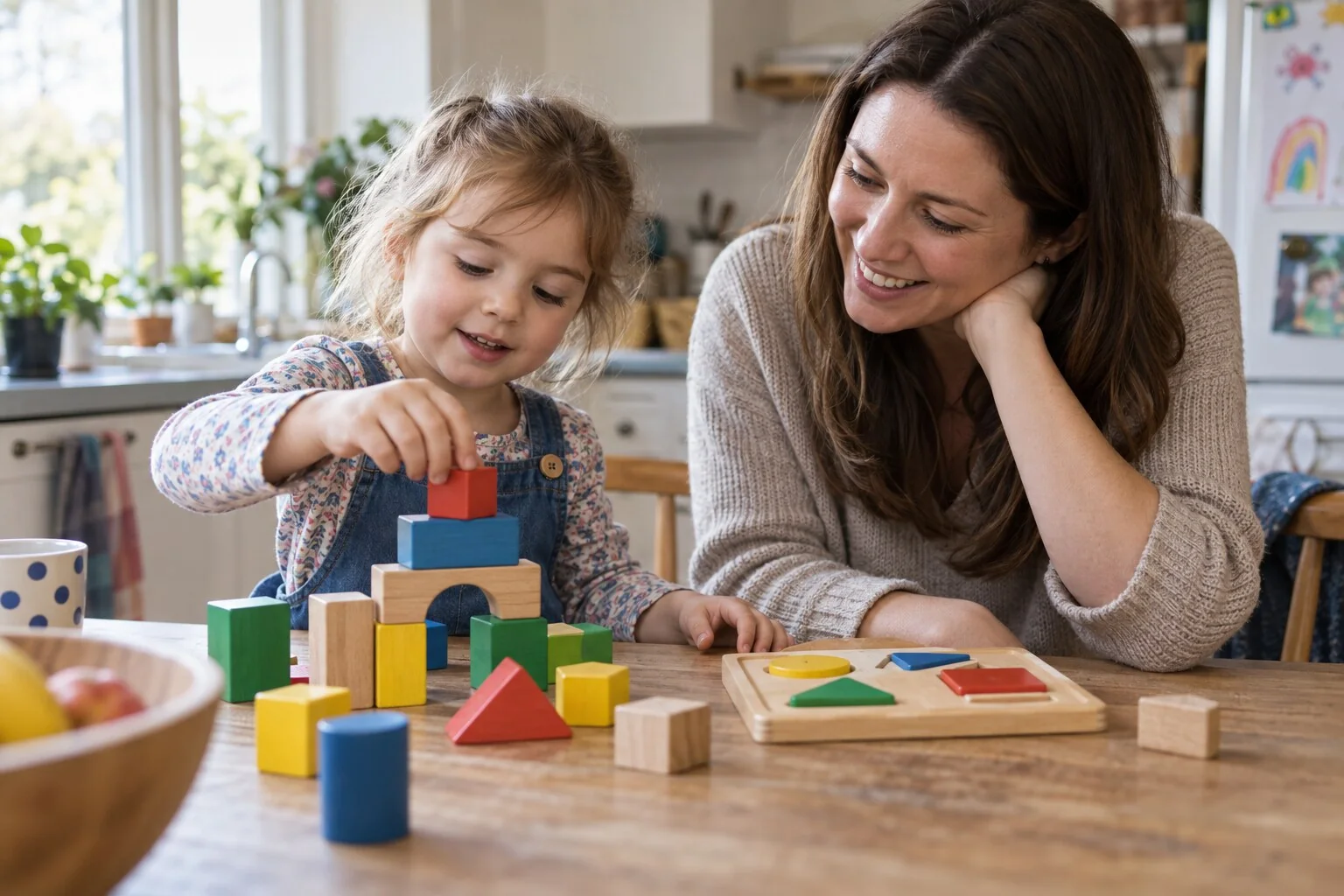
Most childhood illness is mild, but some signs need urgent action
Children pick up frequent coughs, colds, temperatures and tummy upsets, especially once they start nursery or school. Most settle at home with rest and fluids. The important skill is recognising the small number of signs that mean a child needs to be seen urgently, and knowing which service to contact.
This page covers everyday health and development from babyhood to the teenage years. If you have a specific worry about how your child is developing, a GP or health visitor can refer for assessment — you do not need to wait and see.
Signs a child needs urgent help
Call 999 or go to A&E if a child:
- Is struggling to breathe, is grunting, or has pauses in breathing
- Is blue, grey, very pale or mottled, or is cold and floppy
- Is unresponsive, extremely drowsy, confused, or has had a fit
- Has a rash that does not fade when you press it
- Has a stiff neck, dislikes bright light, or has a severe headache with a fever
- Has a serious injury, a deep burn, or may have swallowed medicine, chemicals or a battery
- Is a baby under three months with a temperature of 38°C or above
Contact NHS 111 or your GP the same day if a child:
- Is drinking much less than usual, or is passing far fewer wet nappies or less urine
- Has a temperature that will not come down, or a fever lasting more than five days
- Is vomiting repeatedly, or has blood in vomit or stools
- Has ear pain, a painful rash, or a limp or joint that will not take weight
- Seems to be getting worse rather than better, or is not their usual self
Trust your instinct. Ring back if a child deteriorates after advice, and say plainly that they have got worse since you last called.
Which service, and when
- 999 — a child is seriously ill or injured, cannot breathe properly, is unresponsive, or life may be at risk.
- NHS 111 — you need help urgently but it is not an emergency, or it is out of hours. Available by telephone and online, day and night.
- GP surgery — illness that is not improving, development concerns, referrals, repeat problems and ongoing conditions.
- Pharmacist — advice on minor illness, rashes, coughs and medicines, with no appointment needed.
- Health visitor or school nurse — feeding, sleep, behaviour, toileting, development and family wellbeing.
- Dentist — toothache and dental injuries. NHS dental care is free for children.
Open the section that matches your situation
Each heading row below is a button and opens the information underneath it.
Childhood illnesses
Our separate childhood illnesses page covers common infections, rashes, temperatures and what to do at home, alongside the warning signs above.
- Keep fluids going, in small amounts often, and let a child rest.
- Follow the dosing instructions on the medicine packaging, or ask a pharmacist. We never give doses.
- Ask the pharmacist before combining medicines or giving anything to a very young child.
- Check school and nursery return guidance for infections such as chickenpox and sickness.
- Keep vaccinations up to date, and catch up if any have been missed.
Development and milestones
Children develop at different rates, and a wide range is normal. Milestones are a guide for noticing when extra help might be useful, not a test to pass.
- Health visitor reviews look at movement, speech, play, hearing, vision and behaviour.
- Raise concerns as they occur, rather than waiting for the next review.
- Ask for an assessment if your child loses a skill they had, is not making progress, or something about their development worries you or their nursery or school.
- Being born prematurely affects expected timings; ask for corrected-age guidance.
- Play, reading, singing and talking every day support all areas of development.
- Nursery and school staff can refer to specialist services with your agreement.
Speech, language and communication
- Talk, sing, name things and give a child time to answer, without correcting constantly.
- Reading together daily from babyhood is one of the strongest supports for language.
- Limit background television and screens during play and mealtimes.
- Ask for a speech and language therapy referral through your GP, health visitor or nursery if you are concerned about how your child speaks or understands.
- Stammering, unclear speech and late talking all have specialist support available.
- A hearing check is often the first step when language is delayed.
- Bilingual children are not delayed by learning two languages.
Hearing, eyesight and dental care
- Hearing. Newborn screening happens shortly after birth. Ask for a further check if your child does not respond to sound, has frequent ear infections, speaks loudly or is behind with speech.
- Eyesight. NHS sight tests are free for children. Ask for a test if your child squints, sits very close to screens, rubs their eyes, tilts their head or has difficulty at school. School vision screening does not replace a full eye test.
- Teeth. Register a child with a dentist as soon as teeth appear. NHS dental care is free for children. Brush twice daily with fluoride toothpaste suitable for their age, supervise brushing until around seven, and avoid sugary drinks and bedtime bottles.
- For dental pain out of hours, contact your dental practice’s emergency line or NHS 111. Do not go to A&E unless there is facial swelling, breathing difficulty or a serious injury.
Healthy eating and physical activity
- Offer regular meals and snacks with the family, at a table where possible.
- Fussy eating is common in toddlers. Keep offering food without pressure, and involve children in preparing it.
- Water and milk are the best everyday drinks. Limit fruit juice and avoid energy drinks entirely.
- Children and young people need physical activity every day, including active play and time outdoors.
- Free and low-cost activity is available through parks, libraries, holiday schemes and community clubs.
- Speak to a health visitor, school nurse or GP if you are worried about weight, growth or eating patterns.
- Ask a GP for advice rather than putting a child on a restrictive diet.
Sleep problems in children
- Keep a consistent bedtime and a calm wind-down routine, including at weekends.
- Screens off well before bed, and keep them out of the bedroom where possible.
- Avoid caffeine, including cola and energy drinks, from the afternoon onwards.
- Night waking, nightmares and bedtime resistance are common and usually improve with routine.
- Talk to a GP about snoring with pauses in breathing, extreme daytime sleepiness or persistent night terrors.
- Sleep problems often come alongside anxiety; treating the worry usually improves sleep.
Toileting, potty training and bedwetting
- Most children are ready for potty training somewhere between eighteen months and three years.
- Look for readiness signs rather than a date: staying dry longer, telling you they need to go, and interest in the potty.
- Keep it calm and praise effort. Accidents are part of learning and should not be punished.
- Constipation is a very common cause of accidents and soiling. Speak to a GP, because it needs treating properly.
- Bedwetting is common in young school-age children and is not laziness. Support is available through your GP or school nurse.
- Ask a GP about sudden new wetting, pain when passing urine, or blood in urine.
- Schools must support children with continence needs, including toilet access and spare clothing.
Trusted UK sources for child health
- NHS – baby and child development (opens in a new tab)
- NHS 111 online (opens in a new tab)
- NHS – how to register with a GP surgery (opens in a new tab)
- NHS Healthier Families (opens in a new tab)
- Speech and Language UK (opens in a new tab)
- ERIC – bowel and bladder charity for children (opens in a new tab)
- National Deaf Children’s Society (opens in a new tab)
Important information
Sixpence Support UK provides general information and signposting only. This page does not diagnose conditions and never gives medicine doses. Always follow the instructions on medicine packaging and speak to a pharmacist, GP, health visitor or NHS 111 about your own child. In an emergency, ring 999.