
Eczema: Symptoms, Treatment and Everyday Support
Eczema is a group of conditions that make skin dry, itchy, cracked or inflamed. This page explains the main types, what tends to help day to day, how treatments are used, and the signs that mean you should get medical help quickly.
What this page covers
Eczema is very common and, for most people, it can be managed well at home with the right routine and the right treatments. It can still be exhausting: the itch is real, sleep suffers, and flare-ups often arrive without an obvious reason.
This page is general information only. It cannot tell you whether your own skin problem is eczema — several conditions look similar — and it is not a diagnosis or a promise of a cure. Please do not stop or change any prescribed treatment because of something you have read online, here or anywhere else. Speak to a GP, pharmacist, practice nurse or dermatology team instead.
Key points
- Eczema causes dry, itchy, cracked, sore or inflamed skin. It is not contagious.
- Atopic eczema is the most common type and often starts in childhood, but it can affect any age.
- Symptoms come and go: settled periods are often followed by flare-ups.
- Eczema can look different on different skin tones — it is not always red.
- Moisturisers (emollients) used regularly are the foundation of most treatment.
- Scratching damages the skin and raises the risk of infection.
- Not every rash is eczema, so an assessment may be needed.
Signs of infection — get medical advice promptly
Eczema-affected skin can become infected. Infected eczema often needs treatment and should not be left to see whether it settles. Contact a GP, or NHS 111 if the surgery is closed, if you notice:
- eczema that is getting worse quickly
- skin that is painful, hot or swollen
- fluid leaking from the skin, pus, or yellow or golden crusting
- a fever, shivering or feeling generally unwell
- clusters of small painful blisters
- eczema that suddenly becomes very painful
Possible eczema herpeticum — urgent same-day help
Eczema herpeticum is uncommon but serious. It happens when the cold sore virus infects skin affected by eczema, and it can spread quickly. It needs urgent, same-day assessment.
Contact a GP urgently or call NHS 111 the same day if there is:
- eczema that is spreading fast and is unusually painful
- groups or clusters of small blisters
- small round “punched-out” sores or ulcers on the skin
- a high temperature, shivering or feeling very unwell
- blisters or sores near or around the eyes
Call 999 or go to A&E if the person is seriously unwell, is having difficulty breathing, has severe swelling of the face, lips or tongue, or there is any other life-threatening emergency.
What eczema is
Eczema (also called dermatitis) is a group of conditions in which the skin barrier does not hold moisture well and becomes easily irritated and inflamed. The skin may be dry, itchy, cracked, sore or thickened, and it often feels tight or sensitive.
- It is not contagious. You cannot catch eczema from someone else or pass it on.
- It fluctuates. Skin can be settled for weeks or months and then flare — sometimes with an obvious trigger, sometimes not.
- Atopic eczema often begins in childhood. Many children improve as they grow up, but eczema can continue into adulthood or start for the first time in adult life.
- It looks different on different skin tones. On paler skin it often appears red or pink. On brown and black skin it may look purple, grey, ashen or darker than the surrounding skin, and inflammation can be easier to feel than to see.
- Scratching makes things worse. It damages the skin surface, keeps the itch cycle going and increases the risk of infection.
Types of eczema and dermatitis
Different types behave differently and may be managed differently. Because several skin conditions look alike, a proper assessment is sometimes needed before assuming a rash is eczema.
Atopic eczema
The most common type. It tends to run in families alongside asthma and hay fever, and often affects the creases of the elbows and knees, the hands, face and neck — though it can appear anywhere. In babies it often shows on the face and scalp.
Contact dermatitis
A reaction where the skin has touched something that irritates it (such as detergents, solvents or frequent handwashing) or something the person has become allergic to (such as nickel, fragrances or certain glues and rubber chemicals). It often affects the hands and is common in some occupations.
Discoid eczema
Coin-shaped or oval patches of irritated skin, often on the lower legs, forearms or trunk. Patches can be very itchy and may weep or crust before becoming dry and scaly.
Pompholyx (dyshidrotic eczema)
Small, intensely itchy blisters on the palms, sides of the fingers or soles of the feet. Blisters may later dry and peel. It can be uncomfortable and can make gripping or walking difficult during a flare.
Seborrhoeic dermatitis
Affects areas with more oil glands — the scalp, eyebrows, sides of the nose, ears and chest — causing flaking, scaling and sometimes redness or irritation. Dandruff is a mild form on the scalp. In babies a related condition is often called cradle cap.
Varicose eczema
Also called gravitational or stasis eczema. It affects the lower legs, usually in people with problems with the leg veins. The skin may be itchy, discoloured, tight or shiny, and there is an increased risk of skin breakdown and leg ulcers, so it should be assessed rather than simply moisturised.
Common symptoms
Not everyone has every symptom, and severity varies a great deal from person to person and from week to week. Symptoms can include:
- dry, rough or scaly skin
- itching, which may be worse at night
- inflammation — redness on paler skin; purple, grey, ashen or darker patches on brown and black skin
- cracked, sore or bleeding skin, especially over joints and on the hands
- small blisters in some types, such as pompholyx
- weeping or crusting during a flare
- thickened, leathery skin (lichenification) after repeated scratching
- lighter or darker marks left behind after a flare settles
- disturbed sleep, tiredness and difficulty concentrating at work or school
Common triggers and flare-ups
Triggers differ from person to person, and many flares have no obvious cause at all. Some people find it useful to keep a simple note of flares and what was happening at the time. Possible triggers include:
- soaps, bubble baths, detergents and fragranced products
- heat, sweating and sudden changes in temperature
- cold, dry weather and indoor heating
- certain fabrics, such as wool or rough seams and labels
- stress, worry and poor sleep
- skin infections
- house dust mites, pollen, pet dander or workplace irritants
- hormonal changes, including around periods and pregnancy
- occupational exposure — cleaning products, chemicals, wet work and frequent handwashing
Please be careful with food and diets
Food is only rarely the main driver of eczema. Cutting foods out can lead to poor nutrition, and in children it can affect growth and development. Do not remove foods from a child’s diet without advice from a GP, paediatrician or registered dietitian, and be cautious about commercial allergy tests sold online — many are not reliable. If you think food is playing a part, raise it with a qualified healthcare professional who can arrange proper assessment.
Everyday skin care
A steady, unglamorous routine usually does more good than any single product. The aim is to keep the skin barrier moisturised and to reduce contact with things that irritate it.
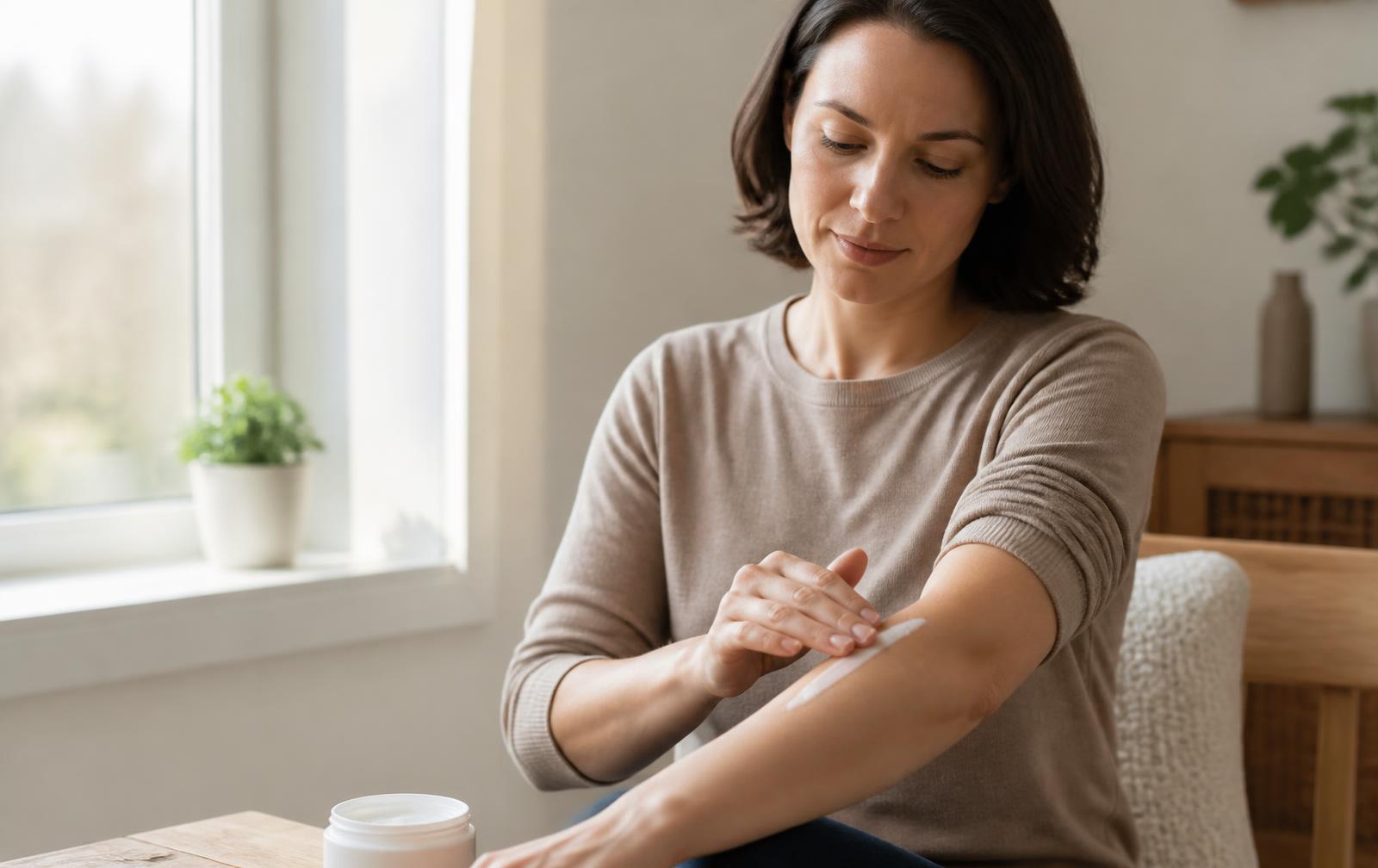
- use emollients (moisturisers) regularly and generously, as advised — including when the skin looks settled
- apply gently in the direction of hair growth rather than rubbing in hard
- use a soap substitute or emollient wash where this has been recommended
- keep baths and showers comfortably warm rather than hot, and pat skin dry
- keep fingernails short and smooth; cotton mittens can help babies at night
- avoid overheating — layers, lighter bedding and a cooler bedroom often help the itch
- choose comfortable, loose clothing and remove scratchy labels
- rinse laundry thoroughly and avoid detergents or conditioners that seem to irritate the skin
- carry moisturiser when away from home, at work or at school
- take emollient from a tub with clean hands or a clean spoon, to avoid contaminating the pot — pump dispensers are often easier
Fire safety warning — emollients and fabrics
Emollient residue soaks into clothing, bedding, dressings and bandages and can make fabric catch fire more easily and burn faster. This applies to paraffin-based and paraffin-free products alike.
- Keep away from cigarettes, e-cigarette charging, lighters, matches and naked flames.
- Keep away from gas fires, open fires, candles, hobs and other heat or ignition sources.
- Do not smoke in bed or while wearing treated clothing or dressings.
- Washing at the highest temperature the fabric allows reduces the build-up but may not remove it completely.
Treatments
Treatment is usually stepped: everyone uses emollients, and other treatments are added during flares or for more severe eczema. This page does not give doses — follow the instructions from your clinician or pharmacist and the leaflet that comes with the medicine.
Emollients and moisturisers
The foundation of eczema care. They come as lotions, creams, ointments and washes; greasier products usually hold moisture better but can feel heavy. The best emollient is the one a person will actually use often enough, so it is fine to ask to try a different one.
Topical corticosteroids (steroid creams and ointments)
Used to calm inflammation during flares. Strengths vary widely, from mild products used on the face to very potent ones for thicker skin, and they are matched to the person, the site and the severity. Use them as instructed — for the length of time advised — and speak to a clinician or pharmacist if you are unsure how much or how long.
There is a lot of frightening content online about steroid creams. Concerns are worth discussing, but undertreated eczema causes harm too. Please do not stop prescribed treatment because of online claims — raise your worries with a GP, pharmacist or dermatology team and agree a plan.
Topical calcineurin inhibitors
Non-steroid anti-inflammatory creams and ointments (such as tacrolimus and pimecrolimus) that a clinician may prescribe, often for delicate areas like the face and eyelids or where steroids are not suitable for long-term use.
Wet wraps and dressings
Damp layers or specialist garments applied over treatment can soothe the skin and reduce scratching. These should only be used when a healthcare professional has advised and shown you how, as using them incorrectly can increase how much medicine is absorbed.
Treating infection
Infected eczema may need antibiotics or antiviral medicine, and sometimes antiseptic measures. This needs assessment rather than guesswork — see the infection panel above.
Antihistamines
Antihistamines do not treat the eczema itself. A clinician may occasionally suggest a short course of a sedating antihistamine where itching is badly disrupting sleep. They are not a routine treatment and are not suitable for everyone, including some young children.
Phototherapy
Carefully controlled ultraviolet light treatment given in a hospital or specialist clinic, usually over several weeks, for eczema that has not responded to topical treatment. It is not the same as using a sunbed, which is not a treatment for eczema.
Tablets and injections for severe eczema
For severe eczema, a dermatology specialist may consider medicines that damp down the immune response — immunosuppressant tablets, or newer biologic injections and targeted tablets. These need specialist assessment, monitoring and a discussion of benefits and risks.
A word on unproven products
There is no cure for eczema, and no “detox”, cleanse, miracle cream or restrictive diet has been shown to cure it. Some unregulated creams sold online have been found to contain undeclared steroids. If a product promises a cure, treat that promise with caution and ask a pharmacist.
Eczema in babies and children
Eczema is common in babies and young children and often improves with age. The routine matters more than any single product, and parents and carers should not feel blamed when skin flares.
- keep skin moisturised every day, not only during flares — most children need emollient several times a day
- itching frequently disturbs sleep, for the child and for the whole household; say so at appointments, because it is a measure of severity
- tell nursery or school about prescribed treatments, when they should be applied, and known triggers
- ask for a written treatment plan so different carers follow the same routine
- try not to scold a child for scratching — distraction, cool compresses and keeping nails short usually help more
- ask for medical advice if feeding, growth, sleep, mood, school or everyday life are being affected
- check any medicine questions with a pharmacist or GP; Medicines for Children has plain-English leaflets written for parents
Eczema and mental wellbeing
Living with eczema is not only a skin problem. Constant itching, broken sleep and visible skin changes can affect confidence, mood, concentration, relationships, school and work. Comments from other people, or worries about being seen as contagious, can be wearing.
- tell your GP if eczema is affecting your mood, sleep or daily life — it is a legitimate part of the consultation
- ask about adjustments at work or school: gloves, changes to wet work, uniform flexibility, time for treatment, or exam considerations
- peer support can help; the National Eczema Society offers information and a helpline
- talking therapies and habit-reversal approaches can help some people break the scratch cycle
- if someone feels unable to cope, or is having thoughts of harming themselves, get help now — contact NHS 111, a GP urgently, or call 999 in an emergency
When to contact a GP
Please make an appointment if:
- symptoms are severe, widespread or keep coming back
- itching is stopping sleep or normal activities
- the treatment you have is not helping, or has stopped helping
- you think the skin may be infected (see the panel above)
- you are not sure whether the problem is eczema at all
- eczema affects the eyes or eyelids, face, genitals, hands, or a large area of the body
- a baby or young child has significant symptoms, or eczema is affecting feeding, growth or sleep
- eczema is affecting mental wellbeing, confidence, school or work
A GP can also refer to a dermatology service if the diagnosis is uncertain, the eczema is severe, or usual treatments are not working.
Preparing for an appointment
Appointments are short. Taking a few notes usually makes them more useful:
- when did the symptoms begin, and how have they changed?
- where on the body do they appear?
- what makes them better or worse?
- which products, treatments and medicines have already been tried, and for how long?
- is sleep being affected — for the person, or for the family?
- are there any signs of infection?
- are work, school, hobbies or daily activities affected?
- take photographs of flare-ups, because skin often looks calmer on the day of the appointment
- bring a list or photographs of soaps, washes, creams and detergents currently used
- write down your questions in advance, and ask for a written treatment plan
Living with eczema
Triggers and treatments vary, so treat the following as ideas to test rather than rules. What works for one person may not suit another.
Sleep
A cooler bedroom, lighter bedding, cotton nightwear, short nails and applying emollient before bed all help some people. Persistent sleep loss is a reason to go back to the GP, not something to endure.
Washing and bathing
Comfortably warm rather than hot water, a soap substitute if recommended, limited time in the bath, patting dry and moisturising soon afterwards.
Clothing
Soft, loose, breathable fabrics; removing labels; avoiding wool next to the skin if it irritates; rinsing new clothes before wearing.
Swimming
Swimming is usually fine. Applying emollient beforehand, showering promptly afterwards and moisturising again helps reduce the drying effect of chlorinated water.
Exercise and sweating
Exercise is good for you and worth continuing. Sweat can sting broken skin, so breathable kit, a cool shower afterwards and re-applying emollient often helps.
Work with chemicals or frequent handwashing
Hand eczema is common in cleaning, catering, healthcare, hairdressing and construction. Suitable gloves, cotton glove liners, gentle hand washes, moisturising through the day and speaking to occupational health or your employer about adjustments can all help. If work seems to be causing it, tell your GP.
School and nursery
Share the treatment plan, agree where creams are kept and who applies them, and ask staff to allow moisturising during the day. Ask for support if a child is being teased.
Travel
Carry enough treatment for the whole trip plus extra, keep creams in hand luggage where allowed, check liquid rules, and remember that hot, cold or very dry climates and unfamiliar water can affect skin.
Relationships and self-confidence
It is reasonable to tell people that eczema is not contagious and to ask for a bit of understanding. Support groups, and talking to a GP if low mood persists, can make a real difference.
Trusted UK help and information
Related Sixpence Support UK information
Eczema is not always caused by an allergy, and most people with eczema do not need allergy testing. These pages may still be useful.
Please speak to a healthcare professional
Sixpence Support UK provides general information only. We cannot examine anyone, give a diagnosis, or recommend medicines or doses, and this page is not a substitute for advice from a qualified healthcare professional. Please do not stop prescribed treatment on the basis of information found online. If symptoms are severe, worsening or worrying you, contact a GP, pharmacist or NHS 111 — and call 999 or go to A&E in an emergency.
- [1] NHS. Atopic eczema · 2026
- [2] NHS. Contact dermatitis · 2026
- [3] NHS. Discoid eczema · 2026
- [4] NHS. Pompholyx (dyshidrotic eczema) · 2026
- [5] NHS. Varicose eczema · 2026
- [6] NHS. Dandruff and seborrhoeic dermatitis of the scalp · 2026
- [7] NHS. Emollients · 2026
- [8] NHS. Steroid medicines · 2026
- [9] NICE. Atopic eczema in under 12s: diagnosis and management (CG57) · 2023
- [10] NICE. Atopic eczema in children quality standard (QS44) · 2013
- [11] National Eczema Society. Information and advice about eczema · 2026
- [12] National Eczema Society. Support and helpline · 2026
- [13] Medicines for Children. Medicine information leaflets for parents and carers · 2026
- [14] NHS. How to register with a GP surgery · 2026
- [15] NHS. Mental health support · 2026
- [16] NHS 111. Get help for your symptoms (England) · 2026