
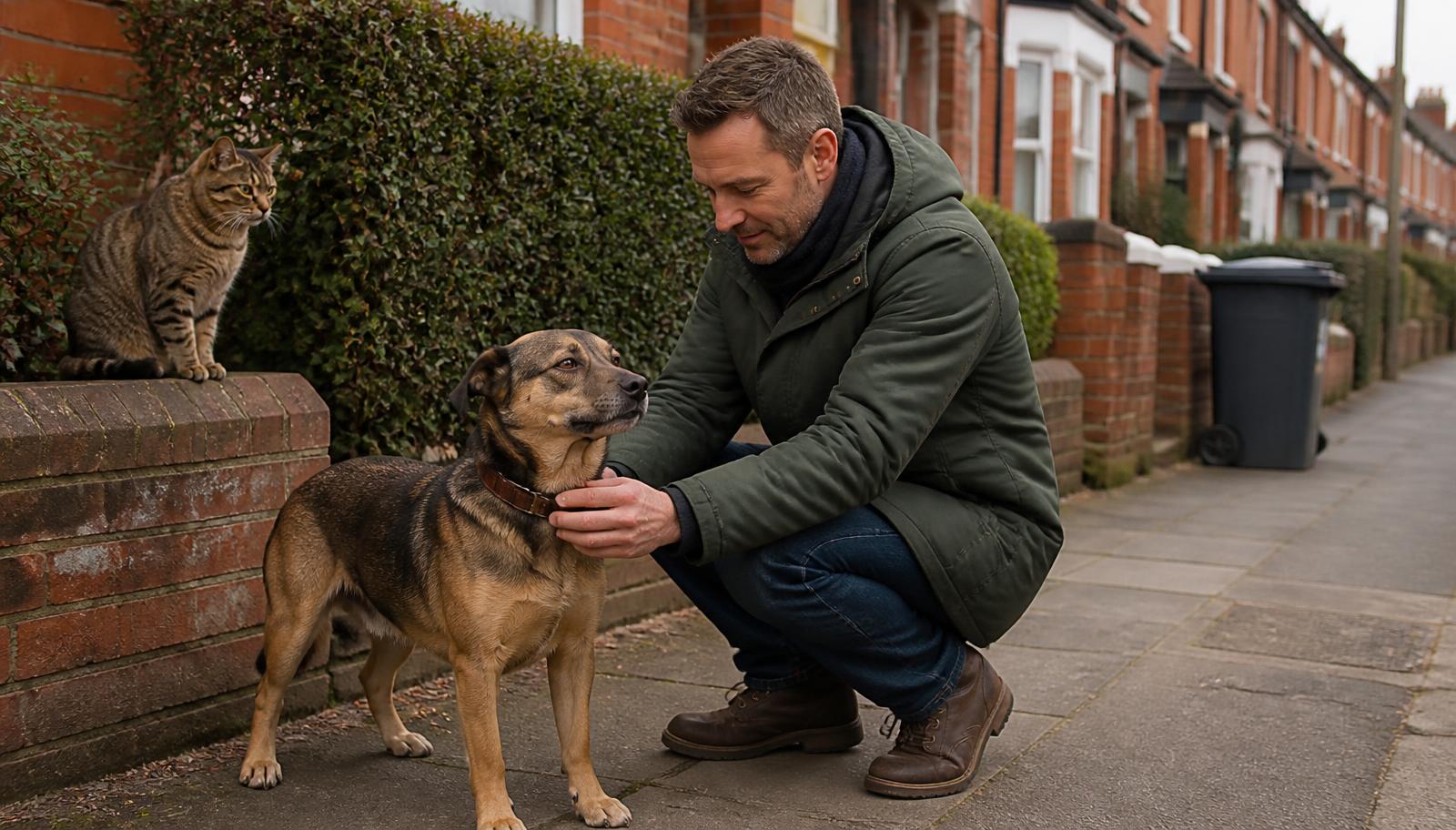
Lost and Found Pets
Practical steps for a missing pet, for an animal you have found, and for an animal that is injured or in immediate danger.
Act quickly and choose the right first step
Acting quickly can improve the chance of reuniting a missing pet with its owner. The correct action depends on whether your own pet is missing, you have found an animal, or the animal is injured or in immediate danger.
The three panels below cover those three situations. Read the one that matches your situation first, then use the sections further down for more detail.
My pet is missing
- Search the home, garden, sheds, garages and nearby hiding places.
- Ask neighbours to check locked sheds, garages and outbuildings.
- Tell the pet’s microchip database that the animal is missing.
- Contact local veterinary practices, rescue organisations and the council’s dog warden where appropriate.
- Use a recent, clear photograph when creating local notices.
I have found a pet
- Approach only if it appears calm and safe.
- Check for a collar and tag without putting yourself at risk.
- Ask a veterinary practice or animal organisation about scanning for a microchip.
- A found dog that cannot be returned directly to its owner must be reported to the council in England and Wales.
- Do not assume that a healthy visiting cat is lost or homeless.
The animal is injured or in danger
- Keep yourself away from traffic, aggressive animals and other hazards.
- Telephone a veterinary practice before travelling where possible.
- Contact the RSPCA or the appropriate animal welfare service for your UK nation.
- Call 999 where an animal is creating an immediate danger to people or traffic.
- Do not attempt to handle an aggressive or badly injured animal.
Things it helps to know first
- A microchip stores contact details on a database. It is not a live GPS tracker.
- The GOV.UK stray-dog postcode service applies to England and Wales. In Scotland and Northern Ireland, contact your local council or local dog service.
- A cat outdoors usually has an owner nearby, even if it visits you often.
- Do not keep, sell, advertise for sale or give away an animal you have found.
- Keep one identifying feature private so you can check that a caller really is the owner.
Missing pets, found animals and staying safe
Each section below opens when you tap or click its heading. They all start closed, so you can read only the parts you need.
What to do when your dog is missing
- Search the immediate area first, including gardens, sheds, garages, outbuildings and any route you usually walk.
- Telephone the microchip database that holds your dog’s record and report the dog as missing.
- Contact your council’s dog warden, local veterinary practices, kennels and rescue organisations, and give a clear description.
- Ask neighbours to check locked sheds, garages, vehicles and building sites where a dog could be shut in.
- Take a recent, clear photograph with you and leave your telephone number with anyone who may see the dog.
- Keep searching at quieter times of day, and take somebody with you rather than searching unfamiliar or isolated places alone.
What to do when your cat is missing
- Missing cats often hide silently very close to home, including in cupboards, wardrobes, lofts, sheds, garages, vehicles and neighbouring gardens.
- Search your own home thoroughly and quietly first, then ask neighbours for permission to check their sheds, garages and gardens.
- Search at quieter times when there is less noise and traffic, and use familiar sounds such as a food pouch or the cat’s usual call.
- Take a torch and look low down, behind, under and inside things.
- Report the cat as missing to its microchip database and tell nearby veterinary practices and rescue organisations.
- Do not put yourself at risk. Do not search alone late at night or enter private land, derelict buildings or busy roads.
Reporting a found or stray dog
If you find a dog and cannot return it directly to its owner, it must be reported to the council in England and Wales. The council’s dog warden service takes responsibility for stray dogs.
- Only approach the dog if it appears calm and safe to approach.
- Check for a collar and tag without putting yourself at risk.
- Ask a veterinary practice or animal organisation to scan for a microchip. Scanning is normally free.
- Use the GOV.UK service below to find the right council. This postcode service applies to England and Wales.
- In Scotland and Northern Ireland, contact your local council or local dog service directly.
- Do not keep, sell, advertise for sale or give away a dog you have found.
What to do when you find a cat
- A cat outdoors usually has an owner. Do not remove a healthy cat simply because it visits you regularly.
- Look for a collar and tag, and ask neighbours whether they recognise the cat.
- Ask a veterinary practice or animal organisation to scan for a microchip so the owner can be traced.
- A paper collar note asking the owner to get in touch is a gentle way to check whether the cat is already cared for.
- If the cat looks thin, injured or unwell, contact a veterinary practice or animal welfare organisation for advice.
- Do not feed a visiting cat regularly without knowing whether it has a medical diet or an owner.
Microchips and updating contact details
- Contact the approved microchip database that holds the pet’s record and make sure the telephone number and address are current.
- A microchip does not provide live GPS tracking. It only works when somebody scans the animal and the database details are up to date.
- Keep a note of the microchip number somewhere you can find it quickly, along with the database name.
- Update the record whenever you move house or change your telephone number, and after a pet changes owner.
- Microchipping rules and requirements are explained on GOV.UK, including the legal requirements for dogs and cats.
Posters, local groups and social media
- Use a recent, clear photograph that shows the pet’s colour, size and any distinctive markings.
- Give enough information to help — area, date last seen, description — but do not publish your full home address.
- Use a telephone number or email address you are comfortable sharing publicly.
- Local community groups, neighbourhood pages and missing-pet pages can reach people nearby quickly.
- Ask permission before putting notices on private property, and remove them once the pet is home.
- Keep one identifying feature out of the public post so you can check anyone who claims to have the pet.
Protecting yourself from missing-pet scams
Some people take advantage of a missing pet. Scammers may claim to have found an animal and then demand money, a transfer fee or transport costs.
- Do not send money, gift-card details or verification codes without reliable proof.
- Ask for a clear, current photograph of the pet holding a specific object, or for the microchip number.
- Be cautious about anyone who refuses to meet, will not involve a veterinary practice, or pressures you to act quickly.
- Never share bank details or passwords, and be wary of unexpected links sent by text or message.
- Report suspicious contact to the police and to the platform you were using.
If you believe your pet was stolen
- Report it to the police using 101, or 999 if a crime is happening or someone is in immediate danger.
- Ask for a crime reference number and keep it safe.
- Report the pet as missing or stolen to its microchip database so a scan raises a flag.
- Keep any evidence, such as messages, photographs, doorbell or camera footage, and the names of witnesses.
- Tell local veterinary practices, rescue organisations and the dog warden.
- Do not personally confront someone you suspect of stealing or keeping an animal. Pass the information to the police instead.
Proving ownership and safely arranging a reunion
- Keep one identifying feature private and ask anyone claiming the pet to provide photographs, veterinary records, microchip details or another form of proof.
- A microchip scan at a veterinary practice is usually the clearest way to confirm who the registered keeper is.
- Arrange to meet in a public place or at a veterinary practice rather than at your home, and take somebody with you.
- If ownership is genuinely disputed, ask the council, the veterinary practice or a rescue organisation for guidance. Sixpence Support UK cannot decide ownership.
- Be careful and polite. Most people involved are simply worried about a pet.
Other animals, birds and small pets
- Rabbits, guinea pigs, ferrets and other small pets can travel further than people expect. Search low down, under sheds, in undergrowth and along fence lines.
- For an escaped bird or parrot, keep the cage visible with familiar food and listen at quiet times of day. Specialist bird groups may be able to advise.
- For horses, ponies and other livestock, contact the police and the local council if animals are loose near roads.
- Wild animals are not lost pets. Contact an animal welfare organisation or a wildlife rescue if a wild animal is injured.
- Reptiles and other unusual pets may need particular temperatures or handling. Ask a specialist veterinary practice before attempting to catch one.
Trusted links and important information
GOV.UK confirms that a found stray dog must be reported to the council in England and Wales when the owner cannot be contacted. Cats Protection warns that an unfamiliar outdoor cat is not automatically lost and recommends checking for an owner and arranging a microchip scan.
- GOV.UK – Report a stray dog (England and Wales; opens in a new tab)
- GOV.UK – Dog and cat microchipping (opens in a new tab)
- Cats Protection – Lost a cat (opens in a new tab)
- Cats Protection – Found a cat (opens in a new tab)
- RSPCA – Found a lost or stray dog (opens in a new tab)
- RSPCA – Found a lost cat (opens in a new tab)
- RSPCA – Report a concern (opens in a new tab)
The GOV.UK stray-dog postcode service covers England and Wales only. Elsewhere in the UK, contact your local council or local dog service.
Kindness helps more than blame
Most missing pets are found close to home, and most found animals have an owner who is worried about them. Take reasonable care of your own safety, involve a veterinary practice or the council where the guidance above says so, and keep a note of who you have contacted so you do not repeat the same calls.
Important information
Sixpence Support UK provides general information and links to other organisations. We do not collect animals, trace microchips, determine legal ownership or arrange reunions. Contact the relevant council, veterinary practice, police or animal welfare organisation directly.