
Massage and Sports Massage: What It Involves, Safety and Choosing a Therapist
Massage uses hands-on pressure, kneading and stretching of soft tissue. Sports massage applies similar techniques around training and recovery. ‘Massage therapist’ is not a protected title in the UK, so training, insurance and voluntary registration are the main things to check.
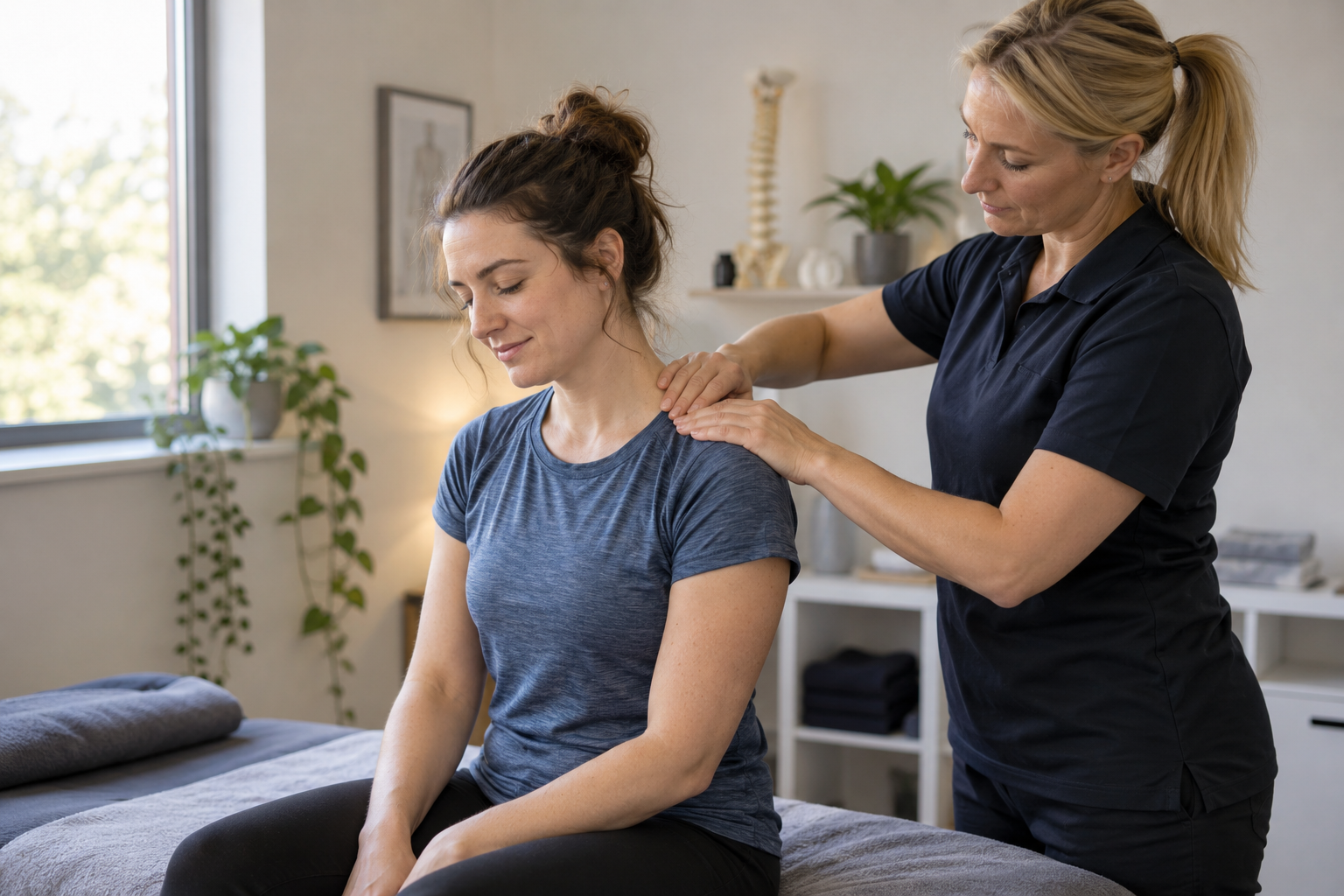
What massage and sports massage are
Massage therapy works on muscles and other soft tissue using pressure, kneading, friction and stretching. Styles vary widely, from gentle relaxation massage to deep tissue and sports massage aimed at people who train or work physically. Sports massage may be used before or after activity, or between sessions as part of a wider training and recovery routine.
What usually happens at an appointment
The therapist should ask about your health, injuries, medicines and what you want from the session, and explain what they plan to do. Sessions commonly last 30 to 60 minutes. You may be asked to undress to your underwear for the area being treated and will be covered with towels; you can decline, keep clothing on, or ask for a chaperone.
Pressure should be adjusted to your comfort. Discomfort during deep work is common, but it should never be unbearable, and you can ask the therapist to ease off or stop at any time.
What it may help with
- Short-term easing of muscle tension, stiffness and general aches.
- Relaxation, and for some people better sleep and lower feelings of stress.
- Comfort and wellbeing alongside other care, including in some palliative settings.
- Perceived recovery and reduced soreness after exercise for some people.
Limits of the evidence
Studies of massage tend to be small and short, and benefits are usually modest and temporary. NICE does not recommend massage on its own for low back pain; where manual therapy is considered, it is as part of a package that includes exercise. Evidence that sports massage prevents injury or improves performance is weak.
What massage cannot do
It cannot cure disease, remove scar tissue permanently, “flush out toxins”, correct a structural problem, or treat infection, clots, fractures or cancer. It is not a substitute for diagnosis, physiotherapy rehabilitation or medical treatment.
Risks and who should get medical advice first
Temporary soreness or tiredness is common. Problems are more likely if massage is applied over an area that should be left alone.
- Do not have massage over skin infections, open wounds, burns, rashes or recent surgery sites.
- Avoid deep massage if you have a bleeding disorder or take anticoagulants — get medical advice first.
- Seek advice first with osteoporosis, recent fracture, active cancer treatment, or lymphoedema.
- A hot, swollen, painful calf may indicate a blood clot. Do not have it massaged — seek urgent medical advice.
- In pregnancy, use a therapist trained in pregnancy massage and tell them how many weeks you are.
Regulation and checking a therapist
Massage therapy is not statutorily regulated, and the titles “massage therapist” and “sports massage therapist” are not protected. Anyone may use them. Sensible checks include:
- Registration with a Professional Standards Authority accredited register, such as the Complementary and Natural Healthcare Council, which requires recognised training and insurance.
- A recognised qualification in massage or sports massage, and current indemnity insurance.
- Local council licensing where it applies — many councils license premises offering “special treatments”.
- If the therapist is also a physiotherapist, check the HCPC register for that title.
NHS availability and costs
Massage is rarely provided by the NHS as a standalone treatment, though hands-on soft-tissue work may form part of NHS physiotherapy, and some hospices and cancer support services offer complementary therapies free of charge to the people they support.
Private prices vary by area, length of session and setting, and we do not publish a typical figure. Ask for a written price list, and be careful with prepaid blocks of sessions.
Questions worth asking before you book
- What qualification do you hold, and which register are you on?
- Do you have professional indemnity insurance?
- Have you treated people with my condition before?
- What will the session involve, and what will I need to remove?
- Can I have a chaperone, or request a therapist of a particular sex?
- What is the cost, and what is your cancellation policy?
How to raise a concern
Raise it with the business first, in writing. If the therapist is on an accredited register, complain to that register. Report licensing or hygiene concerns to your local council. Report anything that felt unsafe or sexually inappropriate to the police on 101, or 999 in an emergency.
Related pages on this site
Sixpence Support UK CIC is an independent information service. We do not recommend, endorse or accept payment from individual practitioners or clinics, and we do not claim that any treatment can cure a medical condition. This page is general information, not medical advice. Always speak to your GP, NHS 111 or another qualified health professional about your own symptoms.
- [1] NHS. Complementary and alternative medicine · 2026
- [2] NICE. Low back pain and sciatica in over 16s: assessment and management (NG59) · 2020
- [3] Professional Standards Authority. Accredited Registers · 2026
- [4] Complementary and Natural Healthcare Council (CNHC). Find a practitioner · 2026
- [5] GOV.UK. Find your local council (special treatment licensing) · 2026
- [6] NHS. Back pain · 2026
- [7] NHS. Physiotherapy · 2026
- [8] NHS 111. Get help for your symptoms · 2026