
Occupational Therapy: What It Involves, Getting an Assessment and Checking Registration
Occupational therapists help people do the everyday activities that matter to them — washing, dressing, cooking, working, studying and getting out — when illness, disability, injury or ageing makes those things harder. ‘Occupational therapist’ is a protected title and practitioners must be registered with the HCPC.
What occupational therapy is
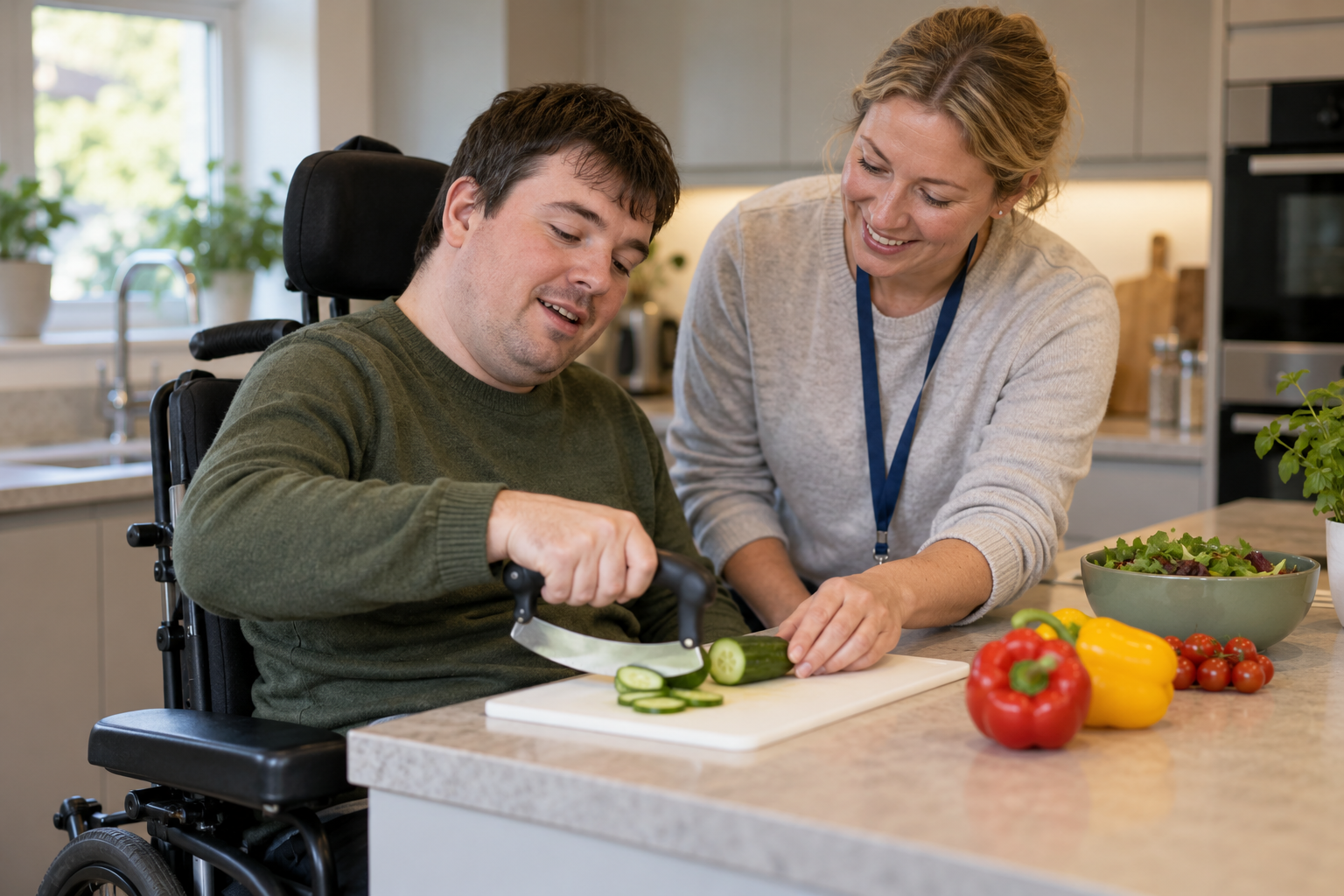
Occupational therapy is a practical, problem-solving profession. Rather than treating a condition in isolation, an occupational therapist looks at what you need or want to do each day, what is getting in the way, and how to change the task, the environment or the approach so it becomes possible and safe.
Occupational therapists work in hospitals, community teams, mental health services, councils, schools, workplaces and independent practice.
What usually happens at an assessment
An assessment often takes place at home, in hospital before discharge, or at a clinic. The therapist asks about your daily routine, your home, your health, and what you find difficult. They may watch you carry out tasks such as standing from a chair, climbing stairs or making a drink.
You should then agree a plan. That might include equipment, changes to the home, new techniques, energy conservation and pacing, exercises, referrals to other services, or advice for a workplace or school.
What occupational therapy may help with
- Staying independent at home after a stroke, fall, operation or hospital stay.
- Managing long-term conditions such as arthritis, MS, Parkinson’s, dementia or long-term fatigue.
- Equipment and adaptations: grab rails, raised seats, bath and shower changes, ramps, stairlifts.
- Fatigue management, pacing and routines in physical and mental health conditions.
- Support to stay in or return to work, education or volunteering.
- Support for children and young people with additional needs at home and at school.
What the evidence supports, and its limits
Occupational therapy is widely recommended in NHS rehabilitation pathways and in national guidance for conditions such as stroke and dementia, particularly for improving independence in daily activities and reducing falls risk at home. The strength of evidence varies by condition, and outcomes depend heavily on whether recommended equipment and changes are actually put in place.
What it cannot do
Occupational therapy does not cure the underlying condition, and an assessment does not guarantee that a council or NHS service will fund every recommendation. Where funding is refused you can ask for the reasons in writing and use the complaints process.
Risks and practical cautions
Risks are low. The main issues are practical: equipment that is the wrong size or badly fitted can cause falls, and adaptations installed without assessment may not suit the person’s needs. Do not fit grab rails, bath boards or stair equipment without checking weight limits and suitability, and ask for a demonstration before using new equipment alone.
Regulation and checking a practitioner
“Occupational therapist” is a protected title. Only people registered with the HCPC may use it, and the register is free to search. Support workers and technicians may assist under supervision but are not themselves occupational therapists. Independent occupational therapists should also hold indemnity insurance.
NHS, council routes and private costs
There are two main free routes. NHS occupational therapy comes through a hospital team, community rehabilitation, or a GP referral. Council occupational therapy comes through adult social care: you can request a needs assessment yourself, and it is free to ask for. Larger home adaptations may be funded through a Disabled Facilities Grant, which is means-tested for adults in England, Wales and Northern Ireland, with separate arrangements in Scotland.
Independent occupational therapists charge for assessments and reports; fees vary and we do not publish a typical figure. Ask for a written quote covering the visit, the report and any follow-up.
Questions worth asking
- Are you registered with the HCPC?
- Will the assessment be at home, and how long will it take?
- What equipment might be provided free, and what would I have to buy?
- How long is the wait, and can anything be done in the meantime?
- Will I get a written copy of the recommendations?
- What can I do if a recommendation is not funded?
How to raise a concern
For NHS services, use the provider’s complaints process and, if unresolved, the relevant ombudsman. For council social care in England, complain to the council first and then the Local Government and Social Care Ombudsman; the other UK nations have their own ombudsman services. Concerns about an individual therapist’s conduct can be reported to the HCPC.
Related pages on this site
Sixpence Support UK CIC is an independent information service. We do not recommend, endorse or accept payment from individual practitioners or clinics, and we do not claim that any treatment can cure a medical condition. This page is general information, not medical advice. Always speak to your GP, NHS 111 or another qualified health professional about your own symptoms.
- [1] NHS. Occupational therapy · 2026
- [2] NHS. Household gadgets and equipment to make life easier · 2026
- [3] GOV.UK. Disabled Facilities Grants · 2026
- [4] GOV.UK. Apply for a needs assessment by social services · 2026
- [5] HCPC. Check the Register — occupational therapists · 2026
- [6] Royal College of Occupational Therapists. Find an independent occupational therapist · 2026
- [7] HCPC. Raising concerns · 2026
- [8] Local Government and Social Care Ombudsman. Make a complaint about council social care · 2026