
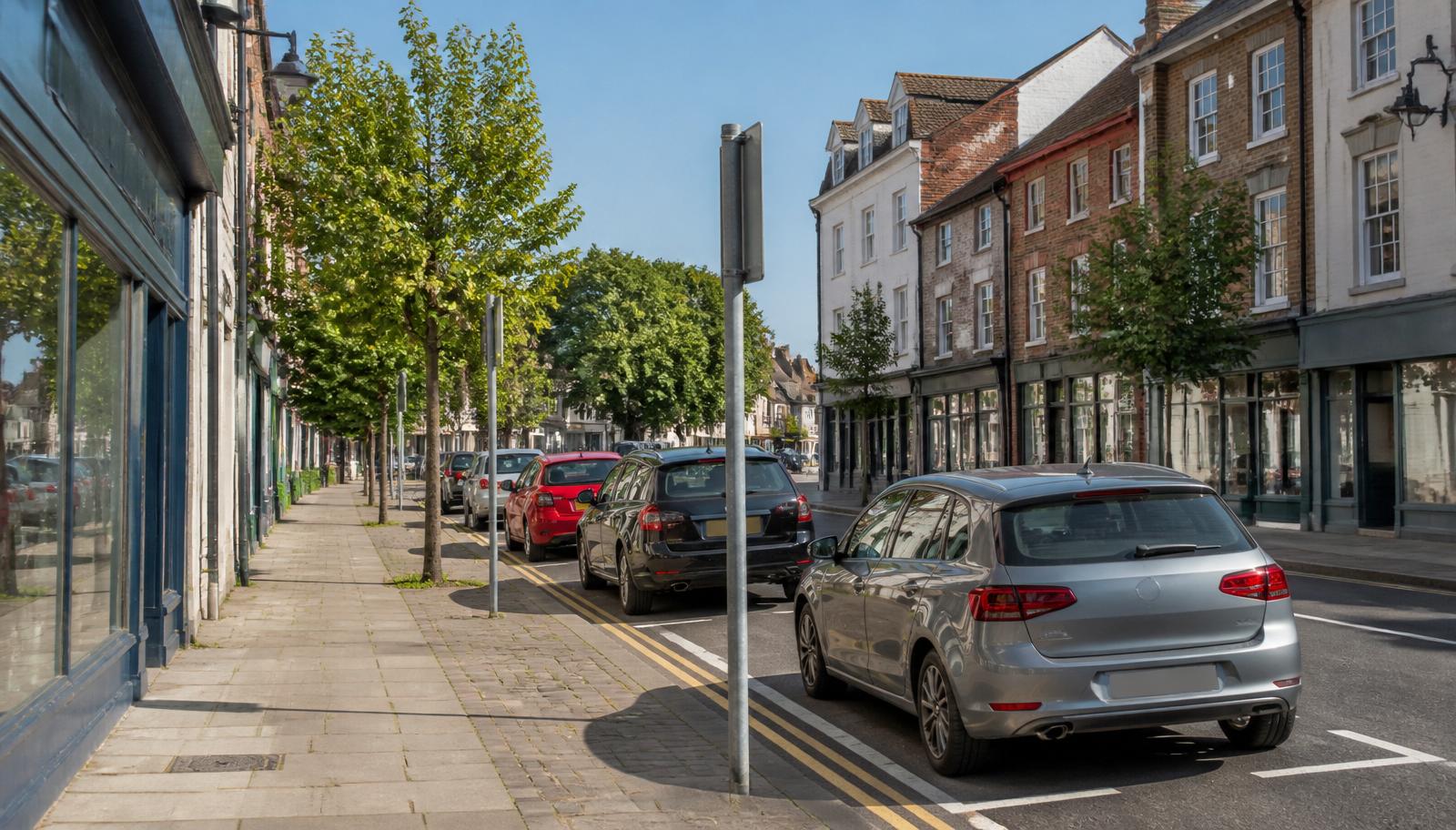
Parking, Traffic and Toll Penalties
A calm, plain-English guide to parking tickets, bus-lane and moving-traffic penalties, congestion and clean-air charges, toll crossings and private parking charges — including how to check a notice and how to appeal.
Why you should act quickly
Parking, traffic and toll notices usually have strict deadlines. If a notice is ignored, the amount owed may increase, and the opportunity to challenge it may be affected or lost.
Read the notice carefully as soon as it arrives. Write down the date it was issued, the reference number, the amount asked for, the date any reduced amount ends and the final date to pay or challenge. Keep the notice and the envelope it came in.
Acting quickly does not mean paying straight away. It means checking the notice, working out who issued it, and deciding in good time whether to pay or to challenge it.
First identify what type of notice you have
These notices are not all dealt with in the same way:
Types of notice explained
- Council parking Penalty Charge Notices (PCNs) — issued by a local authority for parking contraventions on public roads and council car parks.
- TfL Congestion Charge, ULEZ and red-route penalties — issued by Transport for London for unpaid charges or for stopping on a red route.
- Bus-lane and moving-traffic penalties — issued by councils or TfL for things such as driving in a bus lane, banned turns or blocking a box junction.
- Dart Charge and other toll-road or bridge charges — a road-user charge first, which can become a penalty if it is not paid in time.
- Police Fixed Penalty Notices (FPNs) — issued for driving offences such as speeding or using a mobile phone. These may involve penalty points and are dealt with through the police and the courts, not a parking appeal service.
- Private parking charges — issued by parking companies operating supermarket, hospital, retail-park and other private car parks.
Check who issued your notice before you act
A council or TfL Penalty Charge Notice is not the same as a private parking charge. The rules, deadlines and appeal procedures can be different. Check who issued the notice before paying or challenging it.
Check whether the notice is genuine
Look carefully at the paperwork and check:
- The name of the organisation that issued it — a council, TfL, a toll operator, the police or a private parking company.
- The vehicle registration, and the location, date and time given.
- The alleged parking or traffic contravention and how it is described.
- The payment and challenge instructions, including all deadlines.
- Whether the website and contact details match the issuer's official website.
Do not use links in unexpected text messages or emails about unpaid parking, tolls or road charges. Scam messages copy the wording and appearance of official notices. Find the organisation's official website independently — for example by searching for the council's own site, or by starting from GOV.UK — and type the reference number in yourself.
If something does not look right, contact the issuer using the details on their own official website before paying anything.
Paying the notice
Some notices offer a reduced amount if it is paid within an early-payment period. Others do not. Periods and amounts vary between councils, TfL, toll operators and private companies, so always check the actual notice you have received rather than assuming what the deadline is.
Paying is not automatically the right step for everyone. Before you pay, make sure the notice is genuine, that the vehicle and details are correct, and decide whether you have valid grounds to challenge it. In many schemes, paying is treated as accepting the notice, and you may not be able to appeal afterwards.
Keep a receipt or confirmation of any payment, and note the date, time and reference number.
Challenging or appealing
Each type of notice has its own process. Council and TfL notices usually have an informal challenge stage, then a formal representation stage, then an independent appeal to the Traffic Penalty Tribunal (outside London) or London Tribunals (in London). Private parking charges follow the operator's own procedure and any independent appeal service they belong to.
Evidence that may help, where it applies to your situation:
Evidence that may help your challenge
- Photographs of signs, road markings, bays and the wider location.
- The original notice and the envelope it arrived in.
- Payment receipts, machine tickets or parking-app records.
- Blue Badge details, where relevant.
- Evidence of a vehicle breakdown or an emergency, such as a recovery report or medical confirmation.
- Proof that the vehicle had been sold, or that the registration details were incorrect.
- DVLA address or vehicle documents, where relevant.
Explain clearly and briefly what happened, in date order, and attach your evidence. Keep a copy of everything you send and note the date you sent it.
Do not rely blindly on random online appeal templates. A generic letter that does not match your circumstances can weaken your case. The explanation and evidence must relate to what actually happened to you.
Free, impartial guidance on challenges is available from Citizens Advice.
Blue Badge parking issues
A Blue Badge does not allow parking everywhere. It gives certain parking concessions, but restrictions vary from place to place — particularly in some parts of London, where separate local schemes may apply, and on private land such as supermarket, hospital and retail-park car parks, where the landowner's own conditions apply.
Always check the signs at the location and the official rules for that area before parking. Make sure the badge is displayed correctly and is still valid, along with any timing clock if one is required.
General information is published on GOV.UK, including local council Blue Badge information and how to apply for a Blue Badge.
Notices sent to an old address
Councils, TfL and toll operators normally obtain the registered keeper's details from the DVLA. If the address on your V5C vehicle logbook is out of date, notices may be sent somewhere you no longer live and the first you hear of it may be a much larger demand.
Changing the address on a driving licence does not automatically update the V5C. They are separate records and both need to be updated. See GOV.UK — tell DVLA about a change of address and GOV.UK — vehicle log book (V5C).
If you discover an older notice or enforcement action that you never received, get advice quickly rather than ignoring it. There are sometimes procedures for asking for a case to be reconsidered where a notice was never properly received, but they normally have their own time limits.
Private parking charges
A private parking charge is generally not the same as a council fine. It is usually a claim by a parking company based on the advertised terms of using their car park, rather than a penalty issued by a public authority. That means the procedures, the wording and the appeal routes are different.
Things to check:
- Who operates the car park, and whether they are an accredited member of a trade association.
- The signs and stated parking conditions, including free periods, maximum stays and whether registration of the vehicle was required.
- Whether payment was made, and whether the correct registration was entered.
- Whether the vehicle was authorised to park — for example as a permit holder, patient, resident, customer or staff member.
- The operator's official appeal procedure and its deadline.
- Whether an independent appeal service is available after the operator rejects your appeal.
Accredited operators belong to the British Parking Association or the International Parking Community. Depending on which body the operator belongs to, an independent appeal may be available through POPLA or the Independent Appeals Service. The notice or the operator's website should say which applies.
Do not simply ignore a private parking charge. Unpaid charges can be pursued by debt-collection letters and, in some cases, through the county court. Deal with it in writing and keep copies.
Enforcement-agent or bailiff letters
Do not ignore an enforcement-agent letter. Check that it is genuine and seek advice quickly. Enforcement fees can increase as the case progresses.
If an enforcement agent contacts you
Unpaid council and TfL penalties can eventually be passed to enforcement agents, and fees are added at each stage. Check that any letter is genuine, that it relates to a case you recognise, and what stage it has reached.
Contact Citizens Advice or another regulated debt-advice organisation if you need help understanding the letter, or if you cannot afford the amount being requested. Our page on Debt Collectors and Bailiffs explains your rights in more detail.
If paying would cause financial hardship
You can contact the issuing authority or organisation and ask what options are available. Explain your situation clearly and in writing, and include any supporting information about your income, illness, disability or caring responsibilities.
What to expect and where to get money advice
Different organisations take different approaches, and there is no guarantee that instalments, a reduction or a cancellation will be offered. Asking early, and keeping in contact, usually gives you more options than waiting.
Free, independent money advice is available from Citizens Advice and other regulated debt-advice services. You may also find our Benefits and Pensions page useful.
Useful official information
Official information links
- GOV.UK — Parking tickets
- GOV.UK — Challenge a parking ticket
- GOV.UK — Speeding penalties and fixed penalty notices
- Transport for London — Penalties and enforcement
- Transport for London — Congestion Charge
- Transport for London — Ultra Low Emission Zone (ULEZ)
- Transport for London — Red routes
- GOV.UK — Dart Charge (Dartford Crossing)
- Traffic Penalty Tribunal — independent appeals outside London
- London Tribunals — independent appeals in London
- Citizens Advice — Parking tickets
- British Parking Association
- International Parking Community
- POPLA — Parking on Private Land Appeals
- Independent Appeals Service
- GOV.UK / DVLA — Change the address on your V5C and driving licence
- GOV.UK — Vehicle log book (V5C)
Other pages that may help
Related Sixpence Support UK pages
- Debt Collectors and Bailiffs — your rights if enforcement agents become involved.
- Benefits and Pensions — help with income and money worries.
- Motability Scheme — vehicles, adaptations and disability motoring.
- Solicitors — when you may need formal legal advice.
- Letter Support — help reading and understanding a letter you have received.
Important notice
This page provides general information only and is not legal advice. Rules, charges, discounts and deadlines can change, and they differ between councils, Transport for London, toll operators, the police and private parking companies. Always check your own notice and the issuing organisation's current instructions, and seek independent advice from Citizens Advice or a qualified adviser about your own circumstances.
- [1] GOV.UK. Parking tickets — overview · 2025
- [2] GOV.UK. Challenge a parking ticket · 2025
- [3] Transport for London. Penalties and enforcement · 2025
- [4] GOV.UK. Dart Charge — Dartford Crossing · 2025
- [5] Traffic Penalty Tribunal. Independent appeals outside London · 2025
- [6] London Tribunals. Environment and Traffic Adjudicators · 2025
- [7] Citizens Advice. Parking tickets · 2025
- [8] POPLA. Parking on Private Land Appeals · 2025
- [9] Independent Appeals Service. Appeals for IPC-accredited operators · 2025
- [10] GOV.UK / DVLA. Vehicle log book (V5C) — tell DVLA about a change of address · 2025