
Shingles: Symptoms, Treatment and Vaccination
A calm, plain-English United Kingdom guide to shingles — the early warning signs, when to contact a GP or NHS 111, treatment and self-care, nerve pain that can follow, and how NHS shingles vaccination works in each UK nation.
Get urgent advice from a GP or NHS 111 in these situations
Shingles can usually be managed well, but some situations need to be looked at the same day. Contact a GP urgently, or use NHS 111, if:
- the rash is on the face, around an eye, or on the nose
- there are changes to vision, eye pain or a very red eye
- the person is pregnant
- the person has a severely weakened immune system
- the person feels very unwell, or the rash is widespread
- the symptoms affect a baby or young child
- there is facial weakness, hearing loss, dizziness or a rash around the ear
Call 999 or go to A&E if there is sudden loss of vision, or any other life-threatening emergency such as severe confusion, a stiff neck with a high temperature, or collapse.
Key facts
- Shingles is caused by the chickenpox virus (varicella-zoster) becoming active again — so anyone who has had chickenpox in the past can develop it.
- It usually appears as a painful rash on one side of the body and does not normally cross the middle of the body.
- Antiviral medicine works best when started early — usually within about three days of the rash appearing.
- Shingles becomes more common with increasing age, and NHS vaccination is offered to reduce the risk of shingles and its complications.
Sources: NHS — shingles; NHS — shingles vaccine; GOV.UK / UKHSA shingles vaccination programme (see references at the end of this page).
Shingles, explained simply
Shingles is a painful rash caused by the same virus that causes chickenpox. Most people recover well, and there is a lot that can help — particularly if advice is sought early.
This page gives general information only. It cannot tell anyone whether they have shingles, and it is not a substitute for advice from a GP, pharmacist or other qualified clinician.
What shingles is
Shingles happens when the chickenpox virus (varicella-zoster virus) becomes active again in the body. After chickenpox, the virus stays quietly in the nerve tissue for many years without causing any problems. Sometimes it becomes active again and travels along a nerve to the skin — that is shingles.
It is not caused by catching chickenpox a second time, and it is not a sign that someone did anything wrong. Shingles can follow a period of illness, stress or reduced immunity, but very often there is no obvious reason at all.
Early warning signs
Before any rash appears, many people notice something unusual in one area of the body:
- burning, tingling or itching of the skin
- tenderness, or pain that feels sharp, aching or like a band
- skin that feels sensitive to light touch, such as clothing
- headache, tiredness or feeling generally unwell
- sometimes a mildly raised temperature
The pain can begin a few days before the rash shows, which is why shingles is sometimes mistaken for something else at first. Occasionally — though this is uncommon — the nerve pain happens without any visible rash at all.
What the rash can look like
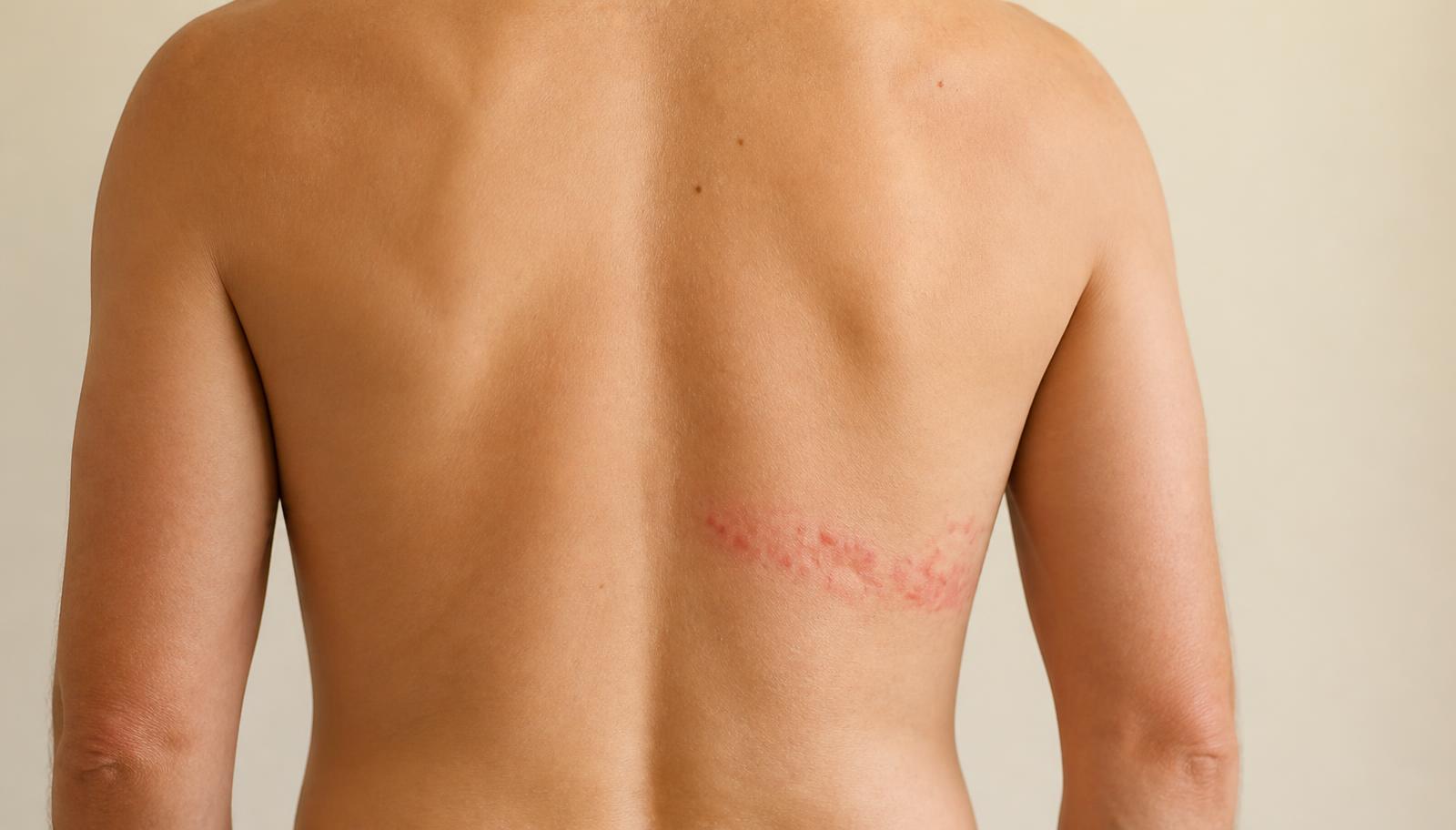
Shingles usually appears as a band or patch of red or darkened skin with small blisters, on one side of the body only. It does not normally cross the middle line of the body.
- most often on the chest, ribs, abdomen or back
- sometimes on the face, around an eye, or near an ear
- occasionally on an arm, leg, buttock or the neck
The blisters usually weep, then dry and form scabs over a week or two. On brown and black skin the rash may look darker or purplish rather than red, and can be easier to feel than to see.
When to contact a GP or NHS 111
Please contact a GP as soon as possible if shingles is suspected, even if the symptoms seem mild. Early advice matters because antiviral medicine works best when started promptly — usually within about three days of the rash appearing.
If more than three days have passed, it is still worth getting advice. A clinician may still decide antiviral treatment is appropriate in some circumstances, for example where the rash is on the face, where the person has a weakened immune system, where new blisters are still appearing, or where the pain is severe.
We do not give medicine names, doses or prescriptions. Any treatment decision is for a GP, pharmacist or other qualified clinician.
Shingles affecting the eye — please get urgent help
Shingles that affects the eye or the nerve supplying it can threaten eyesight, so it needs to be assessed urgently. Contact a GP the same day, or NHS 111, if there is:
- a rash on the forehead, eyelid, side of the nose or tip of the nose
- a red eye, eye pain or a gritty, watery eye
- sensitivity to light
- blurred vision or any other change to sight
Call 999 or go to A&E if there is sudden loss of vision. Treated promptly, most people do well — which is exactly why it should not be left to see whether it settles.
Shingles affecting the ear or facial nerves
Occasionally shingles affects a nerve near the ear. This is known as Ramsay Hunt syndrome, and it needs urgent medical help because early treatment gives the best chance of full recovery. Warning signs include:
- ear pain, or a rash in or around the ear
- weakness or drooping on one side of the face
- hearing changes or hearing loss
- ringing in the ear (tinnitus)
- dizziness or problems with balance
Contact a GP the same day or use NHS 111. If facial weakness comes on suddenly and you are not sure whether it could be a stroke, call 999.
How shingles is diagnosed
A GP, nurse or other clinician can usually recognise shingles from the symptoms and the appearance of the rash, particularly the way it follows a band on one side of the body. No special test is normally needed.
Occasionally further assessment or a swab of fluid from a blister may be arranged — for example when the rash is unusual, widespread, slow to settle, or when the person has a weakened immune system. If the eye may be involved, an urgent eye assessment may be arranged.
Treatment
Treatment for shingles usually focuses on three things:
- Antiviral medicine. This may be prescribed to help reduce how severe and how long the episode is, and to lower the chance of complications. It works best when started early.
- Pain relief. A GP or pharmacist can advise on suitable pain relief for the person's own circumstances and other medicines.
- Treatment for nerve pain. Where pain is severe or lasting, a clinician may consider medicines used specifically for nerve pain, or refer on for further help.
Sixpence Support UK does not diagnose, recommend prescription-only medicines or give dosages. Please follow the advice of a GP, pharmacist or other qualified clinician, and tell them about any other medicines, allergies, pregnancy or immune-system problems.
Looking after the rash at home
Alongside any treatment from a clinician, these simple steps often help:
- keep the rash clean and dry to reduce the risk of infection
- wear loose, comfortable clothing so the skin is not rubbed
- use a cool compress — a clean, cool, damp cloth — for short periods to soothe the area
- avoid adhesive dressings and plasters directly on the rash, as removing them can damage the skin
- try not to scratch or pick at the blisters
- get plenty of rest and drink enough fluids
Please ask a pharmacist or clinician before using any cream, ointment, antiseptic or medicine on or near the rash — some products are not suitable, particularly near the eyes.
Can shingles spread to somebody else?
No — you cannot catch shingles from another person. Shingles only happens when a virus already in someone's own body becomes active again.
However, the fluid inside shingles blisters does contain the chickenpox virus. If that fluid reaches someone who has never had chickenpox and has not had the chickenpox vaccine, that person could develop chickenpox — not shingles.
Once the blisters have dried and formed scabs, this risk has passed.
Protecting other people
Until the blisters have dried and scabbed over, it helps to:
- keep the rash covered with loose clothing or a non-sticky dressing
- avoid touching or scratching the rash
- wash hands regularly, especially after touching the area
- avoid sharing towels, flannels or bedding
- avoid swimming pools and contact sports while the rash is weeping
Also avoid close, direct contact with:
- pregnant people who have never had chickenpox
- people with a severely weakened immune system
- very young babies, particularly newborns
Work, school and everyday activities
Many people with shingles feel able to carry on with everyday life, especially once the pain is under control and the rash can be covered.
It may be necessary to stay away from work, school or nursery if the rash is weeping and cannot be covered, or until it has dried and scabbed over.
Anyone who works with pregnant people, newborn babies, or people with weakened immune systems — for example in healthcare, care homes, childcare or schools — should ask a clinician, occupational health or their employer for guidance before returning.
If time away from work causes worry about pay, sick notes or how an employer or the DWP is handling things, we can help with letters and complaints.
Pain after the rash has gone
Sometimes pain carries on after the skin has healed. This is called post-herpetic neuralgia — in plain English, nerve pain left behind by shingles. It becomes more likely with increasing age.
It can feel like:
- burning, aching or stabbing pain in the area where the rash was
- itching or odd skin sensations
- skin that is painfully sensitive to light touch, such as clothes or bedding
- pain that comes and goes, or disturbs sleep
This is a recognised problem, not something to put up with quietly. Please contact a GP if pain continues after the rash has healed, or if it is difficult to manage. There are treatments and referral options that can help.
Other possible complications
Most people recover from shingles without lasting problems. Complications are less common, but they are worth knowing about so help can be sought early:
- skin infection, if the rash becomes more painful, hot, swollen or spreads
- scarring, or lighter or darker patches of skin where the rash was
- eye problems, if shingles affects the eye or the nerve around it
- hearing changes or dizziness, if a nerve near the ear is affected
- facial weakness, which usually improves but may need urgent treatment
- long-lasting nerve pain (post-herpetic neuralgia)
If something is getting worse rather than better, that is a good reason to contact a GP or NHS 111 rather than wait.
Who is more likely to develop shingles?
Shingles is more likely in people who:
- are older — the risk rises steadily with age, particularly from around 50 onwards
- have a weakened immune system
- have certain illnesses or conditions that affect immunity
- are having treatments that lower immunity, such as chemotherapy, some medicines after a transplant, high-dose steroids or certain immune-suppressing medicines
Even so, younger and otherwise healthy people can also develop shingles. Having shingles does not automatically mean something else is wrong — but if it happens more than once, or is unusually severe, it is worth mentioning to a GP.
NHS shingles vaccination
Vaccination reduces the risk of developing shingles and of serious complications such as lasting nerve pain. It cannot guarantee that someone will never get shingles, but it makes it less likely and usually less severe.
Eligibility is not identical across the UK, and it changes over time. Please check with a GP practice or the official service for your nation.
- England. The NHS runs a phased age-based programme using a two-dose vaccine. It is offered to people as they reach the eligible age, and to those in the eligible older age range, with the programme gradually widening over a number of years. Adults aged 18 or over who are severely immunosuppressed are also eligible. Because the ages included change as the programme is phased in, please check the NHS page or ask your GP practice whether you are eligible now.
- Scotland. Shingles vaccination is offered through NHS Scotland, with its own eligibility arrangements. Check NHS inform or your GP practice.
- Wales. Shingles vaccination is offered through NHS Wales. Check with your GP practice or NHS 111 Wales.
- Northern Ireland. Shingles vaccination is offered through HSC services. Check nidirect or your GP practice.
If you are not sure whether you have been invited, it is always reasonable to ask your GP practice directly — being eligible does not always mean an invitation has arrived.
Can someone be vaccinated after having shingles?
Yes — having had shingles does not necessarily rule out vaccination. People who have recovered from an episode may still be offered the vaccine, depending on their eligibility and clinical advice.
There is usually a sensible gap after recovery before vaccination, and the right timing depends on the individual. Please ask a GP practice or vaccination service when it would be appropriate.
Preparing to speak to a GP or pharmacist
A short note before the appointment or call makes the conversation much easier:
- when the symptoms started — including any pain or tingling before the rash
- where the pain or rash is, and whether it is on one side only
- whether it is close to an eye, the nose or an ear
- any changes to vision, hearing, balance or facial movement
- all current medicines, including anything bought over the counter
- whether the person is pregnant or might be
- any immune-system problems or treatments that lower immunity
- any contact with pregnant people, newborn babies or people with weakened immunity
- how the pain is affecting sleep and daily life
Please speak to a healthcare professional
Sixpence Support UK provides general information only. We cannot tell anyone whether they have shingles, cannot recommend or supply medicines, and are not a substitute for professional medical advice, diagnosis or treatment. Please speak to a GP, pharmacist or another qualified healthcare professional about your own situation, and seek urgent help if the rash is near an eye or ear, if you feel very unwell, or if your symptoms are getting worse.
Trusted organisations and further support
These UK organisations provide further information and support alongside NHS care. If symptoms are getting worse, please still contact a GP, pharmacist or NHS 111.
- Shingles Support Society — charity service offering information and support on shingles and long-lasting nerve pain.
- Age UK — charity with information for older people, including vaccination and staying well.
- UK Health Security Agency — this is a government agency, not a charity, and publishes official vaccination information and data.
Go straight to these organisations
These are separate organisations, not NHS services. Please take telephone numbers and opening hours from their own current pages. Each button opens in a new tab.
These organisations are independent of Sixpence Support UK. Their inclusion is for information and signposting and does not imply a partnership or endorsement.
- [1] NHS. Shingles · 2026
- [2] NHS. Shingles vaccine · 2026
- [3] NHS. Post-herpetic neuralgia · 2026
- [4] NHS. Chickenpox · 2026
- [5] GOV.UK / UKHSA. Shingles vaccination programme · 2026
- [6] NHS inform (Scotland). Shingles · 2026
- [7] NHS 111. Get help for your symptoms (England) · 2026
- [8] NHS 111 Wales. Health advice and services · 2026
- [9] nidirect (Northern Ireland). Health services · 2026
- [10] NHS. Pharmacy services · 2026