
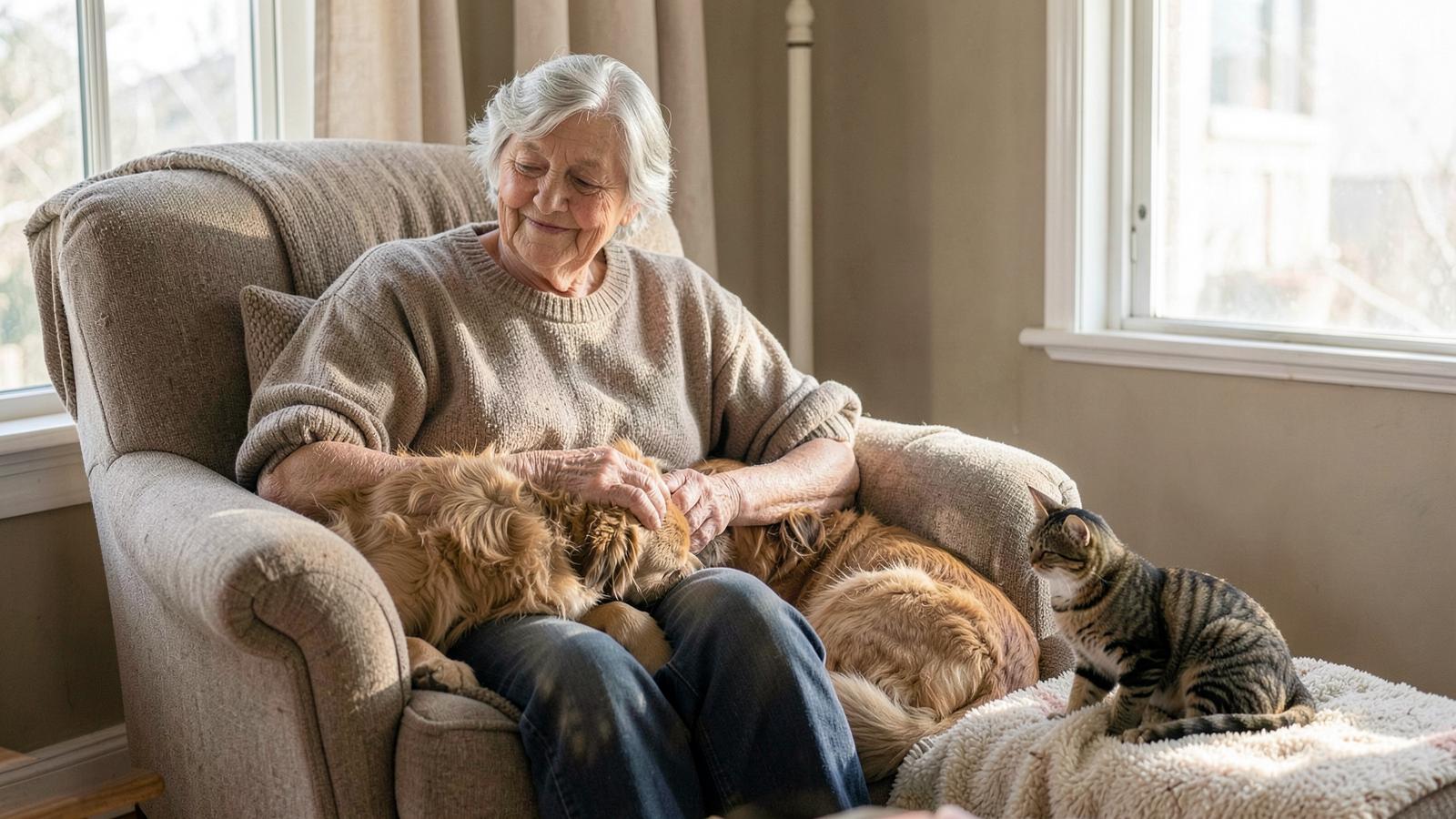
Support for Older or Disabled Pet Owners
Where to ask for help with dog walking, feeding, cleaning, grooming, vet transport and everyday pet care when illness, disability or reduced mobility makes some tasks difficult.
Companionship, routine and everyday help
A pet can provide companionship, routine and emotional support, but illness, disability or reduced mobility can make some everyday tasks difficult. Help may be available with dog walking, feeding, cleaning, grooming, transport and temporary care. The support offered and its eligibility rules vary between organisations and locations.
Ask for help early rather than waiting until you are unable to cope. Keeping a much-loved pet at home is usually best for both of you, and rehoming should never be the first suggestion.
Are you unable to care for your pet today?
- Ask a trusted relative, friend, neighbour or carer for immediate help.
- Contact your veterinary practice if the animal is unwell or needs medication.
- Contact The Cinnamon Trust or a local animal organisation to ask what assistance may be available.
- If you are going into hospital, use the existing Help when a pet owner goes into hospital page.
- Make sure the pet has safe shelter, suitable food, fresh water and any prescribed medication.
What kind of help may be available
- Dog walking and exercise when you cannot manage a walk yourself.
- Cleaning litter trays, hutches or cages.
- Brushing, nail-checks and basic grooming.
- Collecting food, litter or bedding from a shop.
- Transport to a veterinary practice or groomer.
- Short-term or temporary care during illness or a hospital stay.
What is offered depends entirely on the local scheme and the volunteers available. Nobody should be promised support.
Ways to find and arrange support
The expandable sections below explain the main sources of help. Open the ones that apply to you.
Help with everyday pet care
Help might include dog walking, cleaning litter trays or cages, brushing a pet, collecting food, or transporting an animal to a vet or groomer. Some tasks may be shared between a family member, a neighbour and a volunteer.
Write down what you find hardest, so you can explain it clearly when you ring an organisation or ask family to help.
Dog walking and exercise
A dog still needs suitable daily exercise even if the owner cannot manage the walk. Ask family, friends, neighbours or a local dog-walking group first, as arrangements are often free and flexible.
- Explain the dog’s size, breed, temperament and any health issues.
- Agree how often and how long walks should be.
- Agree how the walker enters your home and returns the dog.
- Keep the lead, harness, poo bags and any medication together and ready.
Paid dog walkers, pet sitters or transport services should be checked carefully. Ask about insurance, references, experience, prices and what happens in an emergency.
Cleaning, feeding and grooming
Regular cleaning, feeding and grooming keep an animal comfortable and healthy. If bending, lifting or standing is difficult, ask about volunteer help or share the tasks with a family member or carer.
- Litter trays, hutches and cages usually need cleaning every day.
- Food and water bowls should be washed regularly.
- Longer-coated animals may need brushing several times a week.
- Nails, ears, teeth and skin should be checked regularly.
A groomer, veterinary nurse or animal charity may be able to help with tasks that are harder at home.
Transport to a vet or groomer
Getting an animal to a veterinary practice or groomer can be one of the hardest tasks. Ask about volunteer transport before making expensive alternative arrangements.
- The Cinnamon Trust may arrange volunteer transport for eligible owners.
- Some rescues, community transport schemes and taxis carry animals.
- Explain the size of the carrier and whether the animal is anxious.
- Allow extra time and take any paperwork, medication and treats you need.
Help from The Cinnamon Trust
The Cinnamon Trust supports older people and people who are terminally ill. Its volunteers can help eligible owners with tasks including dog walking, cleaning litter trays, cages, vet transport and grooming journeys.
Disability by itself may not meet the trust’s eligibility rules, so nobody should be promised support. Contact the trust directly to check what is offered in your area.
Asking family, friends, carers and local groups
Practical help is often closer than people expect. Family, friends, neighbours, paid carers, faith groups, community centres, libraries and mutual-aid groups may be willing to help with small regular tasks.
- Be specific about what you need: for example, a 20-minute walk each morning.
- Ask more than one person, so nobody feels the responsibility rests on them.
- Agree how to swap keys or door-code arrangements safely.
- Say thank you and share small updates, so helpers know it is worthwhile.
Local animal organisations, voluntary groups and community networks may operate their own schemes and may know of other help nearby.
Adult social care and needs assessments
A person requesting an adult social-care needs assessment can explain how their disability or condition affects daily living and their ability to look after essential responsibilities. A council needs assessment covers the person’s care and support needs.
Pet-care assistance is not guaranteed as part of a council assessment. Do not claim that the council must fund pet care. However, explaining what you struggle with can still help identify other support the council or a voluntary organisation may offer.
Equipment and practical adjustments at home
Small changes can help, including raised bowls, lightweight litter, long-handled scoops, automatic feeders and keeping supplies within easy reach. An occupational therapist may be able to suggest changes that help with both personal tasks and pet care.
- Store food, litter and cleaning supplies at a comfortable height.
- Use a trolley or wheeled basket to move heavier items.
- Consider a raised feeding station for a larger dog.
- Choose lighter cat litter and easy-open bags where possible.
- Keep leads, harnesses and medication in one clearly labelled place.
Automatic equipment must still be checked regularly and must not replace proper daily care.
Making an emergency pet-care plan
A simple written plan means somebody else can step in quickly if you become unwell, fall or go into hospital.
- Names and telephone numbers of two people who could care for the pet.
- The animal’s name, age, breed and any health conditions.
- The name and telephone number of the veterinary practice.
- What the animal eats, how much and how often.
- Any medication, doses and where it is kept.
- Where the lead, carrier, food and supplies are stored.
Keep a copy on the fridge or by the front door so ambulance crews, neighbours or carers can see it. Share a copy with the people named on the plan.
Trusted links and important information
The Cinnamon Trust states that its volunteers can help eligible owners with tasks including dog walking, litter trays, cages, vet transport and grooming journeys. A council needs assessment covers the person’s care and support needs, but pet-care assistance is not guaranteed.
- The Cinnamon Trust (opens in a new tab)
- GOV.UK – Apply for a needs assessment (opens in a new tab)
- NHS – Getting a needs assessment (opens in a new tab)
- Age UK – Owning a pet (opens in a new tab)
Never stop prescribed veterinary treatment or change an animal’s medication without speaking to a veterinary professional.
Rehoming is not the first answer
Giving up a pet should never be the first suggestion. Ask about volunteer help, transport, needs assessments and practical adjustments before considering rehoming. If you are worried you may not be able to keep your pet in the longer term, speak to an animal organisation early so any change can be planned calmly and kindly.
Important information
Sixpence Support UK provides general information and links to other organisations. We cannot guarantee that practical help, volunteers, transport or funding will be available. Contact each organisation directly to check its current services, eligibility rules and local availability.