
Arts, Crafts, Drama and Dance
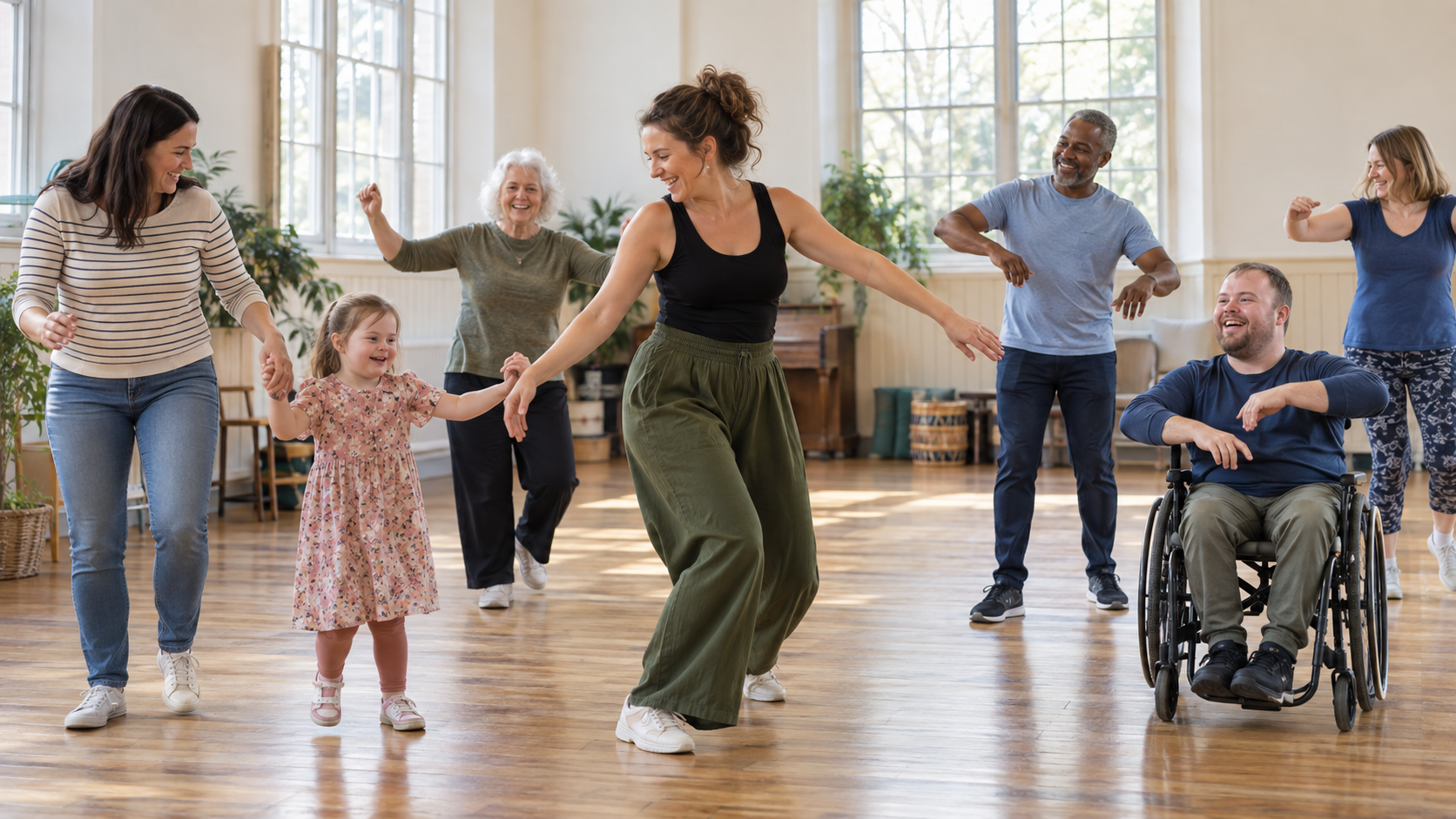
A practical guide for children, adults, older people and disabled people: finding art, craft, drama and dance activities near you, checking they are safe and suitable, and keeping costs manageable.
You do not need experience to start
Most community classes and groups welcome complete beginners. You can usually try one session before deciding, and you never have to perform, exhibit or share your work unless you want to. Choose something that sounds enjoyable — not something you feel you should already be good at.
What kinds of activities are out there
Creative activity happens in village halls, schools, libraries, leisure centres, theatres, studios and community centres across the UK. Common options include:
- Arts and crafts — drawing, painting, pottery, sewing, knitting, woodwork, photography and craft circles.
- Drama — amateur theatre groups, youth theatre, acting lessons, improvisation and play-reading groups.
- Dance — dance schools, community dance, social dancing, movement classes and styles for every age and ability.
Some groups exist mainly for enjoyment and friendship; others work towards shows, exams, grades or exhibitions. Both are fine — it depends what you want.
Finding local activities and lessons
Good places to look, and all of them are free to check:
- Your local council website — many councils list community classes, adult learning courses and leisure-centre activities.
- Libraries and community centres — noticeboards, staff and websites often carry local group details.
- Creative Lives — a UK charity for voluntary and community creativity, with a “find a creative group near you” search covering crafts, music, drama, dance and more.
- NODA (National Operatic and Dramatic Association) supports amateur theatre groups across the UK and can point you towards member groups.
- One Dance UK is the UK support body for dance, with information for dancers, teachers and people getting started.
- Local theatres, arts centres and museums frequently run their own classes and participation programmes.
Arts and crafts classes and community groups
Options range from tutored evening classes at a college to informal craft circles that meet in libraries, cafés and village halls. Tutored classes usually charge a fee; informal groups may ask only a small contribution towards room hire and refreshments.
- Ask whether materials and equipment are included or whether you bring your own.
- Community groups are often happy for you to visit once before joining.
- The Crafts Council is the national charity for craft in the UK and a useful starting point for learning more about making.
Drama groups, theatre groups and acting lessons
Amateur theatre groups rehearse plays, musicals and pantomimes and usually welcome new members on and off stage — performing, costumes, set building, front of house and backstage. Many hold open evenings or taster rehearsals.
- Some groups audition for parts; joining the group itself is usually open to everyone.
- Acting lessons and youth theatre classes are offered by theatres, schools and private teachers.
- For children taking part in performances, councils issue child performance licences in many situations — a reputable group should know when one is needed and handle the paperwork.
Dance schools, dance classes and community dance
Dance covers everything from ballet, tap and street dance to line dancing, folk, ballroom and seated movement. Community and social dance classes usually focus on enjoyment rather than exams; dance schools may offer graded syllabuses, shows and competitions.
- Ask what style and level a class is before booking, and whether you can watch or try a session first.
- Check what clothing and footwear you actually need — beginners rarely need specialist kit.
- One Dance UK provides information about dance across the UK, including advice and resources for people choosing classes and teachers.
Accessible and inclusive sessions
Many areas have inclusive dance companies, disability arts groups, relaxed theatre performances, and craft groups that welcome disabled people, older people and people living with dementia. Ask directly — a good group will talk honestly about what it can offer.
- Ask about step-free access, accessible toilets, parking, hearing loops and quiet spaces.
- Ask whether sessions can be adapted — for example seated dance, wheelchair-accessible worktables or smaller group sizes.
- Ask whether a carer or support worker can come with you, and whether they pay.
- A group or class that charges the public generally has duties under the Equality Act 2010 to make reasonable adjustments for disabled people; if you are refused without a good reason, you can ask them to explain.
Free and low-cost options, concessions and help with costs
Creativity does not have to be expensive. Worth checking before you pay:
- Libraries, community centres and charities often run free or very low-cost groups.
- Many classes offer a free or reduced-price taster session.
- Ask about concessions — for example for older people, students, carers, or people on low incomes or certain benefits.
- Pay-as-you-go sessions avoid being tied into a full term of fees.
- Some community groups lend equipment or share materials rather than expecting you to buy everything.
Costs vary widely between areas and providers, so always confirm the current price, what it includes, and any refund policy directly with the organiser.
Checking suitability, qualifications, insurance and accessibility
There is no single legal requirement for someone to hold a qualification before running an art, craft, drama or dance class. Membership of a recognised body is usually a voluntary quality signal, not a legal licence — treat it as reassurance, not proof.
- Ask what training, experience or voluntary accreditation the teacher or leader holds.
- Ask whether the group holds public liability insurance, especially for physical activities.
- Ask to see the venue yourself and check access, lighting, flooring and facilities.
- Read reviews and ask locally, but weigh them alongside your own visit or taster session.
- Trust your instincts — you should feel welcomed, safe and never pressured into paying on the spot.
Safeguarding children and adults at risk
Any group working with children or adults at risk should take safeguarding seriously and be happy to answer questions about it.
- Ask whether the group has a safeguarding policy and a named safeguarding lead.
- For roles that involve teaching or regularly caring for children, the law requires an enhanced criminal-record check — through the Disclosure and Barring Service in England and Wales, Disclosure Scotland in Scotland, or AccessNI in Northern Ireland. A reputable group will know which checks apply and will not be offended by the question.
- Ask about supervision arrangements, registration at drop-off and collection, and photography rules.
- The NSPCC publishes clear guidance on keeping children safe in clubs and activities, including questions parents can ask.
If you are worried about a child or an adult’s safety, contact your local council’s safeguarding team — find it via the GOV.UK council finder — or call 999 if someone is in immediate danger.
Questions to ask before paying or enrolling
- How much does it cost, and what exactly is included (materials, costumes, exam or show fees)?
- Is there a taster session, and do I pay term-by-term, monthly or per session?
- What is the refund or cancellation policy if I stop, or if sessions are cancelled?
- Who leads the sessions, and what experience or voluntary accreditation do they hold?
- Is there public liability insurance and, where relevant, a safeguarding policy?
- Are there extra commitments — performances, fundraising, volunteering rotas or uniform costs?
- How will I be told about changes, closures or emergencies?
Get important answers in writing where you can, keep receipts, and never feel rushed into a long contract.
What to expect at a first session
First sessions are usually relaxed. You can expect a welcome, a quick introduction to the group and the space, and simple activities that let you join in at your own pace. Nobody expects a newcomer to know the routines.
- Arrive a few minutes early and tell the leader it is your first time.
- Wear comfortable clothing suitable for the activity; you rarely need anything special to begin.
- It is normal to feel nervous — most people there remember their own first session.
- You can watch rather than take part at first if the group allows it.
- Trying one session does not commit you to returning.
Youth-specific creative groups
This page covers all ages. If you are looking specifically at youth theatre, creative groups and activities for young people — including national youth organisations and safeguarding for under-18s — our dedicated page goes into more detail.
Youth Clubs, Groups and Activities →Important information
This page provides general information only. Membership of an organisation or a directory is usually voluntary and is not a legal licence or a guarantee of quality. Always check current details, prices, insurance and safeguarding arrangements directly with the organiser, and contact your local council or call 999 if you have an urgent safety concern.
Trusted UK information and support
These are independent information links, not affiliate links. Sixpence Support UK does not receive payment when you use them and is not endorsed by or affiliated with these organisations.
National arts organisations
Each UK nation has an arts council that funds and supports arts activity. Their websites are useful for finding funded venues, programmes and opportunities in your nation.
Information and links checked: September 2026.