
Museums, Galleries and Cultural Days Out
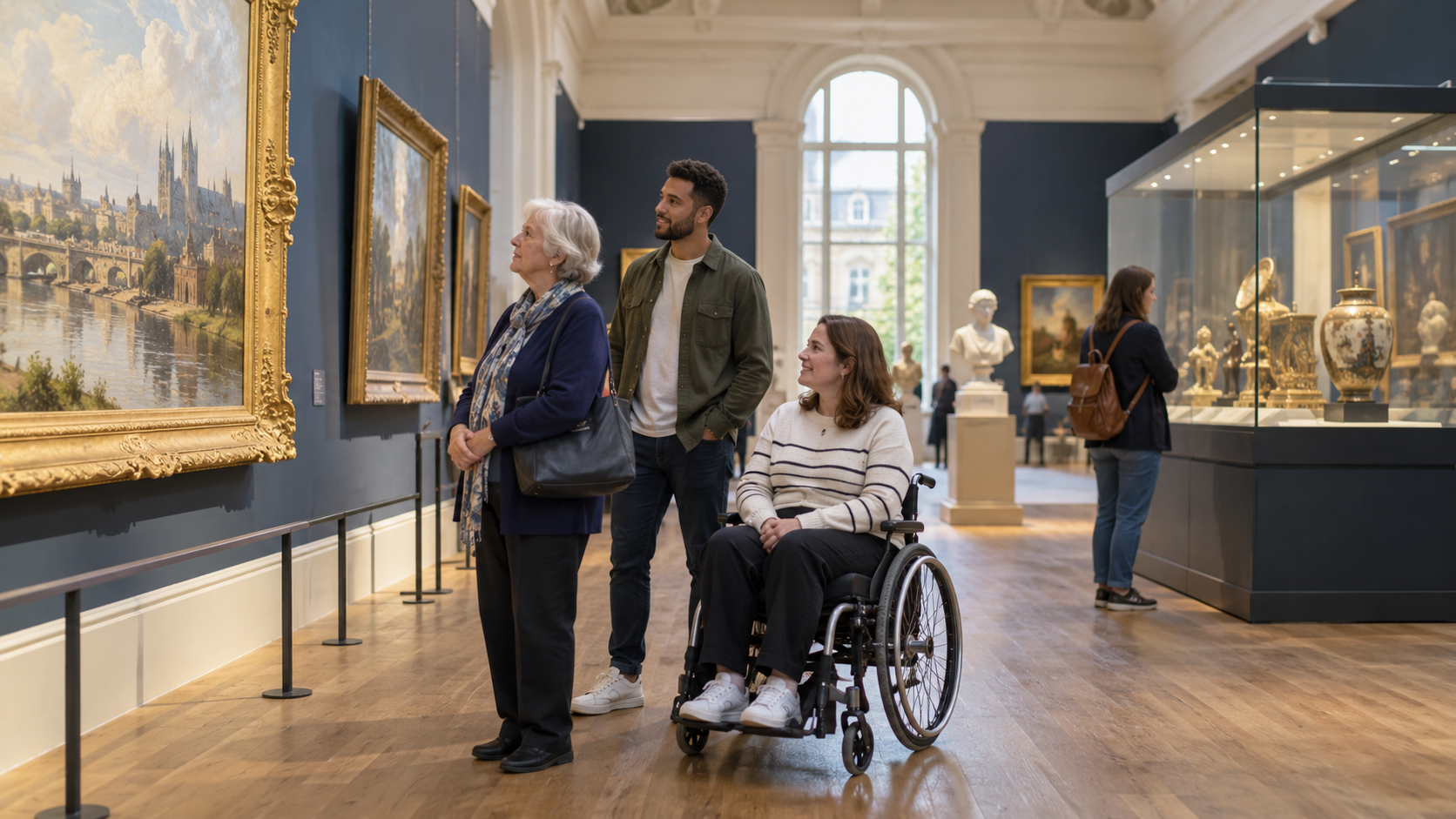
A practical UK guide to finding museums, galleries and cultural days out, including free entry, accessibility, quiet sessions, family activities, concessions and virtual visits.
Check the details with the venue
Admission prices, concessions, essential-companion or carer admission, opening times, booking arrangements and accessibility differ from one venue to another. Check the venue’s current information directly before travelling, even if you have visited before.
Finding museums and galleries locally
Museums and galleries can be run by councils, charities, universities, community groups or independent organisations. Collections range from local history and transport to art, science, industry and natural history.
- Use the GOV.UK local council finder to reach your council website, which may list local museums, galleries, heritage sites and events.
- Art UK’s venue finder helps people explore public art collections and venues around the UK.
- Libraries, tourist information services and community noticeboards may also list local exhibitions and activities.
Free entry and low-cost visits
Some museums and galleries offer free general admission, while others charge, ask for a donation or have separate prices for special exhibitions. Free entry does not always include every exhibition, event or activity.
- Check whether general admission is free and whether a timed ticket is still needed.
- Ask about local-resident offers, family tickets, concessions and free community days.
- Include travel, parking, food, lockers and paid activities when working out the total cost.
- Taking your own food may reduce costs, but check the venue’s rules and picnic areas first.
Accessibility and wheelchair information

A venue’s access page should explain practical details, but it is sensible to contact the venue if something is essential to your visit. AccessAblepublishes detailed access guides for many UK places, including museums and visitor attractions.
Accessibility can vary by location. Check directly before travelling.
- Ask about step-free entrances, lifts, accessible toilets, seating and wheelchair availability.
- Check the distance from parking or public transport and whether paths, galleries or historic rooms have restrictions.
- Ask about hearing loops, captioning, audio description, large-print information, British Sign Language provision and assistance-dog arrangements where relevant.
- If you need a Changing Places toilet, confirm its location, opening arrangements and whether equipment is available.
Quiet and sensory-friendly sessions
Some venues offer relaxed openings, quieter hours, sensory maps, visual stories or sessions with reduced sound and lighting. The name and arrangements vary, so read the event details and ask what will actually be different on the day.
- Ask when the venue is usually quietest and whether there is a calm space you can use.
- Check for sudden noises, flashing displays, dark galleries, strong smells or crowded routes.
- Ask whether ear defenders, sensory bags or printed visual guides are available to borrow.
- Autism in Museums shares information about relaxed and autism-friendly museum visits around the UK.
Dementia-friendly activities
Some museums and galleries run reminiscence sessions, object-handling activities, creative groups or quieter visits for people living with dementia and those who support them. Ask whether booking is required and whether a family member, friend or carer can attend.
National Museums Liverpool’s House of Memories offers museum-led dementia awareness resources and digital activities that can also be used away from a museum.
Family and children’s events
Family trails, craft activities, object handling, storytelling and holiday events can help children explore at their own pace. Some are included with admission and others cost extra.
- Check the recommended age, length, cost and whether adults also need a ticket.
- Ask about buggy access, baby-changing facilities, family toilets and places to eat.
- For a first visit, choose a small part of the venue rather than trying to see everything.
- Kids in Museums provides UK family-visit ideas and information about museums recognised through its Family Friendly Museum Award.
Disabled visitor and essential-companion or carer concessions
Some venues offer a reduced-price or free ticket for a disabled visitor’s essential companion, personal assistant or carer. This is not the same everywhere: the wording, evidence, booking method and number of companion tickets can differ by venue.
- Read the venue’s own access and ticket pages before booking.
- Ask what evidence, if any, the venue accepts and whether the companion ticket must be booked in advance.
- Ask whether the concession also applies to paid exhibitions, tours and events.
- If online booking is not accessible, contact the venue and ask for another way to book.
Virtual museum and gallery visits
Online collections, recorded talks and virtual tours can help you explore from home, prepare for an in-person visit or revisit an object afterwards. They can also be useful when travel, energy, cost or access makes a physical visit difficult.
Art UK provides free online access to artworks from public collections across the UK. Individual museums and galleries may also have online collections or activities on their own websites.
Booking, transport and practical planning
- Check current opening times, last entry and any planned closures.
- Find out whether you need to book a timed ticket, including for free admission.
- Plan the journey and check accessible public transport, drop-off points and parking directly with the relevant providers.
- Ask whether large bags must be stored and whether lockers take cash, cards or a refundable coin.
- Check café arrangements, drinking-water points, seating and whether you may leave and return on the same ticket.
- Save the venue’s telephone number in case travel is delayed or your access needs change.
Questions to ask before visiting
- What will admission cost for everyone in my group, and what is included?
- Do I need to book, and can tickets be changed or refunded?
- What access route should I use, and are all the areas I want to visit step-free?
- Is an essential-companion or carer ticket available, and how do I arrange it?
- When is the quietest time, and is there a quiet space?
- Are accessible toilets, seating, lifts and mobility aids available and working?
- Who should I contact if I need a reasonable adjustment or help during the visit?
Keep any important answers with your booking confirmation so you can refer to them on the day.
Important information
This page provides general information only. Prices, concessions, essential-companion or carer admission, events, opening times and accessibility arrangements can change and differ between venues. Always check the current details directly with the museum, gallery or event organiser before travelling.
Trusted UK information and support
These are independent information links, not affiliate links. Sixpence Support UK does not receive payment when you use them and is not endorsed by or affiliated with these organisations.
Information and links checked: September 2026.