
Burial Grounds, Cemeteries and Crematoriums Across the UK
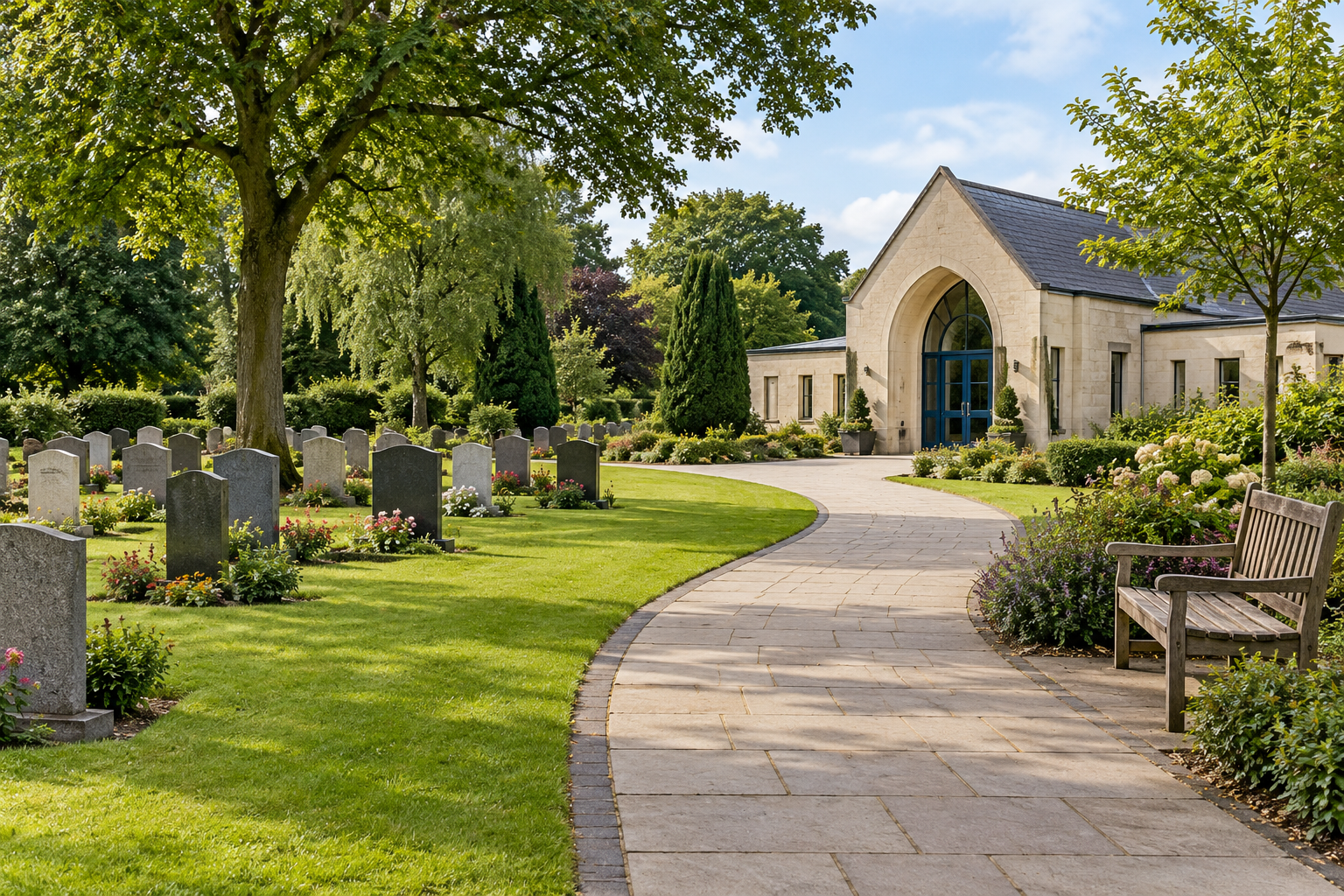
Find burial grounds, cemeteries, natural burial sites and crematoriums across England, Scotland, Wales and Northern Ireland. This page brings together useful directories and official local services. This guide is for people of all faiths and none, with arrangements subject to each site's facilities and rules. Our information is free to use. Burial, cremation and memorial providers charge their own fees. Confirm availability, prices and arrangements directly before making a booking.
Find a local service
Use the links below to search by area, then contact the operator. Not every directory lists every site. A listing does not confirm that new burial spaces or funeral appointments are available.
Hosted by the Institute of Cemetery and Crematorium Management. Contact information for burial and cremation operators in England, Scotland and Wales. This is a service directory, not a grave-record search.
Search its member crematoria and follow operator links. This is a membership directory, not a complete national register.
Explore listed natural and woodland burial grounds. Confirm local availability and individual site rules.
Official services by UK nation
England and Wales
The GOV.UK bereavement services finder covers England and Wales only. Enter a postcode to reach local council bereavement services. Ask about council cemeteries and crematoria, fees and available plots. Churchyards or other burial grounds may have a separate operator.
GOV.UK: find bereavement services from your councilScotland
Find the council for your area and ask for its burial and cremation team.
Northern Ireland
The ICCM directory above covers England, Scotland and Wales. In Northern Ireland, find your council's cemetery and crematorium services through nidirect.
Understanding the options
A cemetery or burial ground provides space for burial. Churchyards and faith burial grounds may have particular eligibility and religious requirements.
Natural or woodland burial sites usually have their own environmental, coffin and memorial rules. Ask about paths and year-round visiting access.
A crematorium carries out cremations and may provide a chapel or ceremony space. Ask about attended services, arrangements for an unattended cremation and how ashes are returned. A direct cremation package is not the same as a chapel service with mourners present.
Memorial gardens may offer places for ashes or remembrance. Ask exactly what a memorial payment includes and how long the arrangement lasts.
Faith, culture and funeral wishes
Burial grounds and crematoriums are not only for Christian funerals. Many council and independent services accommodate different faiths and non-religious ceremonies. Some sites or sections are reserved for particular communities. Confirm the arrangements directly before booking. These are general starting points, not rules for every family. Ask about the person's own wishes and the traditions they followed.
Christian funerals, including Catholic funerals
Many Christian traditions allow burial or cremation, but practices differ between churches. Ask the person's minister or priest about the service and any requirements. Catholic teaching prefers burial and permits cremation subject to Church guidance. Ask the parish priest about funeral rites and laying ashes to rest before deciding what to do with them.
Jewish funerals
Burial is traditional in Judaism. Contact the person's synagogue, rabbi or Jewish burial society promptly for help with preparation, burial arrangements and mourning customs. Practices vary: Orthodox and Progressive communities may have different requirements, and some Reform communities offer cremation. Do not assume one arrangement suits everyone.
Muslim funerals
Islamic funeral practice calls for burial rather than cremation. Contact a local mosque, Muslim funeral service or burial organisation promptly. Ask about ritual washing, shrouding, funeral prayers, a suitable burial plot and grave orientation. Burial is normally sought as soon as practicable, but required paperwork, release of the body and any coroner or procurator fiscal investigation must be completed as applicable. Ask the provider what timing is possible in your circumstances.
Sikh funerals
Cremation is the usual Sikh practice. A local gurdwara and a funeral director experienced in Sikh arrangements can help organise prayers, preparation and the crematorium service. Discuss the Five Ks, time for family participation and arrangements for ashes where relevant to the person's practice.
Guidance from the Network of Sikh Organisations includes advice for normal times; ignore any pandemic-era restrictions described on the same page.
Network of Sikh Organisations: funeral arrangements guidance (normal-times advice)Hindu funerals
Cremation is usual for many Hindu adults, although exceptions and family traditions exist. Ask the family's priest, local mandir or an experienced funeral director about preparation, prayers, family participation and arrangements for ashes. Agree any ceremony requirements with the crematorium before booking.
NAFD Funeral Directory: Hindu funeral traditions in the UKBuddhist funerals
Buddhist traditions vary. Cremation is common, but burial is also practised. Contact the person's temple, Buddhist community or spiritual adviser about prayers, handling of the body and any period of quiet or other wishes before making arrangements.
Dignity Funerals: Buddhist funeralsOther faiths, mixed-faith families and no religion
People of other faiths, mixed-faith families and people with no religion should have their wishes discussed individually. A humanist, non-religious or family-led ceremony may accompany burial or cremation, subject to the venue's rules. Humanists UK can help find a humanist celebrant; other independent celebrants are also available.
Humanists UK: non-religious funeralsPractical checklist for faith and cultural arrangements
Ask the operator about:
- dedicated faith sections and any eligibility rules;
- washing and preparation facilities, or arrangements with a specialist provider;
- shroud or coffin requirements;
- prayer space and service length;
- the earliest available burial or cremation date, weekend arrangements and any extra fees;
- family presence, including any request to witness a cremation, subject to safety and availability;
- handling and return of ashes and any permissions needed;
- language and access needs.
Not every site offers every facility. Contact the family's faith adviser and the provider early. This list is not exhaustive, and never assume a person's wishes from their name or background.
Questions to ask before booking
- Is the site accepting new burials or bookings?
- Are there residency, faith or other eligibility rules?
- What is the full itemised cost, including burial rights, grave opening, service time and any extra charges?
- Are charges different for people who lived outside the area?
- For a burial plot, what rights are being granted, for how long, and what are the renewal or transfer arrangements?
- What memorials, inscriptions, flowers and maintenance are allowed?
- What choices are available for ashes, and what permissions or charges apply?
- What are the visiting hours and arrangements for family visits?
Ask for written terms. Do not assume buying burial rights means owning the land.
Accessibility and personal wishes
Ask about step-free routes, accessible toilets, parking, seating, hearing support and assistance reaching the grave or chapel. Natural sites may have uneven or muddy paths.
Discuss religious, cultural and non-religious wishes directly. Ask about language support, service length and arrangements for people unable to attend in person.
Help with costs
Check support before agreeing to costs you cannot afford. Eligibility depends on your circumstances and where you live, and payments may not cover the whole funeral.
If there is nobody able to arrange or pay for a funeral, ask the local council or relevant hospital what arrangements may apply before committing to a private contract.
See also Benefits, Grants and Help with Living Costs and Bereavement support.
Finding an existing grave
Contact the cemetery, churchyard or burial authority with the person's full name and approximate date of death or burial. Ask whether it holds the register and can provide a plot location or map. Record searches and copies may carry a charge. The service directories above are not complete burial-record databases.
If something goes wrong
Ask the operator for its complaints process. Explain what happened and what you want put right. Keep quotes, agreements and correspondence.
Our Free Letter and Complaint Support can help put your concerns into clear words. For emotional support, see Bereavement.
Sources
- GOV.UK — Find bereavement services from your council (England and Wales)
- GOV.UK — Funeral Expenses Payment
- mygov.scot — Funerals, burials and cremations
- mygov.scot — Funeral Support Payment
- nidirect — Arranging a funeral
- nidirect — Funeral Expenses Payments
- ICCM — Cemeteries and crematoria directory
- FBCA — Crematoria directory
- Natural Burial Alliance — Natural burial grounds
- Church of England — Funeral locations
- Vatican — Instruction Ad resurgendum cum Christo on the burial of the deceased and the conservation of ashes
- United Synagogue — Burial services
- Reform Judaism — Death and the afterlife
- Muslim Council of Britain — Funeral and mortuary services guidance
- Co-op Funeralcare — Muslim funerals
- Network of Sikh Organisations — Funeral arrangements guidance (normal-times advice)
- NAFD Funeral Directory — Hindu funeral traditions in the UK
- Dignity Funerals — Buddhist funerals
- Humanists UK — Non-religious funerals
Sources checked 20 October 2026. General information only. Sixpence Support UK has no partnership with any provider listed and does not confirm prices or availability.