
Gardening, Allotments and Growing Your Own
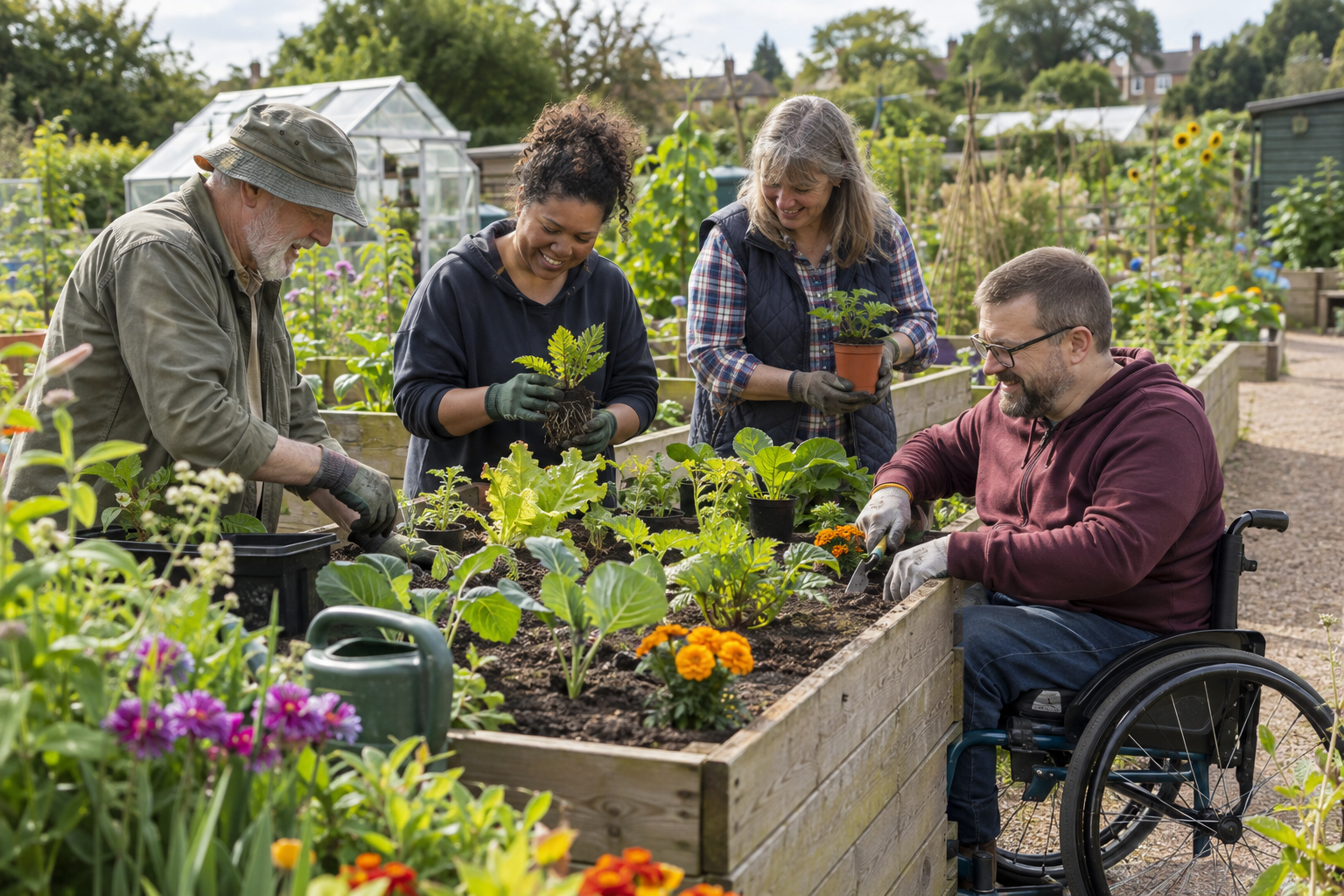
A practical guide to getting started, growing in small spaces, adapting gardening to suit you, finding an allotment or community garden, and staying safe around children and pets.
Start small and make it manageable
You do not need a large garden, expensive equipment or specialist knowledge. One pot, one windowsill or one small patch is enough. Choose a job you can finish comfortably, notice what grows well, and add more only if you want to.
Your first few gardening jobs
Begin with the space and time you already have. Look at how much light reaches the area, whether water is nearby and how easily you can reach every plant. A container of herbs, a window box of salad leaves or a small cleared bed can be a sensible first project.
- Clear only a small area and remove obvious litter or weeds.
- Choose a pot with drainage holes, or loosen the soil in a small bed.
- Read the seed packet or plant label for light, spacing and watering instructions.
- Water the soil rather than soaking the leaves, and check it before watering again.
- Keep a simple note of what you planted and when.
The Royal Horticultural Society gardening advice has step-by-step information for different plants and seasonal jobs.
Gardening without a garden
A windowsill, balcony, doorstep or bright indoor space can all support plants. Herbs and salad leaves can grow in relatively small containers, while larger pots can hold some vegetables and compact fruit plants.
- Check how much sun and wind the space gets before choosing plants.
- Use secure containers with drainage holes and saucers where water could cause damage.
- On a balcony, check weight limits and secure pots so they cannot fall.
- Choose indoor plants that suit the available light and are safe around children and pets.
- Start with fewer pots than you think you can manage, because containers may need regular watering.
Accessible gardening
Gardening can be adapted around disability, age, pain, fatigue or limited mobility. The aim is to make the task fit the person, not to push through discomfort.
- Raised beds and table-height planters can reduce bending and bring plants within easier reach.
- Use lightweight tools, easy-grip handles, smaller watering cans or a hose with a simple trigger.
- Work seated where that is safer, and keep frequently used tools close by.
- Break jobs into short stages, change position, pause before pain or fatigue builds, and plan somewhere to rest.
- Keep paths firm, level and wide enough for the person using them.
Thrive Get Gardening offers practical ideas for adapting gardens, tools and activities to different needs.
Gentle movement, routine and connection
Gardening can provide gentle movement, a reason to spend time outdoors and a regular task to return to. Some people enjoy the quiet and routine; others prefer sharing a plot, swapping plants or joining a community growing group. It is an activity, not a treatment, and everybody’s experience is different.
Choose tasks that feel manageable for you. If a health condition affects what you can do, ask an appropriate healthcare professional for individual advice rather than relying on general gardening information.
Growing food for the first time
Herbs, cut-and-come-again salad leaves, radishes, spring onions and dwarf beans are straightforward starting points. Strawberries and compact fruit plants can also suit pots, although every crop has its own needs.
- Choose crops you already like to eat and check the sowing dates on the packet.
- Plan for the light, depth and space each plant needs rather than filling every gap.
- Use clean containers and suitable compost; never reuse a container that held harmful chemicals.
- Wash hands after handling soil, compost or garden products.
- Wash produce in clean running water and remove damaged or spoiled parts before eating.
- Keep harvested food separate from compost, chemicals, animal waste and dirty tools.
Garden Organic provides information about organic and wildlife-friendly ways to grow food.
Allotments and community gardens
Use the GOV.UK local council finder to identify the council responsible for allotment enquiries in your area. In England and Wales, a council may offer a plot or add you to a waiting list. Arrangements differ across the UK, so check locally.
- Ask about waiting times, plot sizes, rent, deposits, water, toilets, paths and accessible plots.
- Read the tenancy agreement before accepting a plot.
- Check expectations for cultivation, weeds, structures, bonfires, livestock and shared paths.
- Be realistic about travel, watering and regular maintenance throughout the year.
- If a full plot is too much, ask about a half plot, shared plot or local community garden.
The National Allotment Society provides information for allotment growers and associations.
Gardening with children
Children can help with simple, age-appropriate jobs such as filling pots, sowing large seeds, watering and picking ready produce. An adult should supervise and decide which tools and activities are suitable.
- Keep children within sight around ponds, water containers, tools and machinery.
- Teach them not to taste any plant, berry, mushroom or garden product without an adult checking it.
- Store sharp tools, fertilisers, pesticides and other products locked away or out of reach.
- Cover cuts, wear suitable clothing and wash hands after soil contact and before eating.
Pet-safe gardening
Check whether plants, bulbs, composts, fertilisers, slug products and pest treatments are safe for the animals that use your home or garden. Keep products in their original labelled containers and store them where pets cannot reach them.
If you think a pet has eaten or touched something poisonous, contact a vet promptly. Keep the plant, product packaging or a clear photograph if it is safe to do so. Do not make the animal sick unless a veterinary professional tells you to.
Work safely and know when to stop
- Wear secure footwear and suitable gloves for the job.
- Use a stable position, split heavy loads and ask for help rather than twisting or lifting beyond your ability.
- Take drinking water, use shade and suitable sun protection, and avoid strenuous work in very hot weather.
- Clean small cuts, cover them and seek help for deep, dirty or infected wounds.
- Keep tools maintained, carry sharp tools carefully and disconnect powered equipment before clearing a blockage.
- Read and follow every product label, including protective clothing, mixing, storage and disposal instructions.
- Stop if you feel unwell. Call 999 for a serious injury, breathing difficulty, collapse or another immediate emergency.
A simple seasonal starting guide
Spring
Clear small areas, prepare containers, sow suitable seeds and watch for late frosts.
Summer
Water when needed, remove weeds, support taller plants and harvest regularly.
Autumn
Gather crops, collect leaves, tidy damaged growth and plan what to grow next year.
Winter
Clean and store tools, check structures safely and use quieter weeks to plan and order seeds.
Weather and growing conditions vary across the UK, so use plant labels and local advice as well as the season.
Gardening products and places to shop
Garden-centre links and gardening supplies will be added to the Sixpence Support UK Shopping Page as that section develops.
Visit Useful Products and Shopping Links →Important information
This page provides general information only. Follow plant, tool and product instructions. Seek appropriate professional help for health concerns, suspected poisoning or injuries, and call 999 in an emergency.
Trusted UK information and support
These are independent information links, not affiliate links. Sixpence Support UK does not receive payment when you use them and is not endorsed by or affiliated with these organisations.
Information and links checked: September 2026.