
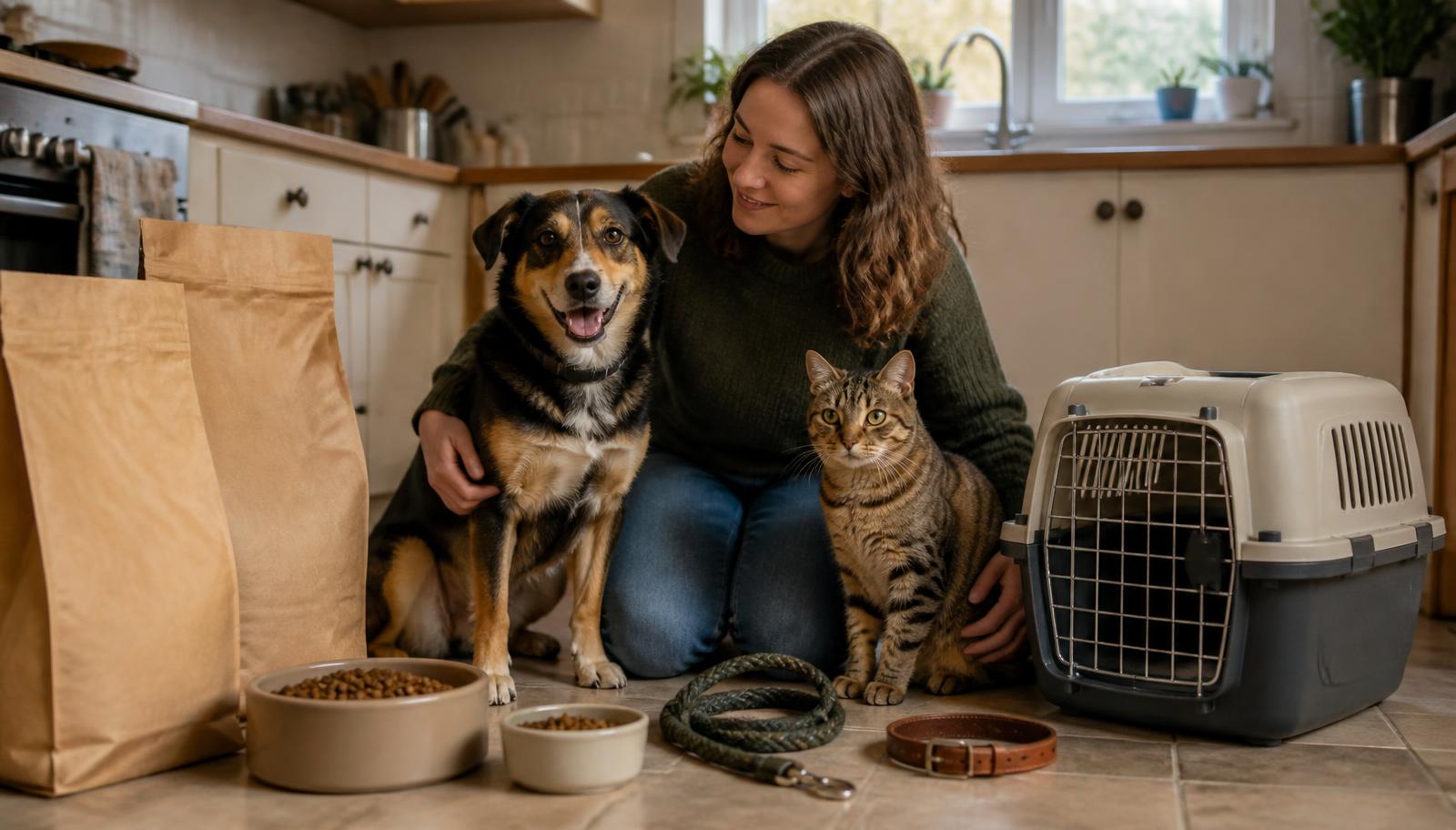
Pet Food and Essential Supplies
Where to ask for help with pet food, litter, bedding and other essentials, and how to change an animal's food safely.
Ask for help as early as you can
If you are struggling to afford food or essential supplies for your pet, ask for help as early as possible. Pet food banks, animal organisations, community food banks and local support groups may be able to provide short-term assistance. Availability and eligibility vary by area, so always contact the service before travelling.
Asking for help is nothing to be ashamed of. Many households use this kind of support for a short period while money is tight, and keeping a pet with the person who loves it is usually the best outcome for both.
Does your pet have no food for today?
- Contact a local pet food bank, ordinary food bank or animal welfare organisation immediately.
- Explain what animals you have and how much food is left.
- Ask whether they require identification, proof of address, benefits information or a referral.
- If your pet is unwell, very weak, refusing food or has special dietary needs, contact a veterinary practice for advice.
Never leave an animal without fresh drinking water.
What pet food banks can and cannot do
- They usually provide short-term emergency help, not a permanent supply of food.
- Stock varies, so the brand or type your animal normally eats may not be available.
- Some services need a referral or evidence of financial hardship, while others do not.
- Opening times, locations and eligibility rules change often.
- Telephone or check online before travelling, so you do not make a wasted trip.
Finding help in your area
The expandable sections below explain the main sources of help. Open the ones that apply to you.
Finding a pet food bank near you
Pet food banks are run by animal charities, community groups, veterinary practices, churches and ordinary food banks. There is no single national list, so it is worth trying more than one route.
- Use the Blue Cross and RSPCA pet food bank finders below.
- Ask your usual veterinary practice whether it knows of local schemes.
- Ask your local food bank whether it also holds pet food.
- Ask your council, library or community hub about local support groups.
- Ask a local rescue or rehoming centre whether it runs a pet food or supplies scheme.
When you contact a service, ask what identification or paperwork they need, whether a referral is required, how much they can give and how often you may return.
Blue Cross pet food banks
Blue Cross runs and supports pet food banks in a number of areas and keeps a current list on its website. Locations, stock and eligibility depend on the individual scheme, so check before travelling.
RSPCA pet food support
The RSPCA has a pet food bank finder and wider cost-of-living information for pet owners, including advice on veterinary costs and everyday care. Support offered varies from area to area.
Help for cat owners
Cats Protection’s Community Kitty works with food banks and local partners to get cat food and essentials to people who need them. It operates through partner organisations rather than as a nationwide service, so help is not available everywhere.
Local food banks and community support
Ordinary food banks, community pantries, warm spaces, faith groups and mutual-aid groups sometimes hold pet food alongside food for people. It is always worth asking, even if pets are not mentioned on their website.
- Explain how many animals you have and what they normally eat.
- Ask whether you need a referral from a support worker, GP surgery or council.
- Ask whether they can also help with litter, bedding or other essentials.
- Ask when you can collect and whether someone else may collect for you.
If money is the wider problem, help with living costs, energy bills and benefits may also be available.
Essential supplies you may be able to request
Pet food banks and animal organisations sometimes hold more than food. It is worth asking about:
- Dog food, wet and dry
- Cat food, wet and dry
- Food for small animals, birds and rabbits
- Cat litter
- Bedding and blankets
- Bowls for food and water
- Leads, harnesses and collars
- Carriers and travel boxes
- Flea and worming treatment, where a scheme can provide it
- Grooming basics and poo bags
Stock changes constantly and nothing can be guaranteed, but asking costs nothing.
Changing food safely
Sudden changes of food can upset an animal’s stomach. Where you can, change food gradually over several days by mixing a small amount of the new food into the old and slowly increasing it.
- Introduce new food slowly whenever the situation allows.
- Watch for vomiting, diarrhoea, refusing food or unusual tiredness.
- Keep fresh drinking water available at all times.
- Check that the food is suitable for the animal’s species, age and size.
If your pet is fed a diet prescribed for a medical condition, speak to a veterinary professional before changing it.
Do not switch to human food or a homemade diet without professional guidance. Some everyday human foods are harmful to animals, and homemade diets can easily miss nutrients an animal needs.
Reducing pet costs without risking welfare
Small changes can help while money is short, as long as the animal’s health and wellbeing come first.
- Ask your veterinary practice about payment plans or health-plan options.
- Check whether you qualify for reduced-cost veterinary treatment through PDSA, Blue Cross or an RSPCA clinic.
- Buy larger bags or multipacks only if you can store them safely and dry.
- Keep up with preventive care, as untreated problems usually cost more later.
- Accept second-hand beds, bowls and blankets from friends or local groups.
Do not stop essential medication or delay urgent veterinary care to save money. Ask the practice about costs before treatment and tell them if you are struggling.
Trusted links and important information
Blue Cross and the RSPCA both provide current pet-food-bank finders, while Cats Protection’s Community Kitty works with food banks and local partners to support cat owners. We cannot promise that help, stock or eligibility is available everywhere.
- Blue Cross – find a pet food bank (opens in a new tab)
- RSPCA – find a pet food bank (opens in a new tab)
- RSPCA – cost-of-living help for pet owners (opens in a new tab)
- Cats Protection – Community Kitty (opens in a new tab)
Asking for help is not a failure
Nobody should be made to feel ashamed for asking for pet food or supplies. Money worries can affect anyone, and short-term help often keeps a much-loved animal at home.
Giving up a pet should never be the first suggestion. Ask about food banks, veterinary payment options and local support before considering rehoming, and speak to an animal organisation if you are worried about coping.
Important information
Sixpence Support UK provides general information and links to other organisations. We cannot guarantee that food, supplies or financial assistance will be available. Always contact the organisation directly to check its current services and eligibility rules.