
Podiatry and Chiropody: Foot Care, NHS Access and Checking Registration
Podiatrists — also called chiropodists — assess and treat problems of the feet, ankles and lower limbs. Both titles are protected in the UK and practitioners must be registered with the Health and Care Professions Council. Foot care matters especially for people with diabetes or poor circulation.
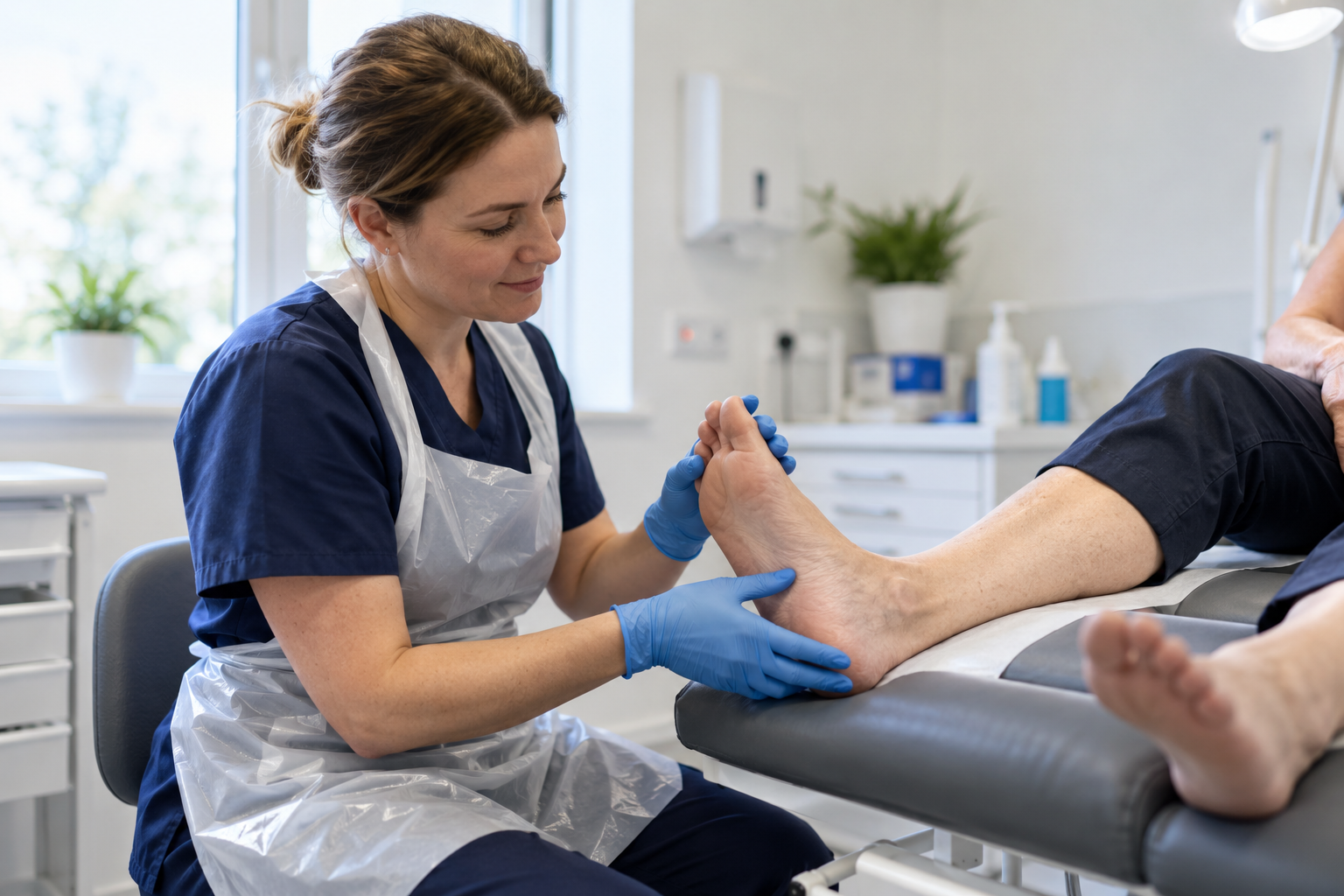
What podiatry is
Podiatry covers the assessment, diagnosis and treatment of foot, ankle and lower-limb problems. That includes skin and nail care, biomechanical assessment of how you walk, insoles and footwear advice, wound care, and some minor surgical procedures such as treatment of ingrown toenails. “Chiropodist” and “podiatrist” mean the same thing; podiatrist is the more modern term.
What usually happens at an appointment
You will be asked about your general health, medicines, circulation, diabetes status, footwear and symptoms. The podiatrist examines the feet and may check pulses and sensation. Treatment might include removing hard skin or corns, cutting and thinning nails, dressing a wound, padding, or providing insoles.
You should be given self-care advice — how to wash and dry feet, moisturise, check skin daily and choose footwear — and told whether follow-up is needed.
What podiatry may help with
- Corns, callus, verrucas, fungal nails and athlete’s foot.
- Ingrown toenails and painful or thickened nails.
- Heel pain, arch pain, bunions and toe deformities.
- Foot and ankle pain related to walking pattern, sport or work.
- Foot care for people with diabetes, poor circulation or reduced sensation.
- Wound and ulcer care as part of an NHS multidisciplinary foot service.
What the evidence supports, and its limits
Structured foot care, risk assessment and prompt treatment of foot problems are central to NICE guidance for people with diabetes, where they help reduce the risk of ulceration and amputation. For general foot pain, evidence supports footwear advice, exercise and, for some conditions, orthoses, but findings on custom insoles are mixed and they are not always better than good off-the-shelf supports.
What podiatry cannot do
It cannot cure arthritis, diabetes or circulatory disease, and it does not replace vascular or orthopaedic assessment where that is needed. Painless routine nail cutting for someone who can manage at home is personal care rather than treatment, and may not be funded by the NHS.
Risks and who should take extra care
Treatment is generally safe. Risks include minor bleeding, infection after nail or skin procedures, and discomfort while new insoles are worn in. Tell the podiatrist if you have diabetes, poor circulation, neuropathy, a weakened immune system, a bleeding disorder or take anticoagulants — these change what is safe to do.
If you have diabetes or reduced sensation, do not use corn-removing plasters or blades on your own feet, and seek professional advice instead.
Regulation and checking a practitioner
“Podiatrist” and “chiropodist” are protected titles. Only HCPC-registered practitioners may use them, and you can search the HCPC register free of charge. Some people offer “foot health practitioner” or similar services; those titles are not protected and are not HCPC-regulated, so ask exactly what training the person holds.
NHS availability and costs
NHS podiatry is available in most areas but is usually prioritised for people at higher risk, for example those with diabetes, circulation problems, reduced sensation or an existing wound. Some services accept self-referral; others need a GP referral. Routine nail cutting for otherwise healthy feet is often not provided.
Private fees vary by area and treatment and we do not publish a typical figure. Ask for prices in writing before the appointment, including any nail surgery, and check whether the fee covers follow-up dressings.
Questions worth asking before you book
- Are you registered with the HCPC as a podiatrist or chiropodist?
- Do you have experience with diabetes-related foot care?
- What will the appointment include, and what will it cost?
- Will I need follow-up appointments, and how often?
- Can you write to my GP or diabetes team if something needs reviewing?
How to raise a concern
Speak to the clinic or NHS service first and ask for the complaints procedure. NHS complaints can be escalated to the relevant ombudsman. Concerns about a registered podiatrist’s conduct or safety can be reported to the HCPC.
Related pages on this site
Sixpence Support UK CIC is an independent information service. We do not recommend, endorse or accept payment from individual practitioners or clinics, and we do not claim that any treatment can cure a medical condition. This page is general information, not medical advice. Always speak to your GP, NHS 111 or another qualified health professional about your own symptoms.
- [1] NHS. Foot care and podiatry (chiropody) · 2026
- [2] HCPC. Check the Register — chiropodists and podiatrists · 2026
- [3] HCPC. Protected titles · 2026
- [4] NICE. Diabetic foot problems: prevention and management (NG19) · 2019
- [5] NHS. Type 2 diabetes: foot care and annual checks (this page is no longer available online) · 2026
- [6] Royal College of Podiatry. Find a podiatrist · 2026
- [7] HCPC. Raising concerns · 2026
- [8] NHS 111. Get help for your symptoms · 2026