
Family Water Sports and Activities
Swimming and supervised water activities are among the most enjoyable things a family can do together in Britain. This page explains the main activities, how to start safely as a beginner, accessible options, likely costs, how to check a provider, and the water-safety advice that matters most.
Last reviewed: 14 August 2026. Sessions, prices, age limits and accessibility differ between providers, so always confirm details directly before booking.
Choosing a family water activity
There is a wide choice, and most families begin with something indoors or on sheltered water with an instructor present.
- Swimming — the most widely available and the best foundation for everything else.
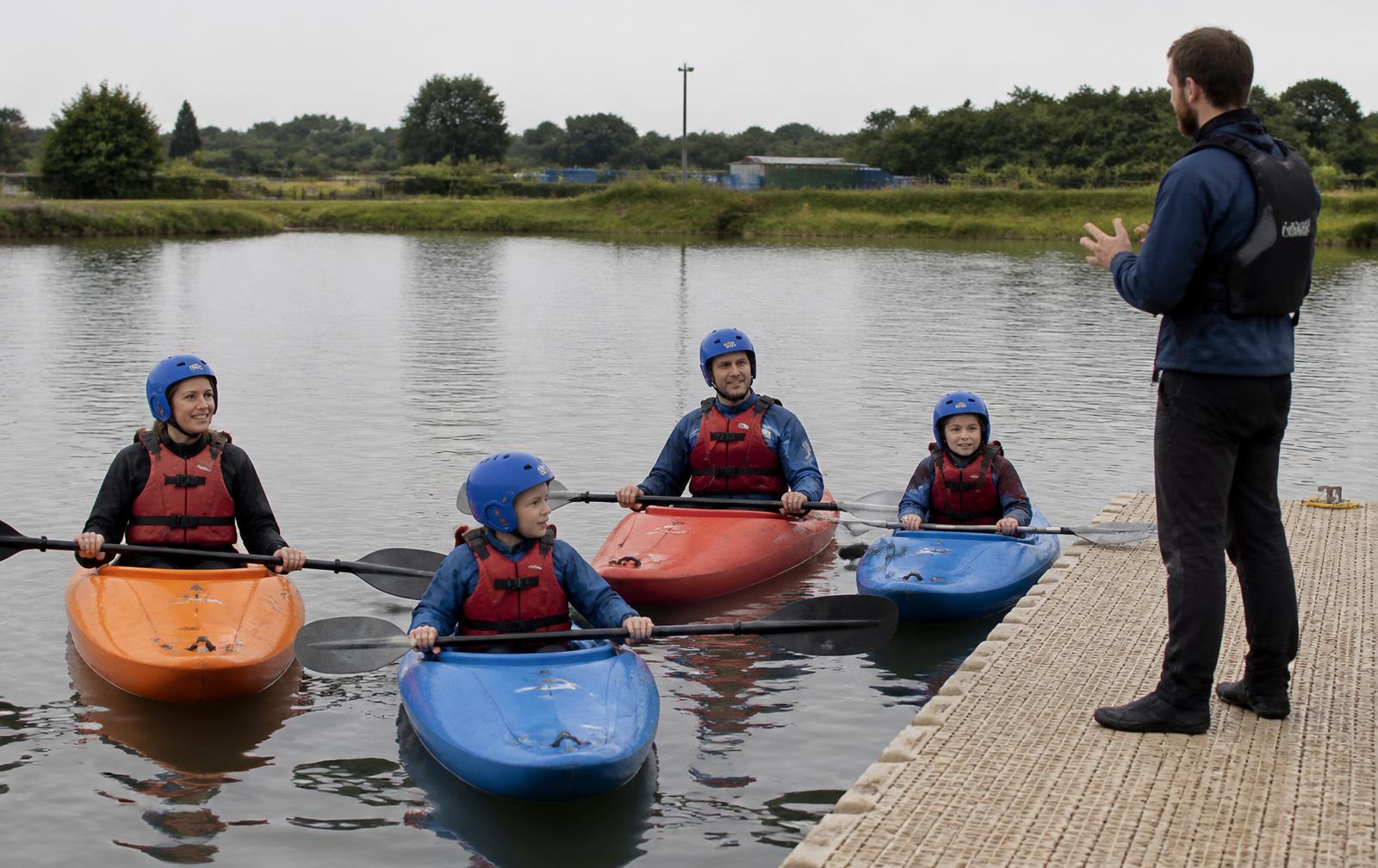
- Canoeing and kayaking — stable sit-on-top kayaks and open canoes are common for beginners on lakes, reservoirs and calm rivers.
- Paddleboarding — standing or kneeling on a board; easy to enjoy in calm, sheltered conditions with instruction.
- Sailing and rowing — usually through a recognised club or training centre, often with youth and family programmes.
- Surfing, bodyboarding and windsurfing — normally learned through a surf school or recognised centre at a lifeguarded beach or sheltered water.
- Organised rafting and activity-centre sessions — multi-activity days where equipment, supervision and instruction are all included.
At a glance
- Start with a supervised, instructed session at a recognised club or centre.
- Equipment can normally be hired or borrowed before you buy anything.
- Confidence in water is not the same as being a competent swimmer.
- Ask about accessibility, age limits and swimming requirements before booking.
- UK open water can be dangerously cold even on warm days.
- Never let children enter open water unsupervised.
Starting as a beginner
Look for recognised clubs, leisure centres, activity centres and training centres with qualified instructors and supervised taster sessions. Bodies such as Paddle UK, the Royal Yachting Association and Swim England list affiliated clubs, courses and recognised centres.4,6,9
A taster or introductory session is the sensible first step. Families can usually hire equipment rather than buying it, and many centres run open days, holiday courses and family sessions where boats, paddles, buoyancy aids and sometimes wetsuits are included.
Swimming and learning to swim
Most leisure centres run family swimming sessions, lessons for children and adults, and quieter or disability-friendly sessions. Swim England’s Poolfinder and Learn to Swim pages help you find pools and lessons near you.9,10
When choosing a pool, it is worth asking about changing facilities, family or accessible changing rooms, water temperature, quieter times and any support your family needs.
Please remember: being confident in water is not the same as being a competent swimmer. A child who is happy splashing in a shallow pool may not be able to swim, tread water or cope with cold water, currents or getting out of their depth.
Canoeing, kayaking and paddleboarding
Beginner sessions normally take place on sheltered water with an instructor, and include a safety briefing and all the equipment you need. Paddle UK’s PaddleSafe advice sets out what to do before and during a paddle.5
- Clothing — quick-drying layers or a wetsuit, footwear that stays on, and warm dry clothes for afterwards.
- Buoyancy equipment — wear the buoyancy aid (and helmet where required) provided, and check with the instructor that it is correctly fitted for each person, including children.
- Weather and water conditions — check the forecast, wind, tides and any local warnings before you go, and follow the provider’s decision if a session is changed or cancelled.13
- Stay together — never paddle alone, keep the group in sight, and stay within the area agreed with your instructor.
- Calling for help — carry a means of calling for help that stays dry and reachable, such as a phone in a waterproof pouch on your person.
We do not give technical paddling instruction on this page. Follow the official guidance from Paddle UK and the qualified instructor running your session.
Sailing, rowing and windsurfing
Sailing, rowing and windsurfing are usually learned through a club or a recognised training centre. Many run beginner courses, open days and low-cost taster sessions, and lend boats and equipment to members and course participants.6
For children and young people, the RYA’s OnBoard programme introduces sailing and windsurfing through affiliated clubs and centres, and many clubs run junior weeks during the school holidays.7 Rowing clubs often offer beginner “learn to row” courses for adults and juniors.
Disabled children and adults
Many disabled children and adults swim, paddle and sail. Depending on the venue, support may include accessible swimming sessions, adaptive equipment, extra staff or one-to-one support, accessible changing facilities, changing benches and pool or boat hoists.
Facilities and support vary a great deal, and not every venue can offer the same thing. Please contact the provider before booking to explain what your family needs and ask exactly what is available. RYA Sailability supports inclusive sailing at affiliated clubs and centres, and Activity Alliance has information on inclusive activity for disabled people.8,11
Costs and equipment
Costs vary widely by area, provider and season. Typical things to budget for:
- Swimming lessons, family swim sessions and pool entry.
- Taster sessions, beginner courses and instructor time.
- Equipment hire — boats, boards, paddles, buoyancy aids, wetsuits.
- Club membership, which may have junior, student, concession or family rates.
- Buying kit later on, such as a wetsuit, buoyancy aid or footwear.
- Travel, parking and food for the day.
Some councils, clubs and community schemes offer concessionary prices, holiday activity schemes or subsidised sessions, but this depends entirely on your area. We do not quote fixed prices here because they change often — always confirm the full cost, including hire, deposits and extras, before you book.
Checking a provider
Sensible questions to ask any club, centre or instructor:
- What qualifications do the instructors hold, and who are they affiliated to?
- Do you have public liability insurance?
- What safeguarding arrangements and policies are in place for children?
- What are the supervision ratios for the session?
- What are your emergency procedures, and is a rescue boat or lifeguard present?
- Are there age limits, weight limits or swimming requirements?
- What accessibility support, adapted equipment and changing facilities are available?
- What is the cancellation, bad-weather and refund policy?
Sixpence Support UK does not inspect, approve or endorse individual providers. The questions above are to help you make your own decision.
Open-water safety — please read before going near open water
- Choose supervised or lifeguarded locations.
- Check the weather, tides and local warnings before you go.
- UK water can remain dangerously cold even during warm weather.
- Cold-water shock can affect strong swimmers.
- Never allow children to enter open water unsupervised.
- Do not use inflatable toys in open water.
- Wear the safety equipment required for the particular activity, and make sure it fits correctly.
- If someone is in difficulty, do not enter the water to rescue them.
- Call 999 — ask for the Coastguard at the coast, or the Fire and Rescue Service for inland water.
- Throw them something that floats if it is safe to do so.
- If you fall in unexpectedly, stay calm, float on your back and call for help.
A buoyancy aid or lifejacket does not replace supervision, training or swimming ability. Follow the RNLI water-safety and Float to Live advice and the Royal Life Saving Society UK Water Safety Code.1,2,3
Finding somewhere to take part
Have your postcode ready — most searches ask for it. Useful starting points:
- Swim England Poolfinder for swimming pools and lessons.9
- Paddle UK for affiliated canoe and kayak clubs, courses and places to paddle.4
- The RYA for recognised sailing and windsurfing training centres and affiliated clubs.6
- Your local council’s leisure pages for pools, holiday schemes and concessions.12
If your family is not ready for open water, indoor options work well: pool-based swimming lessons, indoor kayak or paddleboard taster sessions, water-confidence classes and leisure-pool family sessions.
Frequently asked questions
Do children need to be able to swim?
It depends on the activity and the provider. Many beginner sessions at recognised centres accept non-swimmers because participants wear buoyancy equipment and are supervised by qualified instructors, while some clubs and courses set a minimum swimming ability. Always ask the provider before booking, and be honest about how confident and competent each child really is in water.
Which activity is best for complete beginners?
Supervised swimming at a leisure centre is usually the simplest starting point. On the water, sit-on-top kayaking, an introductory canoe session or a taster sailing session at a recognised centre are popular first steps because equipment, buoyancy aids and instruction are all provided.
Do we need to buy equipment?
Usually not at first. Recognised clubs, activity centres and training centres normally include or hire out boats, paddles, buoyancy aids, helmets and often wetsuits. Hiring or borrowing lets you find out whether your family enjoys an activity before spending money on your own kit.
Are water sports suitable for disabled people?
Many disabled children and adults take part in swimming and water sports, with adaptive equipment, extra support and accessible facilities available at some venues. Facilities vary a great deal between venues, so contact the provider before booking to discuss accessible changing, hoists, adapted equipment and the support you need. RYA Sailability and Activity Alliance can help you find inclusive opportunities.
How can I check whether a provider is safe?
Ask about instructor qualifications, insurance, safeguarding arrangements, supervision ratios, emergency procedures, age limits, swimming requirements, accessibility and cancellation policies. Recognised clubs and centres affiliated to bodies such as Paddle UK, the Royal Yachting Association or Swim England should be able to answer these questions clearly. Sixpence Support UK does not inspect, approve or endorse individual providers.
What should we wear?
Follow the provider's advice. For paddling and sailing that usually means quick-drying clothing or a wetsuit, footwear that stays on, a warm layer for afterwards and dry clothes and a towel. Correctly fitted buoyancy equipment is normally provided and must be worn as instructed. Avoid heavy cotton clothing, which becomes cold and heavy when wet.
Can families take part together?
Yes. Family swimming sessions, family taster days, open days, holiday courses and family-friendly club sessions are common. Some activities have minimum ages or require an adult in the same boat, so check the details when you book.
What should I do if someone gets into difficulty?
Do not enter the water to rescue them. Call 999 and ask for the Coastguard at the coast, or the Fire and Rescue Service for inland water. Throw them something that floats if it is safe to do so, and keep talking to them and encouraging them to float on their back until help arrives.
More from Sixpence Support UK
Important information
Sixpence Support UK provides general information only. Water sports and swimming carry risks, and Sixpence Support UK does not provide instruction, inspect providers or guarantee that an activity is suitable for a particular person. Always follow official safety guidance and the instructions of qualified staff, and speak to a healthcare professional if you are unsure whether an activity is suitable for someone’s health.
- [1] RNLI. Water safety advice · 2026
- [2] RNLI. Float to Live · 2026
- [3] Royal Life Saving Society UK. Water Safety Code · 2026
- [4] Paddle UK. Clubs, courses and getting started paddling · 2026
- [5] Paddle UK / Go Paddling. PaddleSafe advice · 2026
- [6] Royal Yachting Association. RYA training courses and recognised training centres · 2026
- [7] Royal Yachting Association. OnBoard: sailing and windsurfing for young people · 2026
- [8] Royal Yachting Association. RYA Sailability: inclusive sailing · 2026
- [9] Swim England. Poolfinder: find a swimming pool · 2026
- [10] Swim England. Learn to Swim · 2026
- [11] Activity Alliance. Inclusive activity for disabled people · 2026
- [12] GOV.UK. Find your local council · 2026
- [13] Met Office. UK weather forecasts and warnings · 2026
- [14] NHS. When to call 999 · 2026