
Horses, Ponies and Donkeys
Emergency veterinary help, hoof care, feed and grazing, winter welfare, transport, ownership costs, loan agreements, rehoming and what to do about abandoned or neglected equines.
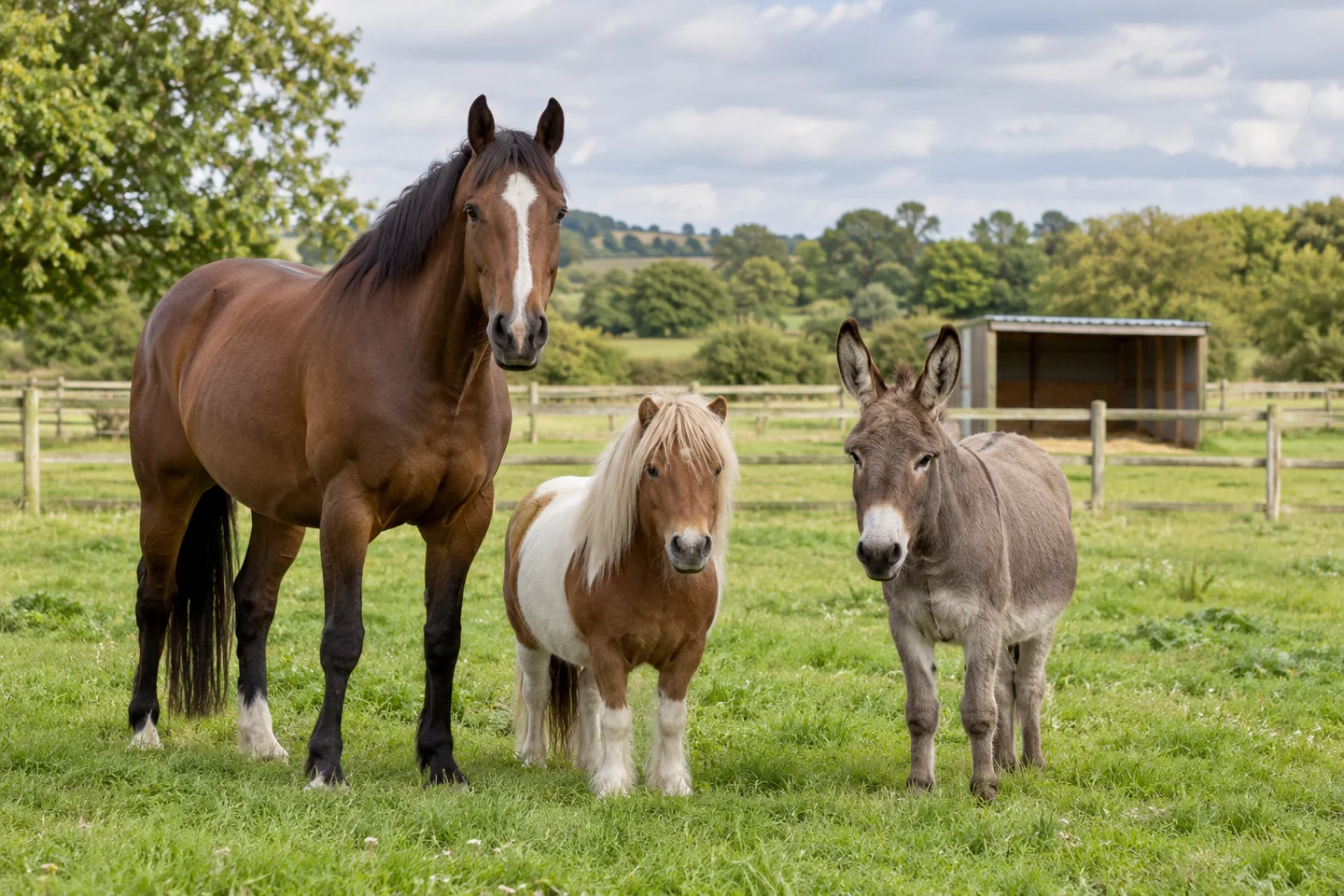
Equines are a long, expensive and legal commitment
Horses, ponies and donkeys can live for 25 to 40 years or more. They need daily checking, year-round grazing or forage, shelter, regular hoof care, dental care, vaccination, worming advice and an emergency plan. Donkeys are not small horses: they have different feeding, shelter and companionship needs, and they hide pain even more than horses do.
This page covers emergencies, day-to-day welfare, costs and the recognised UK charities that help owners. Every outside link opens in a new tab.
Equine emergencies — call a vet immediately
- Signs of colic: rolling, pawing, looking at or kicking the belly, sweating, not passing droppings, off food
- Severe lameness, refusing to bear weight, or a suspected fracture
- Heavy bleeding, deep wounds, wounds near a joint, or a puncture of the hoof or foot
- Choke, difficulty breathing, or coughing with distress
- Suspected laminitis: rocking back, reluctance to walk, heat and strong pulses in the feet
- Eye injury, sudden collapse, seizures, or a foal that is weak or not feeding
- An animal cast, trapped, or caught in wire or fencing
Telephone your veterinary practice first. Its recorded message gives out-of-hours cover. Keep the animal quiet and safe, do not give food or medicines while waiting for advice, and stay safe yourself.
If a horse is loose on a road or a road traffic collision has happened, telephone 999 and ask for the police.
Daily and weekly essentials
- Check every equine at least once, ideally twice, every day — including at grass.
- Constant access to clean water, not a frozen or empty trough.
- Enough forage: grazing, hay or haylage suited to the animal and season.
- Shelter from wind, rain, sun and flies, natural or built.
- Company: equines are herd animals and should not be kept alone.
- Regular hoof care by a registered farrier, usually every few weeks.
- Safe fencing, no rubbish, wire, poisonous plants or unsafe gates.
- Dental checks, vaccination and worm-control advice from your vet.
- A valid horse passport, and an up-to-date microchip record where required.
Open the section that matches your situation
Each heading row below is a button and opens the information underneath it.
Emergency equine veterinary help
Equine emergencies move fast. Have the plan written on the stable wall before you need it.
- Keep your practice’s day and out-of-hours numbers where everyone can see them.
- Know where the nearest equine hospital or referral centre is, and how long it takes.
- Know who can bring a trailer or lorry at short notice, day or night.
- Keep the passport accessible — it is needed for medication records and transport.
- Agree in advance who can make decisions if you cannot be contacted.
- Ask the practice about call-out charges and payment before the emergency happens.
Farrier and hoof care
In the UK only a registered farrier, or a person allowed by law such as a veterinary surgeon or a farriery apprentice under supervision, may shoe a horse. Hoof care is not optional, and neglected feet cause serious pain and lameness.
- Book routine trimming or shoeing every few weeks, as your farrier advises.
- Pick out feet regularly and look for heat, smell, cracks or a loose shoe.
- Donkeys need regular trimming too, and their feet are shaped differently.
- Check that anyone shoeing your horse is on the Farriers Registration Council register, administered through the Worshipful Company of Farriers’ examinations system.
- If a shoe is twisted or half off and you cannot remove it safely, ring the farrier.
- Suspected laminitis or a hoof puncture is a veterinary emergency, not a farrier job.
Feed, grazing, shelter and winter welfare
- Forage first: most equines need mainly grass, hay or haylage, fed little and often.
- Donkeys generally need a high-fibre, low-sugar diet such as barley straw with suitable supplementation, and they are prone to obesity on rich grass.
- Watch weight all year. Obesity and laminitis are as serious as being underweight.
- Restrict rich spring and autumn grass if your animal is prone to laminitis.
- Check water twice a day in freezing weather and break or empty ice.
- Provide dry standing, shelter and a windbreak; mud and cold rain cause real harm.
- Rug only if the animal needs it, check under rugs daily for rubs, sores and weight change, and never leave a rug unchecked for days.
- Donkeys are not waterproof and need dry shelter they can use at all times.
- Ask your vet or a welfare charity for a feeding plan if you are unsure.
Transport in an emergency
- Arrange in advance who can transport your animal at short notice, and confirm insurance.
- Keep the trailer or lorry serviced, with a working floor, tyres, lights and ramp.
- Keep the passport with the animal when travelling.
- Practise loading before an emergency. A frightened, painful horse is far harder to load.
- Ask the vet whether the animal is fit to travel. With some injuries it is safer for the vet to attend on site.
- For a loose horse or a collision on a road, telephone 999 and ask for the police.
- Ask your insurer whether emergency transport or hospital referral is covered.
Financial difficulty and the true cost of ownership
Equine costs are much higher than most pets: livery or land, forage, bedding, farrier, dental care, vaccination, worming, insurance and emergency treatment. Costs continue whether or not the animal is ridden.
- Speak to your vet and farrier early if you are struggling; ask for a plan and estimates.
- Ask your yard about cheaper livery options, shared care or grass livery.
- Ask a welfare charity for advice before the animal’s condition suffers.
- Do not delay hoof care, dental care or veterinary treatment to save money — problems become far more expensive and more painful.
- Be realistic. If ownership is no longer affordable, planned rehoming through a recognised charity is a responsible decision, not a failure.
Loan agreements and responsible rehoming
Loaning is common in the equine world and often goes wrong when nothing is written down. Put everything in writing before the animal moves.
- State clearly who owns the animal and who holds the passport.
- Say who pays for the farrier, dental care, vaccination, insurance and emergency treatment.
- Say what work the animal may do, who may ride it, and where it will be kept.
- Say what notice each side must give, and what happens if the animal becomes unfit for work.
- Agree in writing who can authorise emergency treatment or euthanasia, and who pays.
- Visit regularly if you are the owner, and keep records of visits and costs.
- Charities that rehome equines usually use a formal loan or rehoming agreement and keep ownership themselves, which protects the animal for life.
Abandoned, neglected or straying equines
Abandoned and fly-grazed equines are a serious UK welfare problem. Do not take an animal home or move it yourself: ownership, disease risk and liability are all involved.
- Note the location, date, number of animals and their condition, and take photographs from a safe place.
- Report suffering to the RSPCA, Scottish SPCA or USPCA depending on where you are.
- Report equines loose on a road to the police on 999.
- Report grazing on council land or public land to the local council.
- Contact an equine welfare charity for advice about persistent or repeated cases.
- Do not cut fences, feed unknown animals or enter private land.
Temporary care during illness, hospital admission or a crisis
Equines cannot be left unchecked. If you are admitted to hospital or cannot get to the yard, arrange cover immediately and write everything down.
- Write a care sheet: feed amounts, forage, medication, turnout, rugs and vet details.
- Tell the yard owner, sharer or a trusted friend, and name a backup person.
- Say in writing who may authorise veterinary treatment and how it will be paid for.
- Ask a welfare charity for advice if nobody can help — do not leave animals unchecked.
Planning ahead if you are older, disabled or struggling to cope
- Consider a sharer, part-loan or assisted livery before the animal’s care slips.
- Move to a yard with more help, level ground and better access if you can.
- Write down who will take the animal if you cannot continue, and confirm they agree.
- Take legal advice about including an equine in your will, and name funds if possible.
- Talk honestly to your vet about quality of life and end-of-life planning.
After a horse, pony or donkey dies
Losing an equine can be devastating, and the practical arrangements can feel overwhelming at the same time.
- Your vet can explain euthanasia, collection, cremation and burial rules.
- The passport must be returned to the issuing organisation after death.
- Tell your insurer and, where relevant, the yard and any sharer.
- A companion left alone will often grieve and should not be kept without company. Ask your vet or a charity for advice.
Your legal responsibilities, explained simply
- You must meet the animal’s welfare needs: suitable environment and diet, the ability to behave normally, appropriate company, and protection from pain, suffering, injury and disease.
- Causing unnecessary suffering is a criminal offence throughout the UK.
- Nearly all equines must have a horse passport, and passports must be kept up to date and travel with the animal.
- Microchipping requirements apply — check the current rules for your part of the UK.
- Grazing land must be safe, fenced and free of hazards and dangerous rubbish.
- Medicine records must be kept in the passport where required.
- Fly-grazing on land without permission is unlawful.
Recognised UK horse and donkey welfare organisations
- World Horse Welfare (opens in a new tab)
- The Donkey Sanctuary (opens in a new tab)
- The British Horse Society (opens in a new tab)
- Redwings Horse Sanctuary (opens in a new tab)
- RSPCA – horse and pony advice (opens in a new tab)
- Worshipful Company of Farriers (opens in a new tab)
- RCVS – find a registered veterinary practice (opens in a new tab)
- Legislation.gov.uk – Animal Welfare Act 2006 (opens in a new tab)
Important information
Sixpence Support UK provides general information and signposting. We are not a veterinary service and cannot diagnose or treat animals, pay veterinary or farriery bills, or guarantee that a charity can take an animal. Always speak to a veterinary surgeon about a specific animal, and check each organisation’s current services and criteria directly.