
NHS Careers and Apprenticeships for Young People
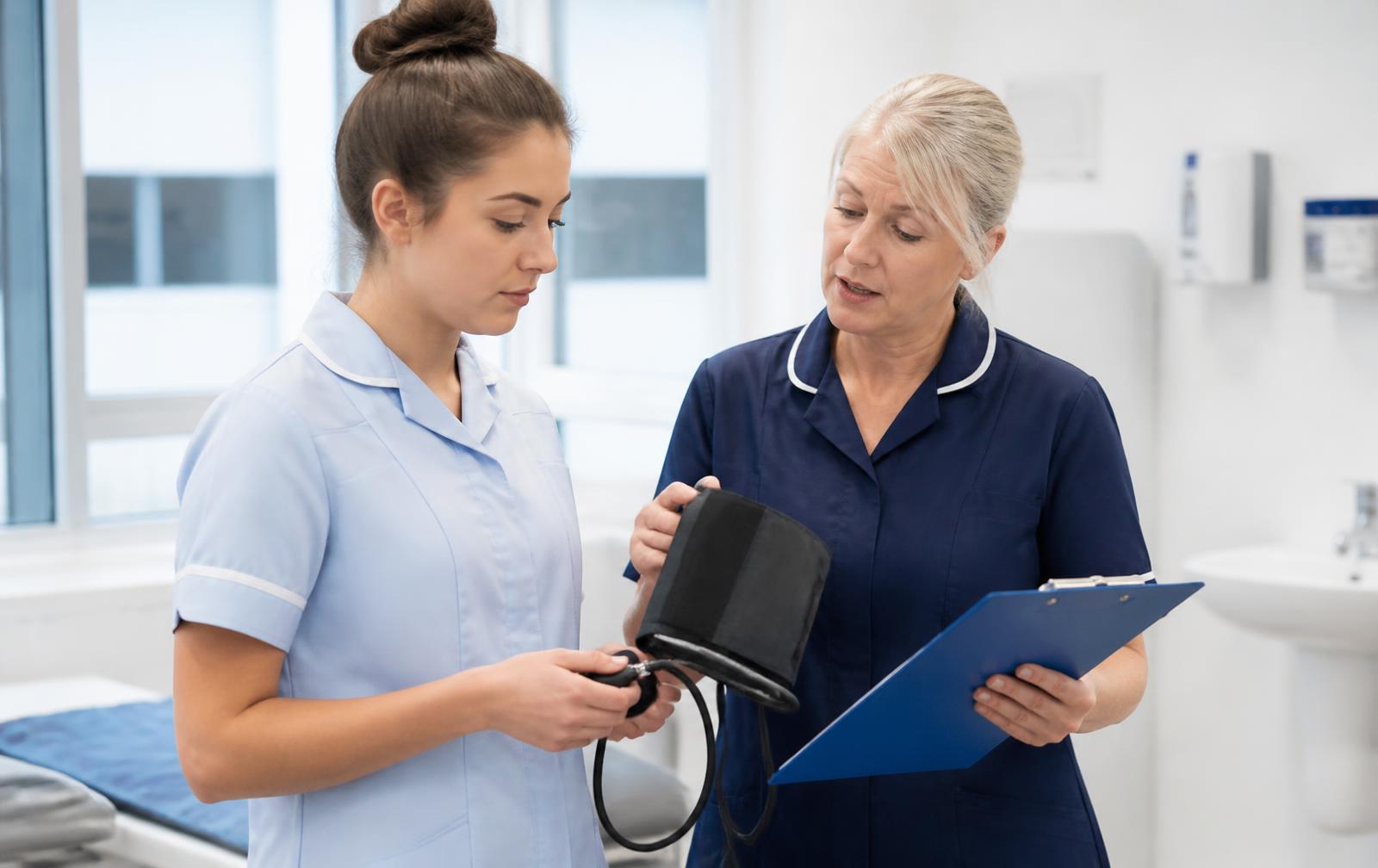
A clear guide for school leavers and young adults to working in the NHS: the wide range of clinical and non-clinical careers, how a paid NHS apprenticeship actually works, what entry requirements and checks to expect, reasonable adjustments, the honest realities of the job, and how to find and apply for genuine vacancies across England, Scotland, Wales and Northern Ireland.
Last reviewed: 14 August 2026. Entry requirements, apprenticeship rules, pay and the vacancies available change over time and differ between individual NHS employers and between England, Scotland, Wales and Northern Ireland — always confirm current details on the official vacancy page and the official careers service for your nation.
About this page
Sixpence Support UK provides general careers information only. Sixpence Support UK is independent of the NHS. We do not recruit for NHS employers, we are not involved in any recruitment decision, and we cannot guarantee anyone a job, an apprenticeship, an interview or a permanent position.
Every NHS organisation recruits separately. What is offered by one trust or health board may not be offered by another, and vacancies depend on the employer and the area. Where information below applies to only some UK nations, that is stated.
More than doctors and nurses
When people picture the NHS they usually think of doctors and nurses. They are only part of it. The NHS is one of the largest employers in the world and it needs hundreds of different kinds of worker, from people giving hands-on care to people who cook, build, repair, count, book, code and drive.12
Careers in the NHS include:
- healthcare support worker;
- nursing associate;
- registered nurse;
- maternity support worker;
- pharmacy technician and pharmacy support;
- dental nurse;
- paramedic, ambulance support and control-room roles;
- physiotherapy, radiography and occupational-therapy support;
- laboratory and healthcare-science roles;
- administration, reception and customer service;
- digital, data and IT;
- finance and human resources;
- estates, engineering, plumbing and electrical work;
- catering, housekeeping, portering and logistics.
Roles that do not involve direct patient care are often called the wider healthcare team. They are real, permanent careers with their own training and progression, not a second-best option.4
Roles that involve caring for patients
Healthcare support worker
The work: Working alongside nurses and other clinical staff on wards, in clinics, in theatres, in mental-health services and in the community: helping people wash, dress, eat and move, taking and recording observations such as temperature, pulse and blood pressure, keeping the environment clean and safe, talking with patients and their families and reporting anything that changes.
Getting in: Often advertised with few or no formal qualifications required, with training provided and, where needed, support to continue English and maths. Many people start here and progress. Titles vary: healthcare assistant, clinical support worker, nursing assistant, support worker.
Nursing associate
The work: A role in England that sits between healthcare support worker and registered nurse. Nursing associates deliver hands-on care, carry out clinical tasks within their scope of practice and work as part of the nursing team.
Getting in: Trained through an approved nursing associate programme, often as a paid apprenticeship. Nursing associates must register with the Nursing and Midwifery Council. This is an England role; Scotland, Wales and Northern Ireland use different role structures.
Registered nurse
The work: Assessing, planning, delivering and evaluating care, giving medicines, leading a team, working with doctors, therapists and families, and taking legal and professional responsibility for practice. Fields include adult, children's, mental-health and learning-disability nursing.
Getting in: Requires an approved nursing degree or a registered nurse degree apprenticeship, followed by registration with the Nursing and Midwifery Council. Apprenticeship places are limited, competitive and are often offered to existing staff.
Maternity support worker
The work: Supporting midwives and mothers before, during and after birth: helping with feeding, observations, comfort, hygiene, equipment, records and practical support on wards, in birth centres and in the community.
Getting in: Entry requirements vary by employer; some posts are advertised as apprenticeships. Experience of caring for people is often valued more than qualifications at entry level.
Pharmacy technician and pharmacy support
The work: Preparing, checking and supplying medicines, managing stock, working in hospital dispensaries, on wards and in aseptic units, and giving people information about their medicines.
Getting in: Pharmacy assistant roles are usually entry level. A pharmacy technician must complete an approved qualification, commonly as an apprenticeship, and register with the General Pharmaceutical Council.
Dental nurse
The work: Working chairside with a dentist: preparing instruments, decontamination and infection control, supporting patients, mixing materials, keeping records and helping with x-rays where trained.
Getting in: Trainee dental nurse posts are commonly advertised, often as apprenticeships, with study alongside work. Registration with the General Dental Council is required to work as a qualified dental nurse.
Paramedic and ambulance roles
The work: Responding to emergency and urgent calls, assessing and treating patients, patient transport, working in control rooms taking 999 and 111 calls and dispatching resources, and supporting clinicians as an emergency care assistant.
Getting in: Paramedics must complete an HCPC-approved programme — a paramedic-science degree or a paramedic degree apprenticeship — and register with the Health and Care Professions Council. Support and control-room roles have their own separate, often lower, entry requirements.
Therapy and imaging support roles
The work: Assisting physiotherapists, occupational therapists, speech and language therapists, radiographers and other allied health professionals: preparing equipment and rooms, supporting exercises and activities, helping patients position safely, and administrative and record-keeping tasks.
Getting in: Therapy assistant, rehabilitation assistant and imaging support-worker posts are often entry level. Registered allied health professions require an approved degree or degree apprenticeship and HCPC registration.
Laboratory and healthcare science
The work: Working behind the scenes on the tests and technology that diagnosis depends on: pathology and laboratory work, blood sciences, microbiology, medical engineering, audiology, cardiac and respiratory physiology and more.
Getting in: Laboratory-support and healthcare-science-assistant posts can be entry level or apprenticeships. Higher scientific roles need specific qualifications and approved training programmes.
How an NHS apprenticeship works
An NHS apprenticeship is a job. If you are appointed you become an employee of that NHS organisation from your first day.311 The key points are:
- You are employed and paid. You receive a wage, holiday and the normal rights of an employee. Pay depends on the employer, the role and the level; there is a national minimum apprentice rate and many NHS employers pay more than it.14
- Training and study happen alongside the work. Part of your paid working time is set aside for learning, which may be at a college or university, online, or in the workplace, and you build a portfolio and complete assessments.
- Entry requirements depend on the vacancy. There is no single NHS entry requirement. Each advert has a person specification listing what is essential and what is desirable.
- Apprenticeships exist at different levels, from entry-level qualifications through to degree-level apprenticeships. Higher levels normally need more qualifications or prior experience.
- Some entry-level roles allow English and maths training where you do not yet hold the required level, so not having those qualifications yet does not automatically rule you out. Whether this applies depends on the vacancy and the nation you live in.
- You apply for an advertised job, not simply for a college course. You cannot enrol on an NHS apprenticeship independently — you wait for a vacancy and apply for it through the official recruitment process.
- Some NHS apprenticeships are for existing staff who are progressing in their careers, for example a support worker training as a nursing associate. Those vacancies are marked as internal.
England only: apprenticeship rules and vacancy service
Apprenticeship standards, levels, funding rules and the Find an apprenticeship service described on GOV.UK apply to England only.1213 The other UK nations run their own systems with different names, structures and entry rules:
- Scotland — Foundation, Modern and Graduate Apprenticeships through Apprenticeships.scot, with NHS Scotland vacancies advertised separately.151617
- Wales — apprenticeships under the Welsh Government framework, with NHS Wales careers and vacancy services of its own.181920
- Northern Ireland — ApprenticeshipsNI through nidirect, with Health and Social Care (HSC) recruitment rather than NHS-branded recruitment.2122
Opportunities for school leavers
If you are leaving school or college, the roles most often open to you at entry level include healthcare support, administration and reception, customer service, business administration, pharmacy support, estates and facilities, catering, housekeeping, portering, digital support and laboratory support.
These are genuine starting points, and many senior NHS staff began in one of them. However, not every NHS employer offers these apprenticeships, and not at every time of year. Some trusts and health boards run large annual apprenticeship intakes; others advertise only occasionally, and some offer none in a given year. What exists near you may be different from what exists elsewhere, so check your local employers directly rather than assuming.
What if there is nothing suitable near me right now?
Vacancies open and close throughout the year, so it is worth setting up job alerts on NHS Jobs and, in England, on Find an apprenticeship, and checking your nearest trust or health board pages regularly.
In the meantime, people often build useful experience through a college course in health and social care, science, business or engineering, part-time customer-service or care work, volunteering, or a supported internship or traineeship where one is available. None of these guarantees an NHS job, but each gives you real examples to use in an application.
Nursing and professional careers
Some apprenticeships can lead toward regulated professions, including nursing, nursing associate, paramedic, physiotherapy, occupational therapy and radiography.567 These are genuine routes, and for some people they are a way into a profession without a traditional full-time university route.
Three things must be true for any of them:
- the education programme must be approved by the relevant regulator;
- you must complete supervised practice hours in real settings; and
- you must register with the correct regulator before practising in that protected title.
Nurses, midwives and nursing associates register with the Nursing and Midwifery Council.24 Paramedics, physiotherapists, occupational therapists and radiographers register with the Health and Care Professions Council.25 Pharmacy technicians register with the General Pharmaceutical Council,26 and dental nurses with the General Dental Council.27
A support apprenticeship does not make you a registered professional
Completing a healthcare-support apprenticeship does not qualify anyone as a nurse, paramedic, physiotherapist, radiographer or any other registered professional. It is a valuable job and often a first step, but each further stage is a separate application to a separate, approved programme.
Professional apprenticeship places are limited, are often offered to existing employees first, and are competitive. Never pay a private company that claims it can put you straight into a registered profession, and check any programme against the regulator's own approved list before committing.
Clinical and non-clinical work
You can build an entire NHS career without ever giving direct patient care. Hospitals, health boards, ambulance services, GP practices and community services all depend on people in administration, IT, finance, estates, maintenance, engineering, catering, portering and logistics.4
These roles suit people who want to work in healthcare but do not want clinical work, or who are not sure yet. They also often have clearer entry points for school leavers.
Administration and customer service
The work: Reception, ward clerking, booking appointments, managing waiting lists, medical records, typing clinic letters, answering enquiries from patients and relatives, and supporting clinical teams so that care runs on time.
Getting in: Frequently advertised as business administration or customer service apprenticeships and as entry-level jobs. Good communication, organisation and computer skills matter more than high grades in many posts.
Digital, data and IT
The work: Service desk and user support, networks, clinical systems, cyber security, data analysis, information governance and helping staff use technology safely.
Getting in: Digital-support and data apprenticeships exist at several levels. Some ask for maths or IT qualifications; others train from entry.
Finance, procurement and human resources
The work: Paying invoices, budgets and reporting, buying supplies and equipment, contracts, payroll, recruitment, training and staff support.
Getting in: Business administration, accountancy and HR apprenticeships are offered by some NHS employers, usually as advertised vacancies rather than open-entry courses.
Estates, engineering and maintenance
The work: Keeping hospitals running: electrical and plumbing work, heating and ventilation, medical-equipment maintenance, carpentry, grounds, fire safety and building projects. Hospitals operate 24 hours a day and cannot simply close for repairs.
Getting in: Engineering, electrical, plumbing and building-services apprenticeships are advertised by some trusts and health boards. Requirements often include maths, and some posts require you to be 18.
Catering, housekeeping and domestic services
The work: Preparing and serving meals for patients and staff, special diets, food safety, cleaning to strict infection-control standards, laundry and linen services.
Getting in: Many posts are entry level with training provided, and some are advertised as hospitality, catering or cleaning apprenticeships.
Portering, logistics and transport
The work: Moving patients safely between wards, theatres and departments, transporting samples, equipment, supplies, waste and post, stores and stock control, and driving.
Getting in: Usually entry level, with training given. Some driving roles require a full licence and additional checks. Shift work is common.
Entry requirements and support
Requirements differ by role, so read the person specification on the actual vacancy rather than relying on general advice. Commonly you will see the following.
Age and education requirements
Each vacancy sets a minimum age. Some entry-level posts accept applicants from 16; others require you to be 18, particularly where the work involves night shifts, certain machinery, driving or lone working. Education requirements range from none stated, through GCSEs in English and maths or equivalent, to A levels or a relevant qualification for higher-level apprenticeships.
Right to work and residency checks
Every NHS employer must legally check that you can work in the UK before you start, and you will be asked for documents or a share code.31 Some apprenticeships also have residency rules attached to their funding, which differ between the UK nations. If you are unsure of your position, ask the recruiting employer before you apply.
References
You will normally be asked for references covering a set period. If you have just left school, a teacher, tutor, work-experience supervisor, volunteering coordinator or another responsible adult who is not a relative is usually acceptable. Ask people before you name them and check their contact details are correct.
Health and background checks
Many NHS roles involve an occupational-health questionnaire, which may include immunisation history, and a criminal-record check through the Disclosure and Barring Service or its equivalent in Scotland and Northern Ireland.32 A previous conviction does not automatically stop you from being appointed; decisions are made case by case by the employer against its own policy. Answer honestly — being found to have concealed something is far more damaging than the thing itself.
Dyslexia, SEND, disability and reasonable adjustments
You can ask for reasonable adjustments at every stage: application forms, online tests, interviews, assessment days, training and the job itself. Examples include extra time, questions in advance, a quiet room, printed or large-print materials, coloured paper or overlays, assistive software, a support worker or interpreter, adapted equipment and adjusted shift patterns.
Ask the recruitment contact named on the advert, in writing where possible, and say what helps you rather than only naming a diagnosis. Sixpence Support UK cannot say whether a particular health condition or disability will affect any specific role — that depends on the job, the employer and its occupational-health assessment, so ask the employer directly.
Continuing English or maths
Where a vacancy or apprenticeship requires a level of English or maths that you do not yet hold, some roles allow you to work toward it during the apprenticeship, in paid time. This is not automatic and depends on the vacancy, the apprenticeship and the nation. Check what the advert says and ask the employer's apprenticeship team if it is unclear.
The reality of NHS work
NHS work can be rewarding and secure, and it matters. It is also demanding, and it is fairer to know that before you apply than afterwards. Depending on the role, the job may involve:
- Shift work, nights, weekends and bank holidays. Hospitals never close. Shifts can be long, and your working pattern may not match your friends' or your family's.
- Contact with people who are ill, frightened, in pain or distressed, and with their relatives. Some people you meet will be at the worst moment of their lives, and some will die.
- Hygiene and infection-control procedures — handwashing, protective equipment, uniform rules, cleaning, safe disposal — followed exactly, every time, even when you are busy.
- Confidential information. You will see and hear things about real people that you may never repeat, including to family and on social media. Breaches are treated very seriously.
- Physical or emotional demands — being on your feet, moving and handling, lifting, cleaning and carrying in some roles, and emotional weight in many others.
- Strict professional standards on conduct, punctuality, appearance, safeguarding, honesty and raising concerns. Every member of staff, clinical or not, is expected to speak up if something is unsafe.
Support exists too: induction, supervision, mentoring, staff networks, occupational health and staff wellbeing services. Ask what support the employer provides when you are at interview.
Finding genuine vacancies
Use official sources only, and take these steps:
- Search NHS Jobs — the main official vacancy service. Filter by location, pay band and job type, and set up email alerts so you are told when new posts appear.9
- Search Find an apprenticeship on GOV.UK for apprenticeship vacancies in England.12
- Check the vacancy pages of your local NHS trust, health board, ambulance service or GP practice. Some posts, especially internal or apprenticeship posts, appear there first.
- Use the official service for your nation — NHS Scotland Careers and Apprenticeships.scot, NHS Wales Careers and the Welsh Government apprenticeship service, or HSC recruitment and ApprenticeshipsNI in Northern Ireland.151821
- Read the full job description and person specification, not just the advert. The person specification tells you exactly what the panel will score you against.
- Check the closing date immediately. NHS vacancies are sometimes advertised only briefly, and popular posts can close early once enough applications are received.
- Apply through the official vacancy page, not through a link sent to you privately or posted on social media.
Never pay for an NHS job or apprenticeship
No genuine NHS employer, and no genuine apprenticeship, ever charges you to apply, to be interviewed, to be guaranteed a place, to have a DBS check arranged as a condition of a fake offer, or to secure a uniform, training pack or "registration".
Treat as a scam anyone who asks for money, cryptocurrency, gift cards or bank details before a genuine offer through an official process; who contacts you offering a guaranteed NHS job you never applied for; who uses a personal email address instead of an official one; or who pressures you to decide quickly. Report it to Action Fraud and tell the real employer.33
Preparing an application
NHS applications are scored against the person specification, so a strong application is usually a well-matched one rather than a clever one.
- Be honest. Never invent qualifications, dates or experience. Everything is checked, and dishonesty in an application is a dismissal matter later.
- Match your examples to the person specification. Take each essential point in turn and give a short, real example — from school, college, a part-time job, caring for a family member, volunteering, sport or a club.
- Check spelling, grammar and your contact details. Read it aloud, or ask someone else to read it. Make sure your email address is sensible and that you check it.
- Request reasonable adjustments early, in writing, for the application, any test and the interview.
- Prepare for the interview. Learn what the employer does, prepare examples about teamwork, communication, dealing with pressure and treating people with dignity, prepare two questions to ask, plan your journey and take your identification documents.
- If you are unsuccessful, ask for feedback and apply again. Most people who work in the NHS were turned down for something first.
Free help with letters and emails
Sixpence Support UK offers free, plain-English help with letters and emails. If you need to ask an employer about reasonable adjustments, request feedback after an unsuccessful application, explain a gap in your education, or query something in a job offer, we can help you word it clearly.
Frequently asked questions
Are NHS apprenticeships paid?
Yes. An apprenticeship is a real job. You are employed by the NHS organisation, you are paid a wage and you have the normal rights of an employee, including holiday. Part of your paid time is set aside for training and study. Pay varies between employers, roles and apprenticeship levels, and there is a national minimum wage rate for apprentices that many NHS employers pay above. The exact salary is stated on the vacancy.
Can I apply after leaving school?
Yes, many NHS apprenticeships and entry-level jobs are open to school leavers, and some employers advertise vacancies aimed at young people. Each vacancy sets its own minimum age, which is often 16 or 18 depending on the role, the department and the tasks involved. Read the advert and the person specification before applying.
Do I need high GCSE grades?
Not for every role. Requirements are set by the individual vacancy, not by the NHS as a whole. Some entry-level apprenticeships ask for few or no formal qualifications and will support you to continue English and maths alongside the job where that is required. Higher-level and professional apprenticeships usually ask for specific GCSEs, or A levels or equivalent qualifications. Always check the person specification for the actual job.
Can I work for the NHS without becoming a nurse?
Yes. A large part of the NHS workforce never gives direct patient care. There are careers in administration, reception and customer service, medical records, finance, procurement, human resources, digital, data and IT, estates, engineering, plumbing and electrical work, catering, housekeeping, portering, laundry, logistics, transport and security. These are permanent careers in their own right, not lesser alternatives.
Can an apprenticeship lead to nursing?
It can, but not automatically. Some people begin as a healthcare support worker, move on to a nursing associate apprenticeship where one is available, and later join a registered nurse degree apprenticeship or a nursing degree. Each step is a separate application to a separate vacancy or course, places are limited and competitive, and registered nursing always requires an approved programme and registration with the Nursing and Midwifery Council. A general healthcare-support apprenticeship on its own does not make anyone a nurse.
Do all NHS employers offer apprenticeships?
No. Every NHS trust, health board, GP practice, ambulance service and other NHS organisation makes its own decisions about which apprenticeships it runs and when it recruits. Some run large apprenticeship programmes, others offer only a few, and some offer none in a particular year. What is available near you may be different from what is available elsewhere.
Where are vacancies advertised?
Genuine NHS vacancies are advertised on NHS Jobs and on the recruitment pages of individual NHS trusts and health boards. In England, apprenticeship vacancies also appear on the GOV.UK Find an apprenticeship service. Scotland, Wales and Northern Ireland have their own official NHS and Health and Social Care recruitment and apprenticeship services. Apply through the official vacancy page only.
Can I ask for reasonable adjustments?
Yes. You can ask for reasonable adjustments at any stage — application forms, online tests, interviews, assessment days and, if you are appointed, in the job itself and in your training. Examples include extra time, alternative formats, a quiet room, questions in advance, assistive software or a different interview format. Ask the recruitment team named on the advert; you do not have to wait until you are offered a job.
Does completing an apprenticeship guarantee a permanent job?
No. An apprenticeship gives you paid experience, a recognised qualification and a strong understanding of how the organisation works, and many apprentices do go on to permanent posts. However, a permanent job depends on there being a funded vacancy at the time your apprenticeship ends, and you normally have to apply for it like any other candidate. No genuine employer can promise a permanent job in advance.
Is an NHS apprenticeship the same as a college course?
No. You apply for an advertised job with an employer, and if you are appointed you are an employee from day one. A college course is a place on a programme of study that you enrol on. Some NHS apprenticeships include study at a college or university, but the starting point is a job vacancy, not a course application.
Are some NHS apprenticeships only for existing staff?
Yes. Many NHS apprenticeships are used to help existing employees progress — for example a healthcare support worker training as a nursing associate, or an administrator training in management or digital skills. Those vacancies are advertised internally or marked as internal only. Others are open to external applicants. The advert says which it is.
Should I ever pay to get an NHS job?
No. You never pay an employer, an agency or an individual to be given an NHS job, an apprenticeship, an interview or a guaranteed placement. Anyone who asks for a fee, for a deposit, or for your bank details before you have a genuine offer through an official process should be treated as a scam and reported.
Important
Sixpence Support UK provides general careers information only. Sixpence Support UK is independent of the NHS, does not recruit for NHS employers, is not involved in any recruitment decision and cannot guarantee a job, an apprenticeship or a permanent position.
Always confirm current entry requirements, apprenticeship rules, pay and vacancies with the official vacancy page, the NHS employer concerned and the official careers service for your nation.
- [1] NHS Health Careers. Health Careers home · 2026
- [2] NHS Health Careers. Explore roles in the NHS · 2026
- [3] NHS Health Careers. Apprenticeships · 2026
- [4] NHS Health Careers. The wider healthcare team · 2026
- [5] NHS Health Careers. Nursing careers · 2026
- [6] NHS Health Careers. Nursing associate · 2026
- [7] NHS Health Careers. Allied health professions · 2026
- [8] NHS Health Careers. Healthcare science · 2026
- [9] NHS Jobs. NHS Jobs vacancy search · 2026
- [10] NHS England. NHS England · 2026
- [11] NHS England. Apprenticeships in the NHS · 2026
- [12] GOV.UK. Find an apprenticeship (England) · 2026
- [13] Apprenticeships.gov.uk. Apprenticeships in England · 2026
- [14] GOV.UK. National Minimum Wage and apprentice rates · 2026
- [15] NHS Scotland Careers. NHS Scotland careers · 2026
- [16] NHS Scotland. NHS Scotland job vacancies · 2026
- [17] Skills Development Scotland. Apprenticeships in Scotland · 2026
- [18] Health Education and Improvement Wales. NHS Wales careers · 2026
- [19] NHS Wales. NHS Wales job vacancies (TRAC) · 2026
- [20] Welsh Government. Apprenticeships in Wales · 2026
- [21] HSC Northern Ireland. HSC recruitment (Northern Ireland) · 2026
- [22] nidirect. Apprenticeships in Northern Ireland · 2026
- [23] nidirect. Careers Service (Northern Ireland) · 2026
- [24] Nursing and Midwifery Council. Nursing and Midwifery Council · 2026
- [25] Health and Care Professions Council. HCPC regulated professions · 2026
- [26] General Pharmaceutical Council. General Pharmaceutical Council · 2026
- [27] General Dental Council. General Dental Council · 2026
- [28] National Careers Service. Explore careers (England) · 2026
- [29] My World of Work. Careers information (Scotland) · 2026
- [30] Careers Wales. Careers information (Wales) · 2026
- [31] GOV.UK. Prove your right to work to an employer · 2026
- [32] GOV.UK. DBS checks: guidance for applicants · 2026
- [33] Action Fraud. Reporting fraud and cyber crime · 2026