
Reptiles
Heating and lighting, suitable housing, diet, safe handling, finding a specialist vet, emergencies, help with costs and responsible rehoming for snakes, lizards, tortoises and turtles.
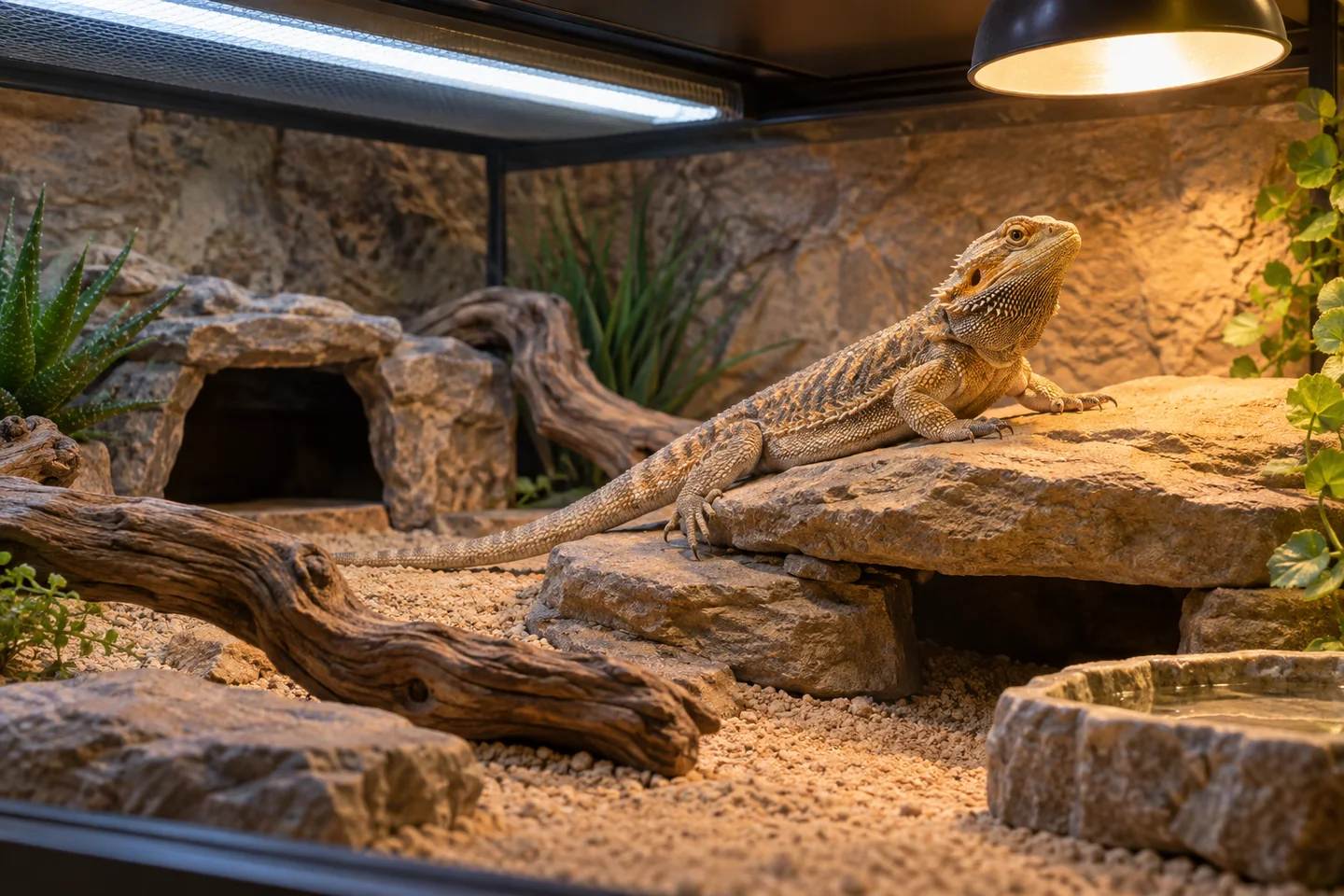
Reptiles depend completely on the environment you provide
Reptiles cannot warm themselves. Their digestion, immune system and behaviour all depend on the temperatures, lighting and humidity in their enclosure. Most reptile illness seen by vets comes from housing, heating, lighting or diet that does not match the species’ needs.
Every species is different, and general reptile advice is not enough. Find written care information for your exact species from a reliable source, and confirm it with a vet who treats reptiles.
When a reptile needs a vet urgently
- Not eating for an unusual length of time for that species, or losing weight
- Open-mouthed breathing, bubbles or mucus at the nose or mouth, or wheezing
- Weakness, tremors, twitching, an inability to lift the body, or a soft jaw or shell
- Burns, wounds, a prolapse, blood, or being trapped and injured
- Shed skin stuck around eyes, toes or tail tip
- Swollen limbs, a swollen mouth, or a reptile that has stopped passing droppings
- A reptile found cold and unresponsive after a heating failure
Telephone a veterinary practice that treats reptiles for advice. Do not attempt to treat or medicate a reptile yourself, and do not use any human medicine.
The five things to get right
- Heat. A correct temperature range with a warm end and a cool end, controlled by a thermostat and checked with reliable thermometers.
- Light. The lighting your species needs, including UVB where appropriate, on a day and night cycle, with lamps replaced as advised.
- Housing. An enclosure of the right size, security, ventilation and humidity, with hides and climbing or digging opportunities.
- Diet. The right food, size and frequency for the species and its age, with supplementation where advised by a vet.
- Hygiene and handling. Clean water and enclosure, calm, minimal handling, and hand washing every time.
Open the section that matches your situation
Each heading row below is a button and opens the information underneath it.
Why specialist veterinary care matters
Reptiles are not treated like cats and dogs. They need vets with specific training in reptile medicine, anaesthesia and diagnostics, and their illnesses are often advanced by the time they are visible.
- Find a practice that regularly treats reptiles before you need one urgently.
- Ask which vet at the practice sees reptiles and who covers out of hours.
- Take your husbandry details with you: temperatures, lighting, diet and enclosure size.
- The British Veterinary Zoological Society represents veterinary professionals working with exotic and zoological species, and the RCVS register shows all UK practices.
- Do not rely on internet forums or shop advice for a sick animal, and never give a reptile medicines intended for people or other species.
Heating and lighting
- Every heat source must be controlled by a suitable thermostat.
- Check temperatures daily at both ends of the enclosure with accurate thermometers.
- Guard heat lamps and heat mats so the animal cannot burn itself.
- Provide UVB lighting where the species needs it, and replace tubes or lamps on schedule.
- Keep a correct day and night cycle; do not leave bright white light on overnight.
- Check humidity with a hygrometer if your species needs a particular range.
- Plan for power cuts and equipment failure: know how you would keep the animal warm safely and who to ring for advice.
Get species-specific figures from a reliable source and confirm them with your vet. Guessing temperatures is one of the most common causes of illness.
Suitable housing
- Size the enclosure to the adult animal, not the size it is when bought.
- Make it escape-proof, with secure lids, doors and cable openings.
- Provide hides at both the warm and cool ends so the animal can choose.
- Use substrate suited to the species, and avoid anything that can be swallowed harmfully.
- Provide branches, rocks or digging depth according to how the species lives.
- Give a water container the animal can drink from and, where appropriate, soak in.
- Keep enclosures out of direct sunlight and away from draughts and radiators.
- House most species alone unless reliable advice says otherwise.
Diet
- Feed the diet the species has evolved for: plant-based, insect-based or whole prey.
- Match food size and feeding frequency to the animal’s species, age and size.
- Use supplements only as advised for the species, and store them correctly.
- Provide clean, fresh water and change it regularly.
- Never feed wild-caught insects or wild plants unless you are certain they are safe.
- Feeding live vertebrate prey is not acceptable and may be an offence.
- Ask your vet before changing a diet for a reptile that is unwell.
Safe handling and hygiene
- Handle briefly and only when needed. Most reptiles do not enjoy being handled.
- Support the whole body and never hold a reptile by the tail.
- Wash your hands thoroughly before and after handling or cleaning.
- Reptiles can carry salmonella. Keep them out of kitchens, do not clean equipment in food preparation areas, and take extra care with young children, pregnant women, older people and anyone with a weakened immune system.
- Supervise children at all times, and do not let a reptile near the face.
- Large snakes and large lizards should be handled with another adult present.
- Seek medical advice for any bite or scratch that breaks the skin.
If you cannot afford veterinary treatment
Charity veterinary services often focus on cats, dogs and other common pets, and may not cover reptiles. Ask before you assume help is available.
- Tell the practice money is a problem and ask for an itemised estimate.
- Ask whether treatment can be staged and whether payment arrangements are possible.
- Check PDSA eligibility, but confirm whether the service covers reptiles in your area.
- Ask a reptile-experienced rescue for advice about local low-cost options.
Food, equipment and running costs
Reptile keeping has ongoing costs: electricity for heating and lighting, replacement bulbs and tubes, substrate, food and equipment.
- Do not switch off heating or UVB to save money — this causes serious illness.
- Ask about help with energy bills if electricity costs are the problem.
- Ask local reptile groups and rescues about second-hand equipment.
- Ask a food bank or rescue about frozen food or insects in a crisis.
Temporary care during illness, hospital admission or a crisis
Reptiles need someone who understands the equipment, not just someone to drop food in. Prepare instructions in advance.
- Write down temperatures, lighting hours, feeding days, and what to do if equipment fails.
- Show the carer how to check thermostats and thermometers.
- Leave your vet’s details and permission to seek treatment.
- Ask a specialist reptile shop, keeper group or rescue about short-term boarding.
- The Cinnamon Trust may be able to help older owners and people who are terminally ill, depending on local volunteers.
Planning ahead if you are older, disabled or struggling
Tortoises and some other reptiles can live for many decades, sometimes longer than their keeper. Plan for that in writing.
- Name someone who will take the animal and its equipment, and check they agree.
- Keep enclosures at a height you can reach and clean safely.
- Take legal advice about long-lived animals when making a will.
- Keep a written record of species, age, care routine and veterinary history.
Responsible rehoming and surrender
Reptiles are frequently given up when they outgrow their enclosure or their needs become clear. Rehome carefully and honestly.
- Contact a reptile-experienced rescue or a specialist rehoming service.
- Pass on the species, age, feeding routine, husbandry details and any health problems.
- Send the equipment with the animal wherever possible.
- Be careful with free-to-good-home adverts, which attract unsuitable keepers.
- Never release a reptile outdoors, into a pond or into the countryside. It is cruel, it harms native wildlife and it is against the law.
Escaped, found, abandoned or neglected reptiles
- If a reptile escapes indoors, switch off cold draughts, close doors, and search warm, dark, enclosed places near the floor. Most are found in the same room.
- Tell neighbours if it may have left the property, and contact a vet and local rescues.
- If you find an unfamiliar reptile outdoors, do not handle it. Keep people and pets away and telephone the RSPCA, Scottish SPCA or USPCA, or the police if it may be dangerous.
- Report suspected abandonment or neglect to the welfare organisation for your area.
After a reptile dies
Reptile keepers often care for an animal for many years, and the loss is real even though others may not understand it.
- Your vet can explain cremation and disposal options.
- If the death was sudden, ask your vet whether a post-mortem examination would help.
- Free pet-loss support is available and you do not need a referral.
Your legal responsibilities, explained simply
- You must meet the animal’s welfare needs: suitable environment, suitable diet, the ability to behave normally, appropriate company or solitude, and protection from pain, suffering, injury and disease.
- Causing unnecessary suffering is a criminal offence throughout the UK.
- Some species need a licence, such as animals listed under dangerous wild animal rules. Your local council issues those licences.
- Some species are covered by international trade rules and need paperwork proving legal origin. Keep any documents you were given.
- Releasing a non-native animal into the wild is an offence.
- Check the rules for your part of the UK before buying, selling or breeding.
Trusted UK organisations for reptile keepers
- British Veterinary Zoological Society (opens in a new tab)
- RCVS – find a registered veterinary practice (opens in a new tab)
- RSPCA – advice for other and exotic pets (opens in a new tab)
- PDSA – Pet Health Hub (opens in a new tab)
- British Veterinary Association (opens in a new tab)
- GOV.UK – find your local council for licensing (opens in a new tab)
Important information
Sixpence Support UK provides general information and signposting only. Nothing on this page is veterinary advice or treatment instruction. We do not give medicine doses or tell you how to treat a sick reptile. Always contact a veterinary practice that treats reptiles about a specific animal, and confirm species-specific temperatures, lighting and diet with that practice.