
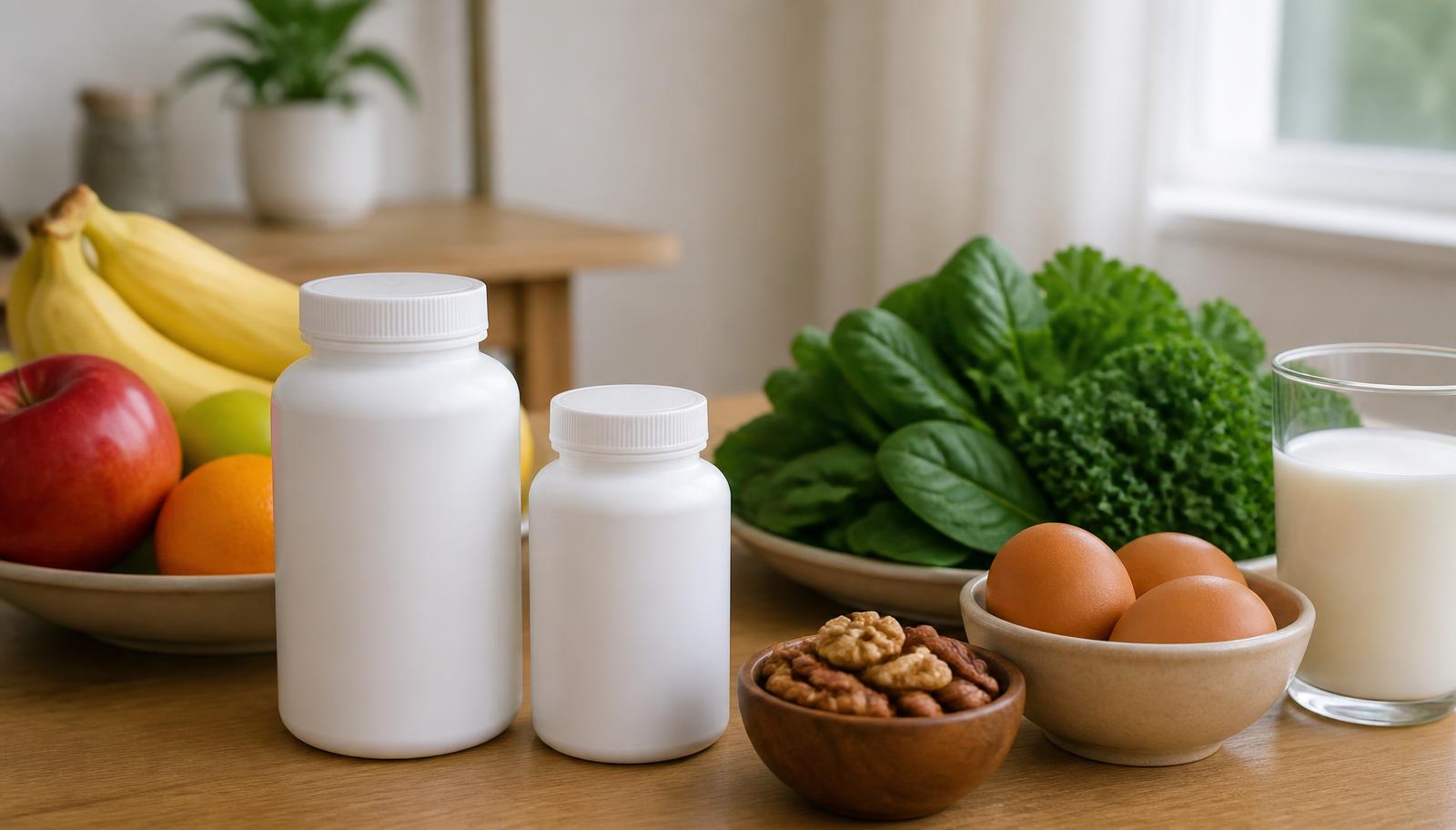
Vitamins and Supplements: Who May Need Them and How to Use Them Safely
Vitamins and minerals help the body work properly. Most people can obtain most of the nutrients they need by eating a varied and balanced diet, but certain people may need particular supplements.
Supplements are not medicines
Vitamins and minerals help the body work properly. Most people can obtain most of the nutrients they need by eating a varied and balanced diet, but certain people may need particular supplements.[1]NHS
Supplements are not medicines and should not replace food, prescribed treatment or professional medical advice. Taking more than the recommended amount does not necessarily provide greater benefit and can sometimes cause harm.[5]GOV.UK
Key facts
- Most people can obtain most vitamins and minerals from a varied and balanced diet.
- Government guidance recommends that everyone should consider a daily vitamin D supplement during autumn and winter.
- Some people are advised to take particular supplements because of pregnancy, age, diet, limited sunlight, a diagnosed deficiency or a medical condition.
- Vitamins and supplements can interact with medicines and affect medical tests.
- Taking several products together can accidentally result in excessive amounts of the same nutrient.
- Ask a pharmacist, GP or dietitian if you are unsure what is suitable for you.
Vitamins and supplements explained
Each section below opens when you tap or click on it. You do not need to read them all — start with the ones that apply to you or to someone you care for.
What are vitamins and minerals?
Vitamins and minerals are nutrients the body needs in relatively small amounts. They support functions including bones, muscles, blood, nerves, immunity, vision and the release of energy from food.[1]NHS
A multivitamin normally combines several vitamins, and sometimes minerals, in one tablet, capsule, liquid, powder, spray or gummy. A multivitamin is not automatically necessary or suitable for everyone. Whether a supplement helps depends on what your body actually needs, not on how the product is marketed.
Food first
A varied diet can provide most of the nutrients most people need. Useful everyday foods include:[9]NHS
- Fruit and vegetables — fresh, frozen, tinned or dried all count
- Beans, peas and lentils
- Wholegrain and fortified foods, such as wholemeal bread and fortified cereals
- Dairy products, or suitable fortified alternatives
- Eggs
- Fish and meat
- Nuts and seeds
Eating a varied diet is not always straightforward. It may be difficult because of disability, illness, swallowing problems, allergies, sensory difficulties, low income, reduced appetite or limited access to food and cooking facilities. None of that is a personal failing.
If you are struggling to eat properly, eating a very narrow range of foods, or losing weight without meaning to, speak to a GP, pharmacist or registered dietitian rather than trying to make up the difference with supplements alone.
Practical help with food costs is covered on our Food Banks and Emergency Food Help page.
Who may need supplements?
Supplements may be recommended for:
- People with a diagnosed vitamin or mineral deficiency
- People who are pregnant, trying for a baby or could become pregnant
- Babies and young children
- People who receive little sunlight
- People who are housebound or spend most of their time indoors
- People who usually cover most of their skin when outdoors
- People with black or brown skin, who may not make as much vitamin D from sunlight
- Vegans and people following other restricted diets
- People with conditions that affect digestion or nutrient absorption
- People who have undergone certain forms of weight-loss surgery
- People advised to take supplements by a GP, dietitian or specialist
Individual needs differ. Blood tests or a professional assessment are sometimes needed before it is clear whether a supplement is appropriate, and at what amount.
Vitamin D
Vitamin D helps the body absorb calcium and phosphate, and supports healthy bones, teeth and muscles.[2]NHS
Current NHS guidance
- Everyone should consider taking a daily supplement containing 10 micrograms of vitamin D during autumn and winter.
- Some people should consider taking 10 micrograms throughout the year, including people who have little or no sunlight exposure.
- Babies and young children have separate recommendations, depending on their age and how much infant formula they receive.
Do not take high-dose vitamin D unless it has been prescribed or recommended for you by an appropriate healthcare professional. Taking too much vitamin D over a long period can cause too much calcium to build up in the body, which can damage the kidneys, bones and heart.[2]NHS
Folic acid and pregnancy
People who are pregnant, trying for a baby or could become pregnant are normally advised to take 400 micrograms of folic acid every day before pregnancy and during the first 12 weeks of pregnancy.[3]NHS
Some people are advised to take a higher, prescribed dose because of their individual circumstances. If you think that might apply to you, speak to a GP, midwife or pharmacist rather than selecting a high-dose product yourself.
Important: vitamin A in pregnancy
Pregnancy multivitamins should not contain vitamin A in the form of retinol unless you have been specifically advised otherwise by a healthcare professional. Too much retinol can harm a developing baby. Check the ingredient list, and avoid fish-liver-oil supplements in pregnancy unless a professional has told you to take them.
Vitamins for babies and children
Current NHS guidance, in plain English:[4]NHS
- Children aged 6 months to 5 years are generally advised to have supplements containing vitamins A, C and D each day.
- Babies having more than 500ml of infant formula a day usually do not need these supplements, because formula is already fortified.
- Breastfed babies may need vitamin D from birth.
- Parents and carers should use age-appropriate products and follow NHS or health-visitor advice on amounts.
Never give adult products to a child
Adult multivitamins and adult iron supplements must not be given to children unless a healthcare professional has specifically advised it. Adult amounts can be far too high for a child, and iron in particular can be dangerous.
Vegan and restricted diets
People following a vegan diet need a reliable source of vitamin B12, either from fortified foods or from a supplement.[8]NHS
Other nutrients that may need attention on a vegan diet include:
- Vitamin D
- Iodine
- Calcium
- Iron
- Selenium
- Omega-3 fats
This does not mean every vegan needs every supplement. A well-planned vegan diet can provide most nutrients from food. It is worth checking reliable dietary guidance or speaking to a registered dietitian, particularly for children, in pregnancy, or alongside a health condition.
Diets can also be restricted for reasons that are not a choice — allergies, coeliac disease, sensory difficulties, eating disorders or other medical conditions. If your diet is narrow for any of these reasons, ask for a proper assessment rather than guessing which products to buy.
Older and disabled people
Supplements are not automatically needed simply because someone is older or disabled. Many older and disabled people eat well and need nothing extra beyond the general vitamin D advice.
Some people may be at greater risk because they:
- Spend little time outdoors
- Have difficulty shopping, cooking or eating
- Have a reduced appetite
- Take medicines that affect nutrient absorption
- Have swallowing difficulties
- Have digestive or absorption problems
- Eat a very restricted range of foods
Please do not start several supplements simply because you feel tired or unwell. Tiredness, weakness, memory difficulties and poor balance can have many causes, including conditions that need treatment, and may need medical assessment.
Iron
Iron is needed to make healthy red blood cells, which carry oxygen around the body. Low iron can cause iron-deficiency anaemia — but tiredness does not automatically mean someone is short of iron.[6]NHS
Iron supplements can cause side effects such as constipation, stomach discomfort and dark stools, and can be dangerous in excessive amounts. People should not take high-dose iron long-term without appropriate advice or evidence of deficiency, and a blood test is the usual way to confirm it.
Safety: keep iron away from children
Keep iron supplements securely out of the sight and reach of children. An iron overdose can be a medical emergency. If an overdose may have occurred, call 999 in a serious emergency, or contact NHS 111 for urgent advice.
Vitamin B12
Vitamin B12 supports the production of red blood cells and the healthy working of the nervous system.[7]NHS
People at greater risk of B12 deficiency may include:
- Vegans without a reliable dietary source
- Some older people
- People with pernicious anaemia
- People with digestive or absorption conditions
- People taking certain medicines
- People who have had particular stomach or bowel operations
B12 deficiency can cause neurological problems, including tingling, numbness, balance difficulties and memory or concentration changes. It should be properly assessed and treated — some people need injections rather than tablets — so speak to a GP rather than self-treating.
Vitamin A
Vitamin A supports vision, skin and the immune system, but excessive amounts can be harmful, particularly to bones and the liver.[1]NHS
Many multivitamins and fish-liver-oil products contain vitamin A. People who regularly eat liver or liver products should take particular care not to add more vitamin A from supplements, because liver is very high in it.
Pregnancy warning
People who are pregnant or could become pregnant should avoid supplements containing vitamin A as retinol unless specifically advised by a healthcare professional.
Calcium
Calcium supports bones and teeth, and also helps muscles and nerves to work properly. Most people should obtain calcium through food, such as dairy products, fortified plant drinks, tinned fish with bones, and some green vegetables.[1]NHS
Some people do need supplements, for example because of their diet, osteoporosis treatment or a medical condition. That should be decided with a professional rather than assumed.
Calcium can affect the absorption of certain medicines, including some thyroid medicines and some antibiotics. A pharmacist can advise on safe timing — often simply leaving a gap between the medicine and the supplement.
See also our Osteoporosis and Bone Health page.
Magnesium, zinc and vitamin C
Magnesium helps turn food into energy and supports the working of muscles and nerves. Zinc helps with wound healing, the immune system and making new cells. Vitamin C helps protect cells and supports healthy skin, blood vessels and connective tissue, and helps the body absorb iron from food.[1]NHS
Most people can obtain enough of all three from food. There is no good evidence that these supplements cure colds, anxiety, cramps, tiredness or sleep problems, and they should not be sold or taken on that basis.
High amounts can cause side effects, including diarrhoea, stomach pain and other digestive problems, and can interact with medicines. High-dose zinc taken over a long period can also affect copper levels.
Gummies, sprays, powders and effervescent tablets
Supplements come in many forms. Attractive packaging, a pleasant flavour or a higher price does not prove that a product is more effective.
- Gummies may contain sugar and can easily be mistaken for sweets.
- Effervescent products may contain significant amounts of salt.
- Powders can make it easier to accidentally take too much.
- Sprays and drops still require careful measuring.
- Keep every supplement away from children and pets.
Can supplements interact with medicines?
Supplements can change how medicines work
Vitamins, minerals and herbal products can alter how prescribed medicines work, or how well they are absorbed. Examples include:
- Vitamin K and warfarin
- Calcium and iron affecting the absorption of levothyroxine and some antibiotics
- High-dose biotin affecting thyroid and other blood-test results
- St John’s wort interacting with many medicines
- Some herbal products increasing bleeding risk when taken with anticoagulant or antiplatelet medicines
Show a pharmacist or GP the actual packets, or a complete written list of everything you take — including supplements, herbal products and anything bought online.
Do not stop any prescribed medication because of something you have read. Ask first.
Supplements and blood tests
Some supplements can alter medical-test results, which can lead to unnecessary worry, repeated tests or the wrong conclusion.
High-dose biotin, often sold for hair, skin or nails, can interfere with certain blood tests, including some thyroid tests and some heart-related tests.
Tell the person arranging or taking your blood test about every vitamin and supplement you use, and follow their instructions about whether anything needs to be paused beforehand.
Avoiding accidental double doses
The same nutrient may appear in more than one thing you take, such as:
- A daily multivitamin
- A separate single-vitamin tablet
- Fish-liver oil
- Fortified foods or drinks
- Hair, skin and nail products
- Energy or fitness supplements
- Pregnancy supplements
Compare labels and add up the total amount of each nutrient, rather than assuming that each separate product is safe to combine with the others.
Choosing a supplement
Practical checklist
- Decide why you think you need it.
- Check whether NHS guidance recommends it for your circumstances.
- Read the complete ingredient list.
- Check the amount of each nutrient.
- Avoid products promising cures, rapid results or “detoxification”.
- Avoid unnecessarily high-dose products.
- Check for allergens and animal-derived ingredients.
- Look at the expiry date and storage instructions.
- Ask a pharmacist about your medicines and health conditions.
- Do not buy prescription-only products from unverified websites or social-media sellers.
Sixpence Support UK CIC does not recommend, rank or sell any brand or product.
Claims, advertising and regulation
Food supplements are not medicines. They should not be advertised as preventing, treating or curing medical conditions, and UK rules restrict the claims a seller may make.[5]GOV.UK
A celebrity endorsement, an online review, an influencer video or the word “natural” is not proof that a product is safe or effective. “Natural” substances can still be strong, and can still interact with medicines.
Products sold online, particularly from overseas sellers, may not meet UK requirements on ingredients, amounts or labelling. Use reputable UK retailers and ask a pharmacist if you are unsure.
Signs that medical advice may be needed
Contact a GP, or NHS 111 where appropriate, if you or someone you care for has:
- Persistent or unexplained tiredness
- Unexplained weight loss
- Ongoing vomiting or diarrhoea
- Difficulty swallowing or eating
- Tingling, numbness or balance problems
- Unusual weakness
- Pale skin, breathlessness or a racing heartbeat
- Symptoms that began after starting a supplement
- Concerns about pregnancy, a child or a possible deficiency
These symptoms can have many different causes. They should be assessed rather than self-treated with several supplements at once.
Urgent help: suspected overdose
Call 999 or go to A&E if someone has taken a potentially dangerous amount of supplements and is seriously unwell, unconscious, having a seizure, struggling to breathe or cannot be woken.
For a suspected overdose without immediately life-threatening symptoms, contact NHS 111 urgently. Keep the packaging so healthcare professionals can identify the product and the amount taken.
Questions to ask a pharmacist or GP
Take these questions with you
- Do I actually need this supplement?
- Could a blood test be appropriate?
- Is this safe with my medicines?
- Am I already receiving the same nutrient from another product?
- What amount is appropriate for me?
- How long should I take it?
- Could it affect an operation, pregnancy or blood test?
- What side effects should I look out for?
Community pharmacists can advise without an appointment: NHS — pharmacies and what they can help with.
Common myths
Setting the record straight
- “Everyone needs a daily multivitamin.” Most people who eat a varied diet do not. The main general recommendation in the UK is vitamin D in autumn and winter.
- “Natural means safe.” Natural substances can be strong, can cause side effects and can interact with medicines.
- “If a small amount helps, a large amount works better.” Higher amounts can be harmful, particularly vitamin A, vitamin D, iron and zinc.
- “Supplements cannot interact with medicines.” They can, and some interactions are serious.
- “A supplement can replace a balanced diet.” Food provides fibre, protein, energy and many other components that a tablet does not.
- “Expensive products are always better.” Price and packaging tell you nothing reliable about whether a product suits you.
- “Supplements can cure depression, dementia, cancer or other illnesses.” They cannot, and it is against UK rules to sell them on that basis. Please do not delay medical treatment.
Trusted organisations and further support
The NHS and GOV.UK are official public bodies rather than charities. Each button below opens in a new tab. Please take current amounts and advice from their own pages, as guidance is updated from time to time.
Official UK guidance
These organisations are independent of Sixpence Support UK CIC. Their inclusion is for information and signposting and does not imply a partnership or endorsement.
Not registered with a GP? NHS — how to register with a GP surgery.
Related Sixpence Support UK topics
Disclaimer
This page provides general UK information and is not a diagnosis or personalised medical advice. Do not start, stop or change prescribed medicines because of this page. Ask a pharmacist, GP, midwife, health visitor or registered dietitian if you are unsure whether a vitamin or supplement is appropriate for you.
- [1] NHS. Vitamins and minerals · 2026
- [2] NHS. Vitamin D · 2026
- [3] NHS. Vitamins, supplements and nutrition in pregnancy · 2026
- [4] NHS. Vitamins for children · 2026
- [5] GOV.UK (Department of Health and Social Care). Food supplements guidance · 2025
- [6] NHS. Iron deficiency anaemia · 2026
- [7] NHS. Vitamin B12 or folate deficiency anaemia · 2026
- [8] NHS. The vegan diet · 2026
- [9] NHS. The Eatwell Guide · 2026
- [10] NHS. NHS 111 — get help for an urgent problem · 2026