
White Goods and Essential Household Appliances: Help, Safety, Repairs and Replacement
A broken fridge, freezer, washing machine or cooker is not a small inconvenience — it affects food, health, hygiene, laundry and money. This page explains what to do first if an appliance is unsafe, how to work out whether to repair or replace, where to look for help with the cost in England, Scotland, Wales and Northern Ireland, what your consumer rights normally cover, how to check official recalls, and how to get an old appliance taken away safely.
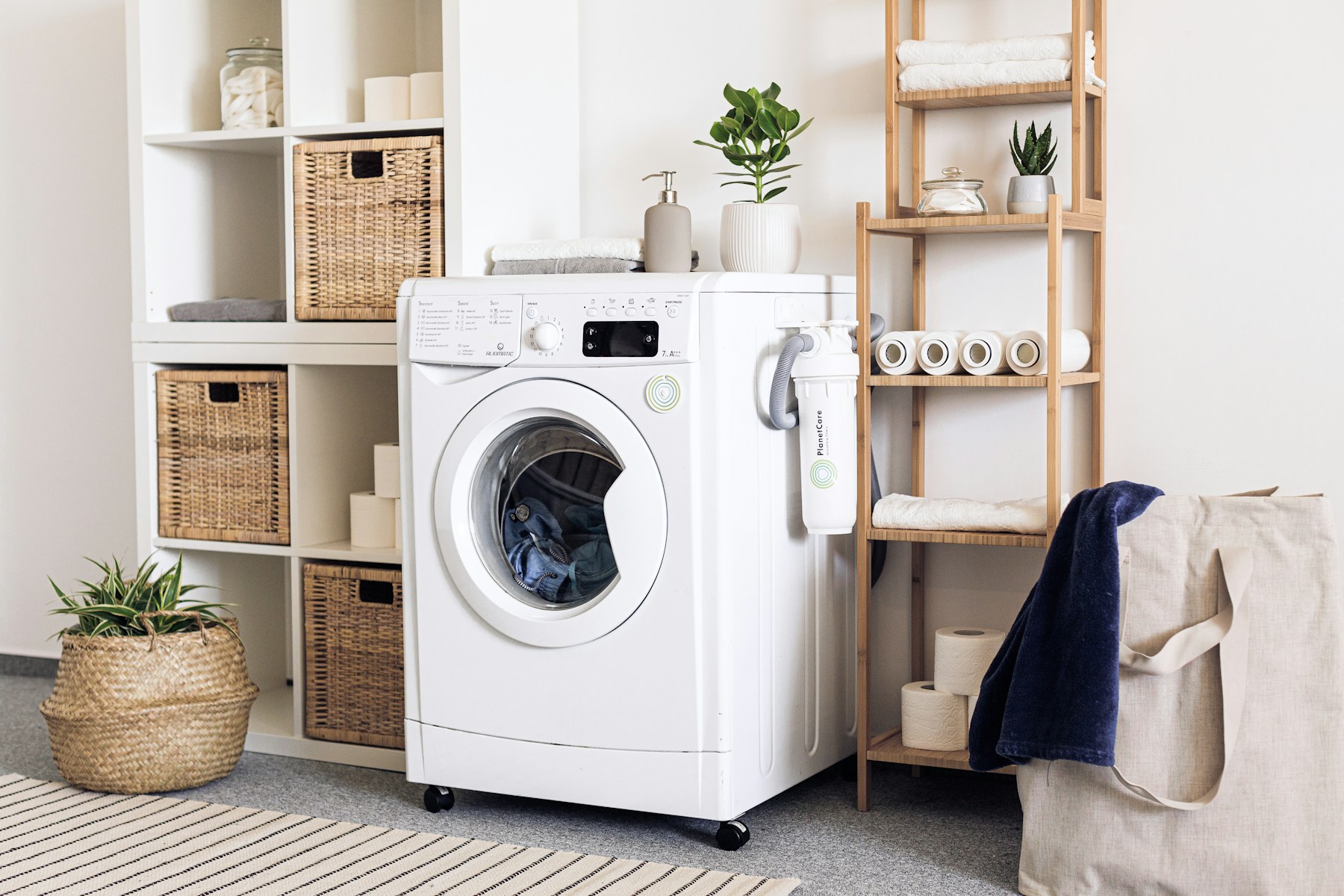
Photo: “White front load washing machine” by PlanetCare, Unsplash · Unsplash License (resized and cropped).
What “white goods” means and what this page covers
“White goods” is the everyday phrase for large household appliances — so called because they were traditionally finished in white enamel. It normally means fridges, freezers, fridge-freezers, washing machines, washer-dryers, tumble dryers, dishwashers, cookers, ovens and hobs. People also use it loosely to include microwaves and other essential cooking equipment. If you see “white goods” on a grant form or a council scheme, that is what it means.
This page covers what to do when one of those appliances breaks, becomes unsafe, or cannot be replaced because of cost. It explains safe first steps, how repair or replacement decisions are usually made, who is responsible when the appliance belongs to a landlord, what consumer law generally gives you, and where help with the cost may exist.
There is no automatic UK-wide right to a free appliance. Help with the cost of white goods comes from a patchwork of local council schemes, national discretionary funds, landlords, social care, charities and reuse projects. What is available depends on where you live, your circumstances, the funding a scheme has left, and the rules that scheme uses. Nothing on this page promises an award, and nothing here is legal or financial advice about your own case.
Key points
- Safety comes first. If an appliance is smoking, sparking, burning or leaking near electrics, stop using it and get help — call 999 in an emergency.
- Never dismantle, bypass or rewire gas or mains-electric parts yourself. Gas work must be done by a Gas Safe registered engineer.
- Check whether the appliance is yours, your landlord's, still under warranty, or subject to an official recall before you spend anything.
- Help with cost varies by nation and by council — Scottish Welfare Fund, Discretionary Assistance Fund (Wales), Discretionary Support (NI) and local household support schemes in England.
- Ask your council, landlord, social worker, support worker or health visitor what is available locally. Many schemes are not advertised widely.
- Your consumer rights are against the retailer that sold you the appliance, not usually the manufacturer.
- Gather evidence early: photographs, model and serial numbers, receipts, repair estimates and letters.
- Compare the true cost of credit or rent-to-own against grants, reuse schemes and secondhand options before signing anything.
- Old fridges and freezers need proper disposal and must not be fly-tipped.
Immediate danger — act now
Call 999 if there is a fire, smoke, someone has had an electric shock, someone is seriously hurt, or people are in danger. Get everyone out of the building first and call from a safe place. Do not go back inside for possessions.
- Fire, smoke or a burning smell. Leave immediately, close doors behind you, do not use lifts and call 999. Never try to fight an appliance fire yourself.
- Sparking, arcing, scorch marks, melted plastic or a hot plug or socket. If it is safe to do so, switch the appliance off at the wall and stop using it and that socket. If you cannot reach it safely, leave the room, and if in doubt call 999.
- Electric shock or tingling when you touch an appliance, tap or pipe. Stop using it, do not touch it again and get urgent electrical advice. Call 999 if someone is unwell after a shock.
- Water leaking near electrical equipment, or flooding. Do not stand in water to reach a switch or plug. If you can safely turn off the water at the stopcock and the electricity at the consumer unit from a dry position, do so. Otherwise leave and call for help.
- Smell of gas or a suspected gas leak. Do not use switches, doorbells, phones or naked flames indoors. Open doors and windows if it is safe, leave the property, and call the national gas emergency service from outside — the current number is published by National Gas emergency contacts.
- Suspected carbon monoxide. Headache, dizziness, nausea, breathlessness or confusion that improves when you leave the building, or a carbon monoxide alarm sounding — stop using the appliance, get fresh air, leave the property and get urgent help. Call 999 if someone is very unwell, and tell the gas emergency service and your landlord.
Never dismantle, bypass, rewire or “make do” with a gas or mains-electric appliance, and never remove a safety device. Gas appliances must only be worked on by an appropriately registered Gas Safe engineer. Electrical work should be done by a competent, qualified electrician — see Electrical Safety First (charity) guidance.
Which appliances this page covers
Each appliance fails in its own way. The notes below are only safe, basic checks — they are not a repair manual. If a check does not solve the problem, stop and get advice from the manufacturer, a competent repairer or your landlord.
Fridges, freezers and fridge-freezers
Signs of trouble include food not staying cold, a motor running constantly, unusual noises, heavy frost build-up, water pooling underneath, or the appliance feeling unusually hot at the back.
- Check the plug is in, the socket switched on and the fuse or trip has not gone.
- Check the temperature dial or display has not been knocked or set incorrectly.
- Check the door seals are clean and closing fully, and that the door is not blocked by an overfull shelf.
- Check the appliance has clear space around the back and sides for ventilation.
- Follow the manufacturer's instructions for defrosting — never chip ice off with a knife or metal tool.
If it still will not cool, treat it as a food-safety matter as well as a repair matter. See the fridge and freezer failure section further down this page and follow current Food Standards Agency guidance.
Washing machines and washer-dryers
Common problems are refusing to start, not draining, not spinning, leaking, or moving violently during the spin cycle.
- Check the power, the door is fully closed and any child lock or delay timer is off.
- Check the water taps behind the machine are turned on and the inlet hose is not kinked.
- Clean the filter and check the drain hose is not blocked or crushed, following the manual.
- Check the load is not badly unbalanced, and that the transit bolts were removed when new.
- Run the manufacturer's recommended maintenance or cleaning cycle if there is one.
Stop and get help if water is leaking near a socket or the machine trips the electrics.
Tumble dryers
Tumble dryers deserve extra care because lint is flammable and dryers run hot for long periods.
- Clean the lint filter after every load, and empty the water container on a condenser dryer.
- Clean the condenser unit or heat-exchanger regularly as the manual instructs.
- Make sure a vented dryer's hose is clear, not crushed and vents outside properly.
- Never run a tumble dryer overnight or when you are out of the house.
- Do not dry items contaminated with oil, petrol, cooking fat or solvents.
- Keep the area around the dryer clear of washing, boxes and clutter.
Tumble dryers have been subject to safety recalls in the past. Check the model against the official recall service — see the recalls section below.
Dishwashers
- Check the power, the door catch, the water supply tap and the salt or rinse-aid warning lights.
- Clean the filter and spray arms, and clear food debris as the manual describes.
- Check the drain hose for kinks or blockages.
- Do not run a dishwasher overnight or when the house is empty.
- Wipe up leaks promptly — persistent leaks can damage flooring and nearby electrics.
Electric and gas cookers, ovens and hobs
A cooker is often the appliance that matters most, because without it hot food becomes difficult and expensive.
- Gas cookers. If you smell gas, follow the emergency steps above. Gas cookers must be installed, moved, repaired and disconnected by a Gas Safe registered engineer — never do this yourself and never use a cooker with a damaged flexible hose.
- Electric cookers. Many are hard-wired rather than plugged in, so a qualified electrician is normally needed to disconnect or install them.
- Check the clock or timer setting — many ovens will not heat if the timer is set to auto.
- Check the trip switch or fuse if the oven is completely dead.
- Check door seals and hinges if heat escapes or cooking is uneven.
- Yellow or lazy flames, soot marks or condensation on windows around a gas appliance can indicate incomplete combustion — stop using it and get it checked.
- Never use a gas cooker or hob to heat a room.
Combination appliances, microwaves and other essential cooking equipment
- Washer-dryers and fridge-freezers combine two functions in one shell. One half can fail while the other keeps working, and repair costs are often higher than for single appliances — factor that into repair-or-replace decisions.
- Microwaves. Never use one with a damaged door, broken catch, damaged seal or internal arcing, and never run it empty. Microwaves should not be opened up at home — the internal components can hold a dangerous charge even when unplugged.
- Air fryers, slow cookers and hobs plates. These are sometimes offered by support schemes as a lower-cost alternative when a full cooker cannot be funded. Use them on a heat-safe surface, never covered, and never unattended overnight.
- Do not run high-power appliances through thin extension leads or multi-way adaptors.
Where to look for help with the cost
Help with the cost of a replacement appliance exists in many areas, but it is not a single national scheme and it is not guaranteed. Names, budgets, qualifying rules, application methods and the items offered all vary by council and by nation. Some schemes provide a grant, some a voucher, some a reconditioned appliance, and some a loan. Many close temporarily when the year's funding runs out.
Ask more than one door. A council may say no while a housing association, social worker, hospital discharge team, health visitor or local charity can help — and the other way round.
Local council welfare, crisis and household support schemes
Most councils in England run some form of local welfare or household support scheme, often using government funding passed to them. Some award white goods directly, some issue vouchers, some refer to a partner reuse organisation. The scheme name differs everywhere — “local welfare assistance”, “household support”, “crisis support” and similar.
- Start at your council's website and search for welfare assistance, crisis support or household support.
- Ask whether they fund white goods, and whether an application must come through a referral agency.
- Ask what evidence they need and how long a decision takes.
- Ask what happens if the scheme is closed — there may be a waiting list or an alternative partner.
Housing associations and council landlords
Social landlords sometimes have tenancy support funds, starter packs for new tenancies, or partnerships with furniture and appliance reuse projects. This is separate from repairs.
- Ask your housing officer or tenancy support team what hardship or starter funding exists.
- Check whether the appliance was supplied by the landlord — if so, it may be their responsibility to repair or replace.
- Ask whether they work with a local reuse or furniture project.
- Put requests in writing and keep the reference number.
See Council and Housing Association Tenants: Rent, Repairs and Your Rights.
Scotland — Scottish Welfare Fund and Community Care Grants
In Scotland the Scottish Welfare Fund is delivered by councils and includes Crisis Grants for emergencies and Community Care Grants, which can cover essential household items such as white goods in defined circumstances — for example when someone is setting up or maintaining a home.
- You apply through your local council, which administers the fund.
- Grants do not have to be repaid, but they are discretionary and not guaranteed.
- There is a review process if you disagree with a decision — ask about it when you receive the outcome.
- Check the current rules on the official page before applying.
Wales — Discretionary Assistance Fund
The Welsh Government's Discretionary Assistance Fund (DAF) provides emergency payments and, separately, awards intended to help people live independently — which can include essential household equipment in defined circumstances.
- Applications are made to the fund directly rather than through your council.
- Awards are discretionary, with qualifying rules and evidence requirements.
- Check the current criteria and application route on the official page before applying.
Northern Ireland — Discretionary Support
In Northern Ireland, Discretionary Support may provide a grant or an interest-free loan in a crisis or emergency, including in some circumstances for essential household items.
- Applications go through the Discretionary Support service, not the council.
- There are income and circumstance conditions, and a review process for refusals.
- Check the current rules on nidirect before applying.
Budgeting Advances and Budgeting Loans
If you receive certain benefits you may be able to borrow through the benefits system rather than commercial credit. A Budgeting Advance is for people on Universal Credit; a Budgeting Loan is for people on certain older benefits. Both are repaid from future payments, so check you can manage the repayments before applying.
- These are interest-free but they are loans, not grants.
- There are qualifying conditions about how long you have been receiving benefit.
- Repayments reduce your future benefit payments — ask what the weekly deduction would be.
See also Universal Credit and DWP Support.
Charitable grants, benevolent funds and reuse organisations
Many charities — including national grant-making trusts, occupational and armed forces benevolent funds, condition-specific charities and local community organisations — help with essential household items. Reuse and furniture projects, which are often charities or social enterprises, supply tested reconditioned appliances at low cost or free to referred households.
- Ask whether an application must come through a referral agency such as a support worker or Citizens Advice (a charity).
- Ask what the charity's own eligibility rules are — they are not government rules.
- Ask whether reconditioned appliances come tested, delivered, installed and with any guarantee.
- Check whether any occupational, trade union, service or employer benevolent fund applies to your work history.
- Never pay a fee to apply for a grant. Legitimate grant-makers do not charge applicants.
Disabled people, carers, families, hospital discharge, domestic abuse and temporary accommodation
Several groups have additional routes to help. None is automatic, but it is worth naming your circumstances clearly when you apply, because schemes often prioritise them.
- Disabled people. Mention any medical need — refrigerated medication, special diets, laundry needs from a health condition, or an appliance you cannot safely use.
- Carers. Ask about a carer's assessment and about carer-specific charitable funds.
- Families with young children. Mention children's ages, school uniform laundry, formula or weaning needs.
- People leaving hospital. Ask the discharge team before you leave, not afterwards.
- Domestic abuse survivors. Resettlement and refuge move-on schemes often include white goods. Ask your support worker or refuge service.
- People moving on from temporary or supported accommodation. Ask about setting-up-home grants and starter packs at the point of the move.
- Care leavers. Ask the leaving-care team about setting-up-home allowances.
Related pages: Mobility Aids, Equipment and Home Adaptations, Women's Refuges and Safe Accommodation.
Preparing an application: evidence checklist
Most schemes ask for some or all of the following. Gathering it first speeds everything up.
- Proof of identity and proof of your address
- Evidence of income, and award letters for any benefits you receive
- Recent bank statements, if the scheme asks for them
- Photographs, or a short video, showing the broken appliance and the fault
- The appliance make, model number and serial number, usually on a label inside the door, on the back or under the lid
- A repair estimate or engineer's report, where you have one
- Evidence of disability, illness, caring responsibilities or children's needs, where relevant
- Your tenancy agreement, if you rent
- A short written explanation of why the appliance is essential and what happens without it
- Details of any previous applications you have made, and their outcomes
Be honest on every form. Never deliberately damage an appliance to try to obtain help — that can amount to fraud, will usually be obvious to an assessor, and can end any future support.
When a fridge or freezer stops working
A failed fridge or freezer is both an appliance problem and a food-safety problem. Take these cautious steps, and check the current Food Standards Agency guidance rather than relying on remembered rules of thumb — the FSA publishes the current temperatures and time limits for chilled and frozen food, and those are the figures to follow.
- Keep the doors closed. Every opening lets cold out. A full freezer holds its temperature longer than a half-empty one.
- Check whether it is a power cut, not the appliance. Check other sockets, your consumer unit, and whether neighbours are affected. In Great Britain you can call 105 free to reach your local network operator — see Power cut? Call 105.
- Write down when it stopped working — the date and, if you know it, the time. Insurers, landlords and support schemes often ask.
- Follow current FSA advice on what chilled and frozen food is still safe, how long it can be held, and what must be thrown away.
- Never judge by smell, taste or appearance alone. Food that has been too warm for too long can be unsafe while looking and smelling completely normal. If in doubt, throw it out.
- Photograph spoiled food before you dispose of it if an insurer, landlord or support scheme may want evidence, and keep a written list.
- Refrigerated medicines. Do not guess. Contact your pharmacy or the prescribing team about whether medicines stored in a failed fridge are still usable.
- Prolonged power loss. Energy network operators operate compensation arrangements in some circumstances. Ask your network operator or supplier what applies — do not assume you will qualify.
If you have lost the food in your home and cannot replace it, see Food Banks and Emergency Food Help.
Repair or replace: how to decide
There is no fixed rule, but these questions usually settle it.
- Is it safe? An appliance with a safety fault, scorching, exposed wiring or a recall notice should not be kept in use, whatever the repair cost.
- Basic checks first. Power, fuse, trip switch, water supply, filters, hoses, door catches and settings, following the manual.
- Manufacturer troubleshooting. Most manufacturers publish fault codes and troubleshooting guides, and many have a helpline. This is free and often solves it.
- Get a written repair estimate including parts, labour and any call-out fee, and ask whether the call-out is charged if the repair is not done.
- Use a competent repairer. Ask about qualifications, insurance and any guarantee on the work. For gas, they must be Gas Safe registered.
- Weigh age, condition and history. Repeated faults, a much older appliance, or a repair costing a large share of the replacement price usually points to replacement.
- Include running costs. A cheap repair on a very inefficient appliance may cost more over a year than a more efficient replacement.
- If you rent and the appliance is the landlord's, get permission first. Arranging your own repair without asking can leave you paying for it, or in breach of your agreement.
- Avoid unsafe shortcuts. No unofficial or unsuitable parts, no bypassing safety switches, no unqualified gas or electrical work.
Sixpence Support UK does not recommend particular repair companies, retailers or manufacturers.
Council, housing association and private tenants: who is responsible
Responsibility for an appliance is not automatic. It usually depends on:
- Who owns the appliance, and who supplied it
- What your tenancy agreement says
- Whether the appliance is listed on the inventory
- Whether it is built in or integrated into the property
- What caused the fault, including any damage or misuse
Broadly, appliances the landlord supplied as part of the let are more likely to be the landlord's responsibility, and appliances you bought and brought with you are yours. But it is not true that every landlord must repair every appliance, and the position differs between tenancies and between the four nations.
- Report the problem in writing, not just by phone, and describe the fault plainly.
- Ask for and keep the repair reference number.
- Keep dated photographs and a note of every call, visit and missed appointment.
- If nothing happens, use the landlord's formal complaint procedure and ask for the final response.
- Do not withhold rent as a way of forcing a repair — get advice first.
See Council and Housing Association Tenants: Rent, Repairs and Your Rights and Free Letter and Complaint Support.
Consumer rights when an appliance is faulty
If you bought the appliance, your rights are normally against the retailer that sold it to you — not the manufacturer. Retailers sometimes tell customers to “ring the manufacturer”. You can do that if it is quicker, but it does not remove the seller's responsibility.
- Legal rights, guarantee and warranty are three different things. Your legal rights come from consumer law and sit with the seller. A manufacturer's guarantee is a promise from the maker. An extended warranty is a product you pay for. A guarantee or warranty running out does not automatically end your legal rights.
- Remedies can include repair, replacement, a price reduction or a refund, depending on the fault, how long you have had the item and what the law allows. Time limits and the order in which remedies apply are set out in current guidance — check GOV.UK and Citizens Advice (charity) for the up-to-date position before you write to the seller.
- Second-hand and refurbished appliances from a business still carry consumer rights, though what counts as satisfactory quality takes account of age, price and description.
- Buying from a private seller gives you far fewer rights — broadly, the item must match its description, but you cannot expect the same protection as from a trader.
- Online purchases usually carry additional cancellation rights, with exceptions. Check current guidance for the time limits.
- Online marketplaces. Work out whether the seller is a business or a private individual, and whether the marketplace itself offers a protection scheme. That decides what you can claim and from whom.
- Section 75. If you paid by credit card, the card provider may be jointly liable with the seller for goods within certain purchase-value limits. Check the current thresholds before relying on it.
- Chargeback is different. It is a card-scheme process, not a legal right, with its own time limits, and it is not guaranteed to succeed.
- Keep everything — receipts, order confirmations, delivery notes, the advert or listing, warranty documents and all correspondence.
This is general information, not legal advice, and no one can guarantee a claim will succeed. If a trader will not put things right, get advice from Citizens Advice consumer help (charity). If the seller has gone out of business, see Citizens Advice: if a company stops trading.
Buying safely: what to check before you order
- Measure everything — the gap, the height including feet and hinges, the depth with the door open, and the route in: doorways, stairs, corners and lifts.
- Check installation requirements — plumbing, drainage, an existing socket, hard-wiring, or whether a Gas Safe engineer is needed.
- Ask about delivery, installation, connection and removal of the old appliance, and whether each is included or charged.
- Read the energy label and the estimated annual consumption, not just the rating letter.
- Choose a sensible capacity for your household — a machine that is too small means more cycles, and one that is too large may cost more to run.
- Accessible controls — large, high-contrast displays, tactile buttons rather than flat touch panels, audible signals and reachable positions matter for many disabled and older users.
- Noise, ventilation and drainage — check noise levels for flats and open-plan rooms, and that ventilation and waste connections can be met.
- Check what a warranty actually covers — parts, labour, call-outs, exclusions, how long, and how to claim.
- Buying refurbished or second-hand? Ask who tested it, whether it has been PAT tested or safety checked, whether it has been recall-checked, what guarantee comes with it, and whether delivery and installation are included.
- Watch for pressure selling, fake reviews and suspiciously cheap listings. A price far below everything else usually signals a problem. Never pay by bank transfer to a stranger.
We do not endorse any retailer, manufacturer or finance company. See also Scams, Fraud and Suspicious Messages.
Credit, hire purchase and rent-to-own: understanding the real cost
Buying an essential appliance on credit is a normal, reasonable decision when there is no other way to get one, and nobody should feel judged for it. What matters is going in with the full picture.
- Ask for the total amount repayable, not just the weekly or monthly figure.
- Compare that total with the cash price of the same appliance elsewhere.
- Check the interest rate, the length of the agreement and any arrangement fee.
- Check late-payment and default charges, and what happens if you miss a payment.
- Check whether insurance, warranties or service cover are bundled in, and whether they are optional.
- With rent-to-own or hire purchase, check whether you own the appliance at the end and what happens if you fall behind — the goods can often be taken back.
- Avoid unregulated or informal lending. Check a lender is authorised before you sign.
Before signing anything, check grants, reuse projects and interest-free options above. For free independent debt advice see Citizens Advice (charity) — debt and money and Debt Collectors and Bailiffs. This page cannot give personalised financial advice.
Installation and everyday safety
- Follow the manufacturer's instructions for installation, levelling, ventilation and use. Keep the manual, or download it from the maker's website.
- Leave the ventilation gaps the manual specifies, especially behind fridges, freezers and dryers.
- Do not overload sockets, and do not run large appliances through thin extension leads, coiled reels or stacked adaptors.
- Check water inlet hoses and drain hoses regularly for bulging, cracking, kinks or damp patches, and replace damaged hoses.
- Clean tumble-dryer lint filters after every load, and clean condensers as the manual instructs.
- Do not run washing machines, dryers or dishwashers overnight or while the house is empty.
- Keep the tops and surrounds of appliances clear of washing, papers, tea towels and clutter.
- Fit and test working smoke alarms, and a carbon monoxide alarm where there is any fuel-burning appliance. Test them monthly.
- Keep children and vulnerable adults away from hot ovens, hobs and dryer doors, and use door locks or hob guards where appropriate.
- After flooding or water damage: do not use any appliance that has been in floodwater until it has been checked by a competent electrician, and any gas appliance until it has been checked by a Gas Safe registered engineer. Drying it out is not enough. Photograph the damage for insurance.
Safety guidance above reflects official fire and rescue, GOV.UK, Electrical Safety First (a charity) and Gas Safe Register (the official gas registration body) advice. Always follow your own appliance manual and local fire service guidance.
Product recalls and safety notices
Appliances are sometimes recalled because of a fault that could cause fire, shock or injury. Checking takes a few minutes and it is free.
- Find the details. The make, model number and serial number are on a rating plate — commonly inside the door, on the back, under the lid, or behind the kickplate.
- Check the official service. Search the GOV.UK product safety alerts, reports and recalls service, run by the Office for Product Safety and Standards. Electrical Safety First (a charity) also runs a recall checker.
- Register your appliance with the manufacturer so you are contacted directly about safety notices. You can usually register second-hand appliances too.
- Follow the manufacturer's recall instructions exactly — do not attempt your own modification.
- Stop using the appliance immediately if an official notice says to, even if it seems to be working normally.
- Keep evidence of any promised repair, modification, replacement or refund, including reference numbers and appointment dates.
We deliberately do not list recalled models here, because such a list goes out of date. Always use the live official checker.
Insurance, appliance cover and power-cut compensation
These are four separate things and they cover different situations.
- Home contents insurance may cover accidental damage, fire, theft or escape of water, and sometimes freezer food contents — but usually not ordinary breakdown or wear and tear.
- Appliance or breakdown cover is a separate paid policy for repairs. Check what it excludes and whether there is a waiting period.
- A manufacturer's guarantee is free with the appliance for a set period and covers faults, not accidents or misuse.
- Energy network compensation may apply after a long unplanned power cut. Rules are set by the regulator and network operator, and eligibility is not automatic.
Before claiming, check the excess, the exclusions, any single-item limit, and what evidence is required — often photographs, receipts, a repair report and dates. Making a claim can affect future premiums. Nothing here promises that a claim or compensation will be paid. See Insurance: Choosing Cover, Making a Claim and Complaining.
Energy use and running costs
- Use the programme designed for the job — eco and lower-temperature cycles usually use less energy, though they may run longer.
- Run full loads rather than several part loads, without cramming the drum.
- Keep door seals clean and intact, and keep filters and condensers clear so appliances do not work harder than needed.
- Set fridge and freezer temperatures to the levels in current Food Standards Agency and manufacturer guidance, and check them with a thermometer.
- Defrost a freezer when ice builds up, following the manual, and let hot food cool before putting it in the fridge.
- Keep the back of the fridge or freezer ventilated and away from cookers and radiators.
- Dry washing outdoors or on an airer where you can — but ventilate the room to avoid damp and mould.
- Compare energy labels and estimated annual consumption when buying, and think about lifetime running cost rather than purchase price alone.
- Switching appliances off at the wall when safe and practical reduces standby use — but never unplug a fridge, freezer or anything that must stay powered.
We do not quote savings figures, because they depend on your tariff, appliance and usage. For help with bills see Gas, Electricity and Water Bills.
Disability, accessibility and adaptations
- Controls and displays. Look for large tactile dials or buttons, high-contrast displays, and avoid flat touch panels if you have limited dexterity or sight loss.
- Loading position. A raised washing machine or dryer, a front-opening or side-opening oven, or a fridge with the freezer section on top can make a real difference for wheelchair users and people who cannot bend.
- Alerts. Visual, audible and vibrating end-of-cycle alerts, and connected app notifications, help people with sight or hearing loss.
- Occupational therapy. An OT assessment can recommend adaptations, positioning and equipment, and an OT report is often strong evidence for a funding application.
- Reasonable adjustments. When applying for help you can ask for adjustments — a longer deadline, a phone or home-visit application instead of an online form, or support to complete it.
- Accessible formats. You can ask any council, landlord or scheme to communicate in large print, easy read, braille, by email, or through an interpreter or BSL.
Asking for adjustments does not entitle anyone to a particular appliance, and no scheme can promise a specific item. See Mobility Aids, Disability Equipment and Home Adaptations.
Getting rid of an old appliance: recycling and removal
- Retailer take-back. Many retailers will collect your old appliance when they deliver the new one, sometimes free and sometimes for a fee. Ask before you order.
- Council bulky waste collections. Most councils collect large items, often for a charge, with reductions in some areas. Book through your council.
- Household recycling centres accept waste electrical and electronic equipment (WEEE). Check opening times, van and trailer permits, and any booking requirement.
- Reuse organisations. If the appliance still works, a local reuse charity or furniture project may collect it and pass it to a household that needs it.
- Smart or connected appliances. Before disposal, unlink the appliance from your account and app and factory-reset it so your personal information and wi-fi details do not go with it.
- Fridges and freezers need special handling because their cooling systems and insulation contain gases that must be removed safely. Never let anyone strip or dump them, and never leave one in a garden or alleyway where a child could climb in.
- Use a licensed waste carrier. If someone offers cheap cash removal, check they are registered. If your waste is fly-tipped, you can be fined even though someone else dumped it.
What to do now
- Make the appliance safe — switch it off at the wall if it is safe to do so, and call 999 if there is fire, smoke or immediate danger.
- Write down the fault, the date it started, and the make, model and serial number.
- Check the appliance against the official GOV.UK recalls service.
- Check who owns it — you, your landlord, or a hire or credit agreement.
- Find the receipt, guarantee, warranty or tenancy agreement.
- Do the safe basic checks, then get a repair estimate if it is worth repairing.
- Check what local and national help exists for your nation and your council area.
- Gather your evidence: photographs, benefit letters, ID, proof of address and any medical evidence.
- Apply, keep copies of everything you send, and note the reference number and decision date.
- If you are refused or ignored, ask about a review and get help writing a letter or complaint.
About the organisations named on this page
GOV.UK, the Office for Product Safety and Standards, the Food Standards Agency, mygov.scot, GOV.WALES and nidirect are official government services or public bodies. The Gas Safe Register is the official gas registration body for Great Britain. Citizens Advice, Electrical Safety First and local reuse and furniture projects are charities or social enterprises, not government bodies. Councils, housing associations and energy network operators set their own rules within the law. Always check the current rules on the official page before applying, because schemes, thresholds and funding change.
- [1] GOV.UK (Office for Product Safety and Standards). Product safety alerts, reports and recalls · 2026
- [2] GOV.UK. Office for Product Safety and Standards · 2026
- [3] Food Standards Agency. Chilling, freezing and defrosting food safely · 2026
- [4] Food Standards Agency. Best before and use-by dates · 2026
- [5] Food Standards Agency. Home food fact checker · 2026
- [6] GOV.UK. Accepting returns and giving refunds: the law · 2026
- [7] Citizens Advice (charity). Consumer advice · 2026
- [8] Citizens Advice (charity). Something's gone wrong with a purchase · 2026
- [9] Gas Safe Register. Gas Safe Register — the official gas registration body · 2026
- [10] Electrical Safety First (charity). Electrical safety guidance · 2026
- [11] Electrical Safety First (charity). Product recalls checker · 2026
- [12] GOV.UK. Cost of living support · 2026
- [13] GOV.UK. Find your local council · 2026
- [14] GOV.UK. Budgeting Loans · 2026
- [15] GOV.UK. Universal Credit: other financial support (Budgeting Advance) · 2026
- [16] mygov.scot (Scottish Government). Scottish Welfare Fund: Crisis Grants and Community Care Grants · 2026
- [17] Welsh Government. Discretionary Assistance Fund (DAF) · 2026
- [18] nidirect (Northern Ireland Government). Discretionary Support · 2026
- [19] GOV.UK. Recycling and waste: local services · 2026
- [20] Energy Networks Association. Power cut? Call 105 · 2026