
HomeVideos
Anita’s videos
Anita presents plain-English videos about mobility aids, disability equipment and home adaptations, and how to get an assessment and the right support.

Videos
Mobility Aids, Disability Equipment and Home Adaptations
Anita explains how to find suitable mobility aids and disability equipment, why a proper assessment matters, what may be available through health or social care, what grants may help, and how to avoid pressure selling and unexpected costs.
Presenter: Anita (AI-generated presenter)
Watch videoHello, my name is Anita. If you need help moving around safely or managing everyday tasks at home, it can be difficult to know what equipment is suitable or where to ask for support.
Sixpence Support UK has a detailed guide to mobility aids, disability equipment and home adaptations. It covers walking sticks, frames, wheelchairs, mobility scooters, bathing and toileting equipment, adjustable furniture, stair lifts, ramps, grab rails and changes that may make your home safer and easier to use.
The guide explains why a proper assessment can be important, where equipment may be available through health or social care services, and what financial assistance or grants might be available.
It also includes questions to ask before buying or hiring equipment, and warnings about unsuitable products, pressure selling and unexpected costs.
Support and eligibility differ across the UK, so always check the arrangements where you live.
Visit sixpencesupportuk.org and look for mobility aids, disability equipment and home adaptations.
Everything on Sixpence Support UK is free to use, with no subscriptions and no hidden charges.
Thank you for taking the time to listen to me.
Adoption: Considering Adoption, Adopted People and Family Support
Anita explains what adoption legally means and how it differs from fostering, kinship care and special guardianship, the steps involved in adopting, support after a child joins your family, how adopted adults can access records and tracing services, and the support available to birth relatives.
Presenter: Anita (AI-generated presenter)
Watch videoHello, my name is Anita. Adoption can affect people throughout their lives. You may be considering adopting a child, already caring for an adopted child, looking for support as an adopted adult, or trying to understand your options as a birth relative.
Sixpence Support UK has a detailed guide covering adoption and the support available. It explains what adoption legally means and how it differs from fostering, kinship care, special guardianship, and other permanent care arrangements.
If you are thinking about adopting, the guide covers who may apply, choosing an adoption agency, assessment, preparation, matching, introductions, and the support that may be available after a child joins your family.
There is also information about life story work, contact with birth relatives, education, health needs, identity, and helping an adopted child feel safe and secure.
Adopted adults can find information about accessing adoption and birth records, tracing relatives, intermediary services, contact registers, and protecting themselves when using online searches or DNA services.
Birth relatives can also find guidance about support, contact arrangements, and coping with difficult feelings or loss.
Adoption law, services, and procedures differ across England, Scotland, Wales, and Northern Ireland, so always check the official arrangements where you live.
Visit sixpencesupportuk.org and look for Adoption, Considering Adoption, Adopted People, and Family Support.
Everything on Sixpence Support UK is free to use, with no subscriptions and no hidden charges.
Thank you for taking the time to listen to me.
Public Transport and Accessible Travel
Anita explains how to plan journeys when you have a disability, reduced mobility, a health condition or anxiety, including checking accessibility, booking passenger assistance, what help is available if a journey is disrupted, and how to complain.
Presenter: Anita (AI-generated presenter)
Watch videoHello, I'm Anita, one of the presenters for Sixpence Support UK. Using public transport can feel difficult when you have a disability, reduced mobility, a health condition, anxiety, or need extra support. A little planning can make the journey easier.
Before you travel, check whether the station or stop is accessible, whether lifts are working, and whether you need to book assistance. You can ask about wheelchair spaces, ramps, priority seating, accessible toilets, companion travel, and what help is available if your journey is disrupted.
Arrangements can differ between operators and across the UK, so always check with the official transport provider before travelling.
If something goes wrong, keep your ticket and make a note of what happened, including the date, time and place.
On the public transport page at Sixpence Support UK, you can find clear, plain-English guidance about planning journeys, passenger assistance, accessibility, complaints and useful official links.
The information is free, with no subscriptions or hidden charges. Visit sixpencesupportuk.org and look for public transport.
Sixpence Support UK — clear information to help you travel with more confidence.
The AI Assistants: Penny, Sunny, Teddy and Zoya
Anita explains how the AI assistants at Sixpence Support UK can help you find information, understand things in plain English and work out your next practical step, what they cannot do, and how Zoya the AI translator works.
Presenter: Anita (AI-generated presenter)
Watch videoHello, my name is Anita. I would like to explain how the AI assistance at Sixpence Support UK can help you.
Penny, Sunny, and Teddy are AI assistants, not real people. You can choose the assistant you feel most comfortable using. They can help you find information across the website, explain things in plain English, and guide you towards relevant subjects, checklists, and official services.
You can ask them questions about areas such as health, benefits, bills, housing, education, care, and everyday support. They can also help you understand what your next practical step might be.
They cannot diagnose a medical condition, make decisions for you, or replace a doctor, solicitor, emergency service, or other qualified professional. If someone is in immediate danger, they should always call 999.
Zoya is the website's AI translator. She can help translate written information between different languages, making the website easier to use for people who may struggle with English. Because automated translations are not always perfect, important medical, legal, or financial information should also be checked with a qualified person or official service.
Please avoid entering passwords, bank details, or other highly sensitive personal information into any AI service.
All four assistants are there to make information easier to find and understand. Visit sixpencesupportuk.org to meet Penny, Sunny, Teddy, and Zoya, and explore the support available.
Sixpence Support UK is free to use with no subscriptions and no hidden charges.
Thank you for taking the time to listen to me.
SEND, ALN and ASN: Extra Support in Education
Anita explains what SEND, ALN, ASN and SEN mean across England, Wales, Scotland and Northern Ireland, the kinds of extra help available in school, nursery or college, and how to ask for support and have concerns written down.
Presenter: Anita (AI-generated presenter)
Watch videoHello, my name is Anita. If a child or young person needs extra help with learning, communication, behaviour, mobility or taking part in school or college, the wording can feel confusing.
In England, SEND means Special Educational Needs and Disabilities. In Wales, ALN means Additional Learning Needs. In Scotland, ASN means Additional Support Needs. Northern Ireland usually uses the term Special Educational Needs, or SEN.
Although the names and systems differ, they are all about making sure children and young people receive the support they need in education.
Support might include help from a teacher or learning assistant, changes to lessons or exams, communication support, specialist equipment, help with mobility, or a more detailed support plan.
A parent, carer or young person can speak to the school, nursery or college and ask who is responsible for arranging this help. You can also ask for the concerns and agreed actions to be written down.
Sixpence Support UK explains these different terms in plain English and helps you understand the next steps.
Everything is free to use, with no subscriptions and no hidden charges. Visit sixpencesupportuk.org to find out more.
Thank you for taking the time to listen to me.
How Sixpence Support UK Can Help
Anita introduces the free information and practical support available through Sixpence Support UK, including disability and mobility, health conditions, benefits and grants, living costs, and help with letters and complaints.
Presenter: Anita (AI-generated presenter)
Watch videoHello, my name is Anita and I'm one of the presenters for Sixpence Support UK.
Sixpence Support UK is a free starting point for clear information and practical support.
Our website covers disability and mobility, anxiety and depression, dementia, autism, health conditions, benefits and grants, living costs, bereavement, scams, and support for young people and older people.
We also provide free help with preparing letters, emails and complaints.
Everything is written in plain English, with no subscriptions and no hidden charges.
You can help us reach more vulnerable people without spending anything. Please follow our page, like, copy and share our videos, and tell others about our website.
Visit sixpencesupportuk.org.
Thank you for watching.
Other presenters
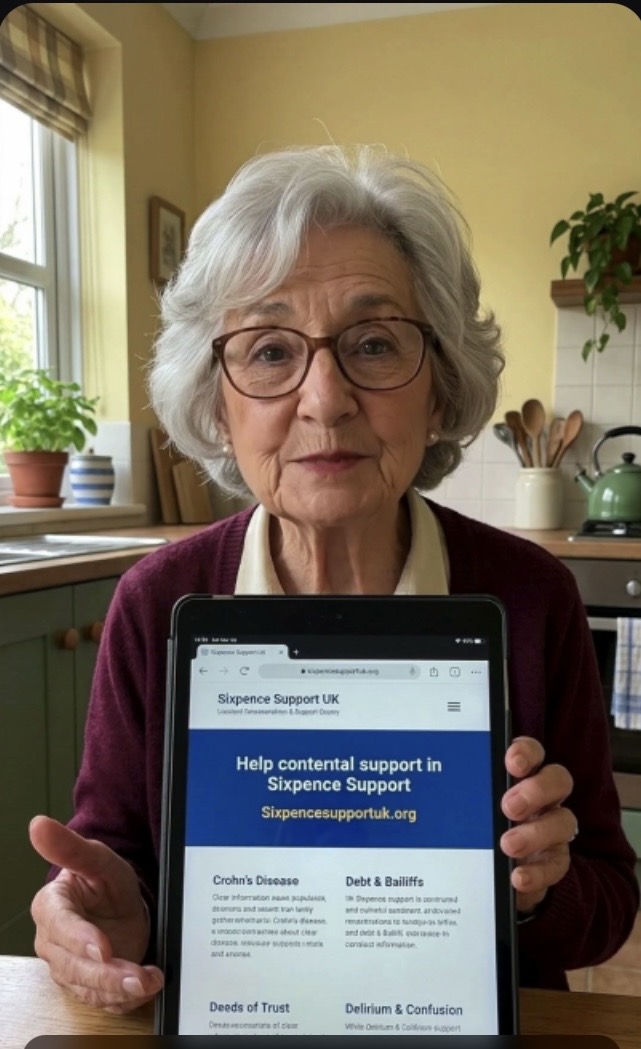 BerylEveryday help and support
 StanleyEveryday help and support
 JordanHelp and support for young people
 SophiaHelp and support for young people
 BenAI presenter · not a real person
- AnitaAI presenter · not a real person
 The MajorAI presenter · not a real person
 John ShawAI presenter · not a real person
 AlisonAI presenter · not a real person
 ThomasAI presenter · not a real person