
Exploring All Dog Breeds
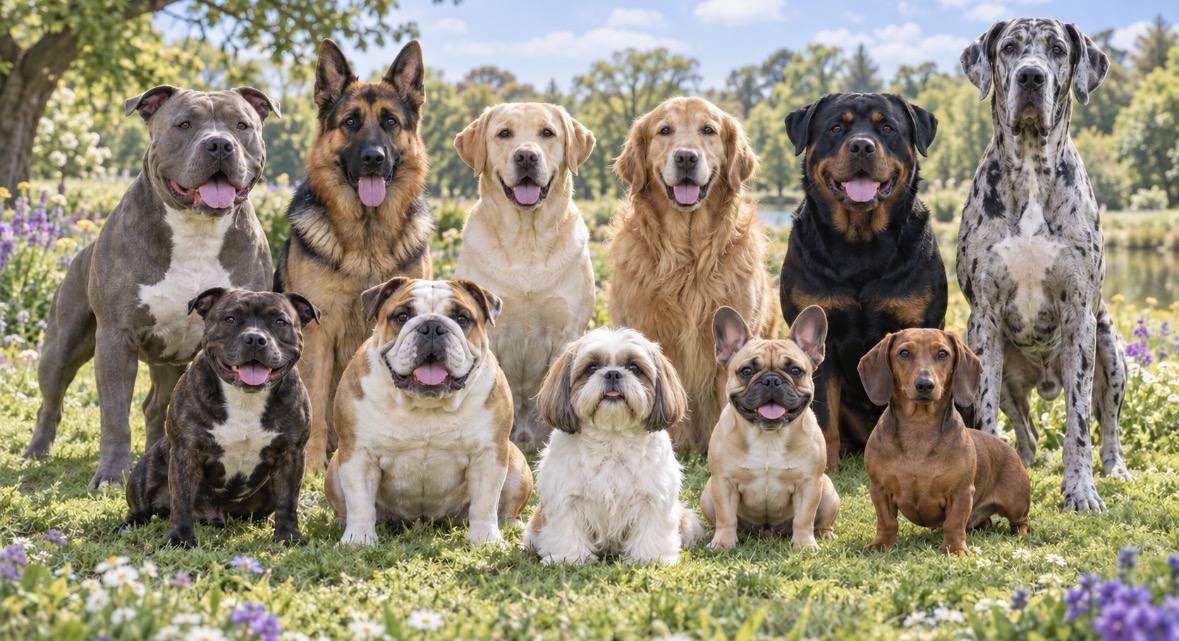
Dogs come in many different sizes, shapes and personalities. Learning about a breed’s likely exercise, training, grooming and health needs can help you decide whether that type of dog may suit your home and way of life.
Every dog is an individual. Breed information can describe common characteristics, but it cannot guarantee a dog’s health, temperament or behaviour. Think carefully about the lifelong commitment and speak to a veterinary professional or reputable rescue organisation when you need individual advice.
This page is an information guide only. Sixpence Support UK is not a marketplace, a breeder directory or a recommendation service, and we do not sell, advertise or rehome dogs.
Before choosing a dog
Do not choose a dog because of its appearance alone. Consider the time, space and money needed for exercise, training, food, grooming, insurance and veterinary care throughout the dog’s life.
Children and dogs must always be supervised responsibly. No breed should automatically be described as completely safe with children, older people, disabled people, cats or other animals.
Search and filter the breeds
The list below contains the 227 pedigree breeds shown in the Royal Kennel Club Breeds A–Z directory, checked on 16 September 2026. The number of recognised breeds can change, so check the Royal Kennel Club directory for the current list.
Breed directory
Search for a breed, choose a letter or use the filters to begin.
Breed names, groups and the listed size, exercise, grooming, coat, shedding, lifespan, home, garden and vulnerable native breed details come from the Royal Kennel Club Breeds A–Z directory. All descriptive wording on this page is written by Sixpence Support UK.
Crossbreeds and mixed-breed dogs
Many dogs in the UK are crossbreeds or have unknown ancestry, so they do not appear in the recognised pedigree list above. That does not make them any less suitable as companions.
- Crossbreeds can inherit any mixture of physical and behavioural characteristics from their parents.
- Size, coat, shedding, temperament and health cannot be guaranteed from a crossbreed name.
- Terms such as Cockapoo, Labradoodle and Cavapoo describe crosses, not Royal Kennel Club recognised pedigree breeds.
- Crossbreeds still need appropriate health checks, responsible breeding, training, socialisation and lifelong care.
- DNA tests may suggest ancestry, but they cannot reliably predict every aspect of health or behaviour.
- Adopting an adult dog can sometimes make its established size, coat and temperament easier to assess.
No dog can be guaranteed not to trigger allergies, and we do not describe any breed or cross as “hypoallergenic”. If you or someone in your household has an allergy, get medical advice before getting a dog. The NHS allergies pages are a starting point, and your GP or an allergy clinic can advise on your own situation.
Choosing a dog responsibly
Open the sections below for practical points to work through before and after you bring a dog home.
Is a dog right for your circumstances?
Think about your working hours, who else lives with you, your health, your income and how settled your housing is. Consider who would care for the dog if you were ill, and whether everyone in the household agrees. Fostering for a rescue organisation can be a way to find out what daily dog care really involves.
The true lifelong commitment
Many dogs live well over ten years, and some considerably longer. Over that time you are committing to daily walks in all weathers, training, grooming, veterinary and dental care, insurance, holiday arrangements and the extra needs of an older dog.
Puppies compared with adult dogs
A puppy needs constant supervision, toilet training, socialisation, several small meals a day and vaccinations, and its adult size, coat and temperament are not yet certain. An adult dog’s size, coat and character are usually clearer, and many are already house-trained. Rescue organisations can describe what an adult dog needs.
Adopting from a rescue organisation
Reputable rescue organisations assess dogs, treat known health problems, neuter, vaccinate and microchip where appropriate, and match dogs to homes. Expect a home check, honest conversations about behaviour and an adoption fee. Our adoption and responsible rehoming page explains the process, and Dogs Trust rehoming, the RSPCA and Blue Cross all rehome dogs.
Finding a responsible breeder
A responsible breeder will welcome questions, let you visit more than once, show you where the puppies live, provide health-test certificates for both parents and stay in touch afterwards. They will never meet you in a car park or deliver a puppy to your door. The Royal Kennel Club find a breeder service and RSPCA puppy advice explain what to look for.
Questions to ask before buying a puppy
Ask how old the puppy is, how many litters the mother has had, which health tests were carried out on both parents and what the results were, what the puppy has been socialised with, whether it has been vaccinated, wormed and microchipped, what food it is used to, and what happens if things do not work out. Ask for everything in writing and keep copies of receipts and records.
Meeting the puppy with its mother
Always see the puppy with its mother, in the place where it has been raised, and watch how she behaves with the litter. It is against the law in England, Scotland and Wales for third parties to sell puppies they have not bred themselves. If a seller will not let you see the mother and the home, walk away and report your concerns.
Health screening and veterinary records
Ask which screening schemes apply to the breed and ask to see the certificates, not just a verbal assurance. Results for hips, elbows and eyes under the British Veterinary Association and Royal Kennel Club Canine Health Schemes, and many DNA tests, can be checked in the Royal Kennel Club health test results finder. Register with a veterinary practice before the dog arrives — you can find one through the Royal College of Veterinary Surgeons.
Microchipping and ownership records
In England, Scotland and Wales dogs must be microchipped and the keeper’s details kept up to date on an approved database, and dogs must wear a collar and tag with the owner’s name and address in a public place. GOV.UK explains the microchipping rules. In Northern Ireland a dog must also be licensed by the local council as well as microchipped — nidirect explains dog licensing and microchipping. Update the microchip database whenever you move or change telephone number.
Vaccinations, parasite control and routine care
Your veterinary practice will advise on vaccination, worming, flea and tick treatment, neutering, dental care, weight and diet for your individual dog. Do not follow dosing advice from social media or from another dog’s medicine. PDSA and Dogs Trust publish general care guidance.
Training and socialisation
Use kind, reward-based training and avoid anything based on fear, pain or intimidation. Good puppy classes and accredited trainers or behaviourists can help, and your vet can refer you if a behaviour problem develops. Sudden behaviour changes should always be checked by a vet, because pain and illness affect behaviour.
Exercise and mental stimulation
Match daily exercise to the breed, the individual dog, its age and its health, and ask your vet about exercise for growing puppies and older dogs. Sniffing, chewing, training games and safe play matter as much as distance. Learn the local rules — some parks and beaches have Public Spaces Protection Orders requiring leads or excluding dogs, as GOV.UK explains.
Grooming and coat care
Longer, curlier and denser coats generally need more work, and lower-shedding coats often need professional clipping every few weeks, which is a regular cost. Introduce brushing, nail care, ear checks and tooth brushing gradually and gently, and ask your vet or a qualified groomer for help if a dog finds handling difficult.
Food, insurance and veterinary costs
Budget for food, insurance, preventive care, grooming, equipment, training, and daytime or holiday care. Larger dogs usually cost more to feed, insure and treat. Compare insurance carefully, including exclusions and lifetime versus annual cover. Our veterinary costs and financial help page explains what help exists, and our pet food and essential supplies page covers help when money is short.
Dogs and children
Children and dogs must always be supervised by a responsible adult, and children should be taught to leave a dog alone when it is eating, sleeping or resting in its own space. No breed is automatically safe with children. Teach children to recognise when a dog is uncomfortable, and give the dog a place where it can go undisturbed.
Dogs and other animals
Whether a dog can live with cats, small animals or other dogs depends on the individual dog, its history and careful introductions, not on its breed name. Introduce animals slowly and under supervision, keep feeding and resting areas separate at first, and get advice from the rescue organisation, your vet or an accredited behaviourist.
Living in a flat or rented home
Check your tenancy or lease before you commit, and get written permission where it is needed. Think about lifts, stairs, noise, shared entrances and where the dog will toilet. Our renting a home and keeping a pet page explains how to ask a landlord and how the rules differ across the UK.
Support for older or disabled dog owners
Practical help exists with dog walking, feeding, grooming, transport to the vet and temporary care. See our support for older or disabled pet owners page and our page on help when a pet owner goes into hospital. It is also worth planning who would care for a dog if something happened to you.
Avoiding puppy farms, scams and irresponsible sellers
Warning signs include several breeds or litters available at once, no sight of the mother, pressure to pay a deposit quickly, payment by bank transfer or gift card, a puppy offered for delivery, and no paperwork. Never buy a puppy you have not seen in its home. Our scams and fraud page explains how to report a scam, and concerns about welfare can be reported through our reporting animal cruelty or neglect page.
What to do if you can no longer care for a dog
Contact a reputable rescue organisation or the breeder rather than passing the dog to someone you do not know or advertising it online. The Royal Kennel Club has guidance for owners who are unable to care for a dog, and our adoption and responsible rehoming page explains responsible rehoming. If a dog has died, our pet bereavement page lists free UK support.
Dogs and the law
Dogs affected by UK law
It is against the law anywhere in the UK to let a dog be dangerously out of control, in public or in a private place, and this applies to every dog whatever its breed. GOV.UK explains what “dangerously out of control” means. Some types of dog are also banned or restricted, and the rules differ between the four nations.
A banned “type” is defined by a dog’s physical characteristics, not by its pedigree name or paperwork. A dog can be judged to be a banned type even if it is not a recognised breed. Sixpence Support UK cannot tell you whether an individual dog is a prohibited type, and neither can a photograph or a description. Only the police, a council dog warden, a court or an appropriately qualified expert can decide, so get official or legal advice if you are unsure.
England and Wales. The Pit Bull Terrier, Japanese Tosa, Dogo Argentino, Fila Brasileiro and XL Bully types are banned, and GOV.UK lists the banned dogs. Owners of XL Bully dogs must follow the rules attached to a Certificate of Exemption, including keeping the dog muzzled and on a lead in public, holding third-party public liability insurance and having the dog neutered and microchipped. GOV.UK sets out the rules for XL Bully owners.
Scotland. It is a criminal offence to keep an XL Bully dog without a valid Certificate of Exemption. Owner-led applications closed on 31 July 2024, and new exemptions can now be granted only by a court order. It is also an offence to breed from, sell, give away or rehome an XL Bully, to abandon one or let it stray, or to have one in public without a lead and muzzle. From 1 November 2026, a child under 12 must not be left alone with an XL Bully or any other banned breed in a house, garden or other private place, and an adult aged 16 or over must be present. mygov.scot explains the Scottish rules.
Northern Ireland. Five types are banned: the Pit Bull Terrier, Japanese Tosa, Dogo Argentino, Fila Brasileiro and XL Bully. nidirect lists the banned breeds. Since 1 January 2025 it has been an offence to own an XL Bully type dog without an exemption certificate, and the application window closed on 31 December 2024, so anyone without a certificate should contact the dog control section of their local council. nidirect explains the XL Bully rules. Dogs in Northern Ireland must also hold a council dog licence. nidirect explains dog licensing and microchipping.
Other everyday legal duties apply throughout the UK, including microchipping and keeping contact details current, keeping a dog under control around livestock, cleaning up after a dog, and following local Public Spaces Protection Orders or byelaws. Penalties for breaking dog-control law can be serious, including fines, prison sentences and orders to destroy a dog. Always check the guidance for your own nation, and take legal advice about an individual dog or an individual case.
Other Sixpence Support UK animal and pet pages
- Adoption and responsible rehoming
- Veterinary costs and financial help
- Emergency and out-of-hours vets
- Lost and found pets
- Pet food and essential supplies
- Renting a home and keeping a pet
- Support for older or disabled pet owners
- Help when a pet owner goes into hospital
- Planning who will care for a pet
- Pet bereavement
- Reporting animal cruelty or neglect
Trusted sources
These organisations publish free, current UK information about dogs, breed health and dog law.
Important note
Sixpence Support UK provides general information and trusted links. Breed characteristics are only a guide and individual dogs can differ considerably. This page does not replace advice from a veterinary professional, qualified behaviourist or appropriate legal professional.
If a dog is ill, injured, struggling to breathe, has collapsed or may have been poisoned, contact a veterinary practice immediately.
Information and links checked: September 2026
- [1] Royal Kennel Club. Breeds A–Z
- [2] Royal Kennel Club. Vulnerable native breeds
- [3] Royal Kennel Club. Health and dog care
- [4] Royal Kennel Club. Health conditions A–Z
- [5] Royal Kennel Club. Health test results finder
- [6] Royal Kennel Club. Find a breeder
- [7] Royal Kennel Club. Dog care basics
- [8] Royal Kennel Club. Unable to care for your dog
- [9] Royal College of Veterinary Surgeons. Find a vet
- [10] British Veterinary Association. Canine Health Schemes
- [11] PDSA. Puppy and dog advice
- [12] RSPCA. Dog advice and welfare
- [13] RSPCA. Getting a puppy
- [14] Dogs Trust. Dog care advice
- [15] Dogs Trust. Rehoming a dog
- [16] Blue Cross. Pet advice
- [17] GOV.UK. Controlling your dog in public
- [18] GOV.UK. Banned dogs
- [19] GOV.UK. Ban on XL Bully dogs (England and Wales)
- [20] mygov.scot. XL Bully dogs in Scotland
- [21] nidirect. Banned breeds of dogs in Northern Ireland
- [22] nidirect. XL Bully dogs
- [23] nidirect. Dog licensing and microchipping
- [24] GOV.UK. Get your dog or cat microchipped
- [25] NHS. Allergies