
Birds and Parrots
Care and welfare for companion birds, the very different long-term needs of parrots, finding an avian vet, emergencies, financial help, rehoming and welfare concerns.
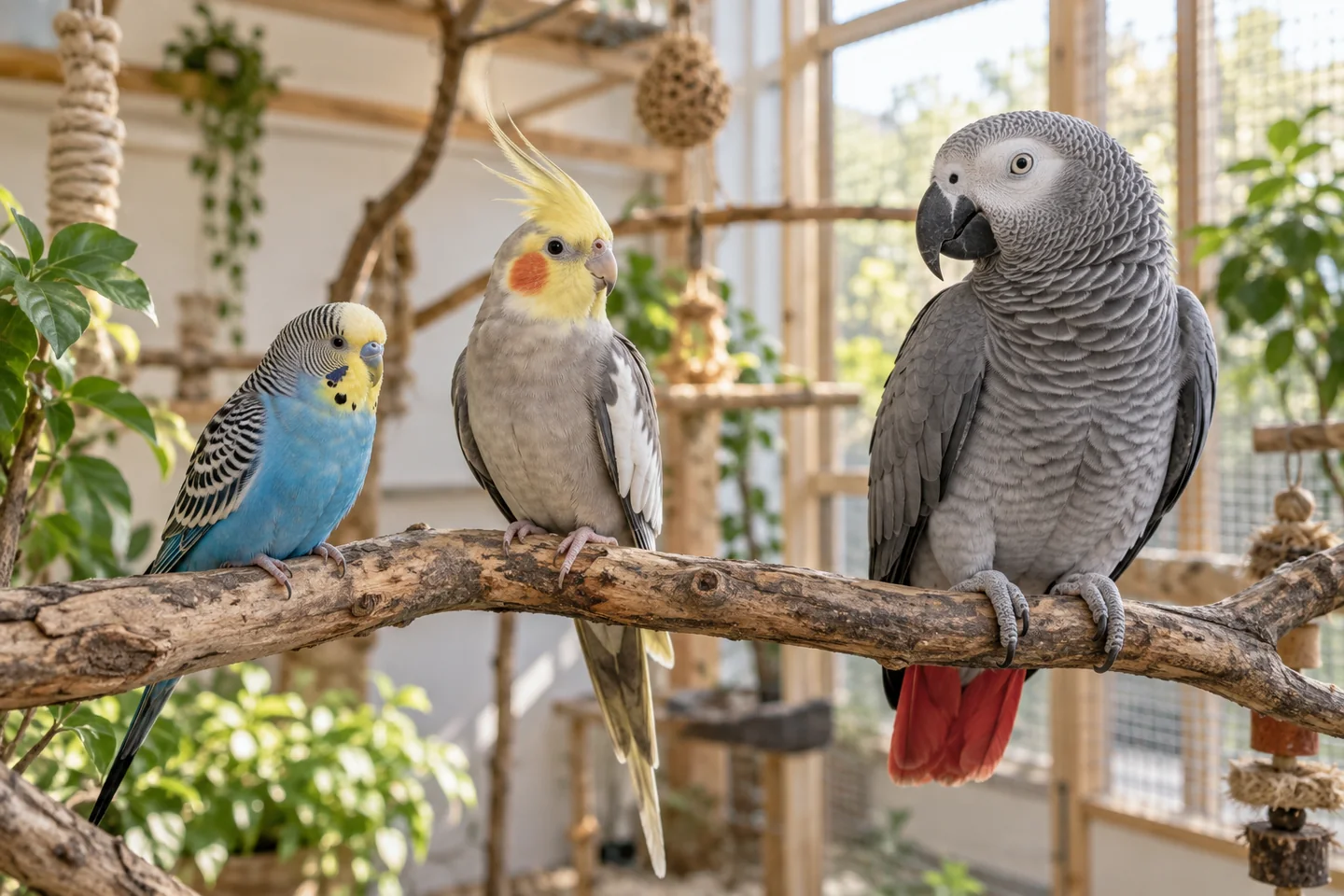
Companion birds and parrots are not the same commitment
Budgerigars, canaries, finches, cockatiels and similar birds are often called ordinary companion birds. They still need company, space to fly, daily care and an experienced vet, but they usually live for a number of years rather than decades.
Parrots — including African greys, amazons, macaws, cockatoos and conures — are different. Many are highly intelligent, extremely long-lived, loud, destructive when bored, and prone to serious behavioural and feather problems when their needs are not met. A parrot can outlive its owner, so care must be planned for the whole of the bird’s life.
When a bird needs a vet immediately
- Sitting fluffed up on the floor of the cage, eyes closed, not moving normally
- Open-mouthed breathing, tail bobbing with each breath, or clicking and wheezing
- Bleeding, a broken blood feather, or an injury from a cat, dog or window strike
- Not eating, vomiting, or very changed droppings
- Sudden weakness, fitting, or an inability to perch
- Any exposure to fumes, non-stick cookware overheating, smoke, aerosols or scented products
Birds hide illness until they are very unwell. A bird that looks obviously sick is an emergency — telephone a veterinary practice straight away.
Everyday care in short
- The largest housing you can provide, wider than it is tall, plus daily time out where it is safe.
- Company: most small companion birds should be kept with their own kind.
- A complete, species-appropriate diet — seed alone is not enough for most birds.
- Fresh water daily, and a way to bathe or be misted.
- Natural-branch perches of different widths, and safe chewing and foraging items.
- Daylight rhythm and 10 to 12 hours of undisturbed dark sleep.
- A smoke-free, fume-free home. Birds are extremely sensitive to airborne chemicals.
Open the section that matches your situation
Each heading row below is a button and opens the information underneath it.
Everyday care for ordinary companion birds
Budgies, canaries, finches and cockatiels are social, active birds that need stimulation and exercise every day.
- Keep them in compatible pairs or groups of their own species where possible.
- Give a formulated diet with suitable fresh vegetables, as advised by your vet.
- Clean food and water containers daily; clean housing regularly.
- Rotate toys and foraging items to prevent boredom.
- Weigh regularly if you can — weight loss is an early warning sign.
- Keep them away from kitchens, candles, aerosols and open windows.
Parrots: specialist, long-term welfare needs
Parrots are wild-natured, highly social animals kept in our homes. Their needs are closer to those of a demanding companion than a caged pet.
- Long lifespans. Many parrots live for decades, and larger species can live longer than the person who bought them, so lifetime and after-death care must be planned.
- Hours of daily interaction, training and foraging enrichment.
- Very large housing plus safe out-of-cage time and flight where possible.
- Noise levels that can affect neighbours and tenancies.
- Feather damaging behaviour, screaming and biting are usually signs of unmet needs, pain or distress — they need veterinary and behavioural assessment, not punishment.
- Costs are ongoing: specialist vet care, housing, replacement toys and a varied diet.
If you are struggling with a parrot’s behaviour or care, ask for help early. A recognised parrot rescue can give advice, and rehoming through a rescue is far better than passing the bird from home to home.
Finding an avian or exotic-animal vet
Birds need a vet used to treating them. Anaesthetic, handling, medication and diagnostic needs differ from cats and dogs, and a small bird can deteriorate quickly.
- Ask a practice how many birds it sees and whether a vet there has avian experience.
- Ask who provides night and weekend cover for birds specifically.
- Register in advance and keep the number by the cage.
- All UK veterinary surgeons are registered with the Royal College of Veterinary Surgeons, and the British Veterinary Zoological Society represents vets working with exotic and zoological species.
What to do in a veterinary emergency
- Telephone a practice before travelling and say the patient is a bird.
- Move the bird in a small, dark, ventilated, secure box or carrier.
- Keep it warm, quiet and away from draughts on the journey.
- Take a sample of the droppings and a note of the diet if you can.
- If fumes are suspected, get the bird into fresh air and ventilate the room.
Do not give human medicines or home remedies, and do not try to treat bleeding feathers or wounds with anything other than gentle pressure while you seek advice.
If you cannot afford veterinary treatment
Speak to the practice before treatment begins and ask for an estimate. Charity veterinary help is limited and depends on where you live and your circumstances.
- PDSA may help eligible owners on certain benefits in areas its services cover.
- Some RSPCA and other local branches run low-cost schemes.
- Ask about staged treatment, itemised estimates and payment arrangements.
- Charity services do not always cover exotic species — check first.
Food and essential supplies
Bird food is not always held by pet food banks, but it is always worth asking, and some rescues can help in a crisis.
- Ask food banks, rescues and your vet about bird food and cage supplies.
- Change diet gradually — birds can refuse unfamiliar food and lose weight quickly.
- Do not rely on cheap seed mixes alone; ask your vet what to prioritise.
Temporary care during illness, hospital admission or a crisis
Birds need daily care and cannot be left over a weekend. Arrange cover in advance and write down exactly what your bird needs.
- Write a care sheet: diet, water, out-of-cage routine, medication and vet details.
- Name a main carer and a backup, and show them the routine beforehand.
- The Cinnamon Trust may be able to help older owners and people who are terminally ill, depending on local volunteers.
- Ask a parrot rescue about short-term fostering if no one can help.
Planning care if you are older, disabled or struggling
Because parrots can live for decades, a written plan matters more than for most pets. Say who will take the bird, and make sure that person has agreed.
- Name a main carer and a backup in writing, with contact details.
- Consider mentioning your wishes when making a will, and take legal advice.
- Keep housing at a height you can reach and clean safely.
- Ask for help with heavy cleaning or lifting before it becomes a struggle.
Responsible rehoming and surrender
Contact a recognised rescue rather than selling or giving a bird away online. Parrots that move repeatedly between homes often develop lasting behavioural problems.
- Be honest about biting, screaming, plucking and any health problems.
- Send diet details, veterinary history and paperwork with the bird.
- Ask about waiting lists and whether the rescue can advise while you wait.
- Never release a pet bird outdoors — it will not survive.
Escaped, found, abandoned or neglected birds
Escaped pet birds often stay nearby for the first day or two. Act quickly, because they are vulnerable to cold, predators and starvation.
- Search and listen locally, especially at dawn, and call the bird from outdoors.
- Put the cage outside in sight with familiar food, and leave a window covered but visible.
- Tell neighbours, local groups, veterinary practices and nearby rescues.
- If you find a tame or ringed bird, contain it gently in a box and contact a vet or rescue. Do not assume it is wild.
Injured or distressed wild birds
Wild birds are not pets and need different help. Do not try to keep or hand-rear a wild bird. Many fledglings on the ground are being fed by their parents and should be left alone.
- Watch from a distance first; interference often does more harm than good.
- If a bird is clearly injured, contact a wildlife rescue or the RSPCA for advice.
- Keep pets and people away, and do not offer food or water by force.
Reporting a welfare concern
Report birds kept in unsuitable conditions, deprived of food and water, or clearly suffering. Record what you saw, when and where. Do not enter private property.
- England and Wales: RSPCA
- Scotland: Scottish SPCA
- Northern Ireland: USPCA and your local council
After a bird dies
Birds often live alongside their owners for many years, and the loss can be profound. A remaining bird may also become withdrawn or noisy, and may need company or advice.
Your legal responsibilities, explained simply
Anyone responsible for a bird must meet its welfare needs: a suitable environment and diet, the ability to behave normally, appropriate company, and protection from pain, suffering, injury and disease.
- Causing unnecessary suffering is a criminal offence across the UK.
- Some species are subject to additional rules on trade, paperwork or licensing. Check before buying, selling or breeding a bird.
- It is an offence to release a non-native pet bird into the wild.
- Wild birds have separate legal protection; nests must not be disturbed.
Trusted UK organisations for birds and parrots
- RSPCA – advice for pet birds (opens in a new tab)
- Birdline Parrot Rescue (opens in a new tab)
- British Veterinary Zoological Society (opens in a new tab)
- RCVS – find a registered veterinary practice (opens in a new tab)
- PDSA – Pet Health Hub (opens in a new tab)
- RSPB – injured and baby wild birds (opens in a new tab)
- Help Wildlife – wildlife rescue contacts (opens in a new tab)
- The Cinnamon Trust (opens in a new tab)
Important information
Sixpence Support UK provides general information and signposting. We are not a veterinary service, and we cannot diagnose or treat birds, pay veterinary bills or guarantee that any organisation can help. Always speak to a veterinary professional about a specific bird and check each organisation’s current services directly.