
Other Animals
Hamsters, gerbils, rats and mice, ferrets, fish and aquatic animals, and unusual or exotic pets — plus separate guidance on injured or distressed wildlife.
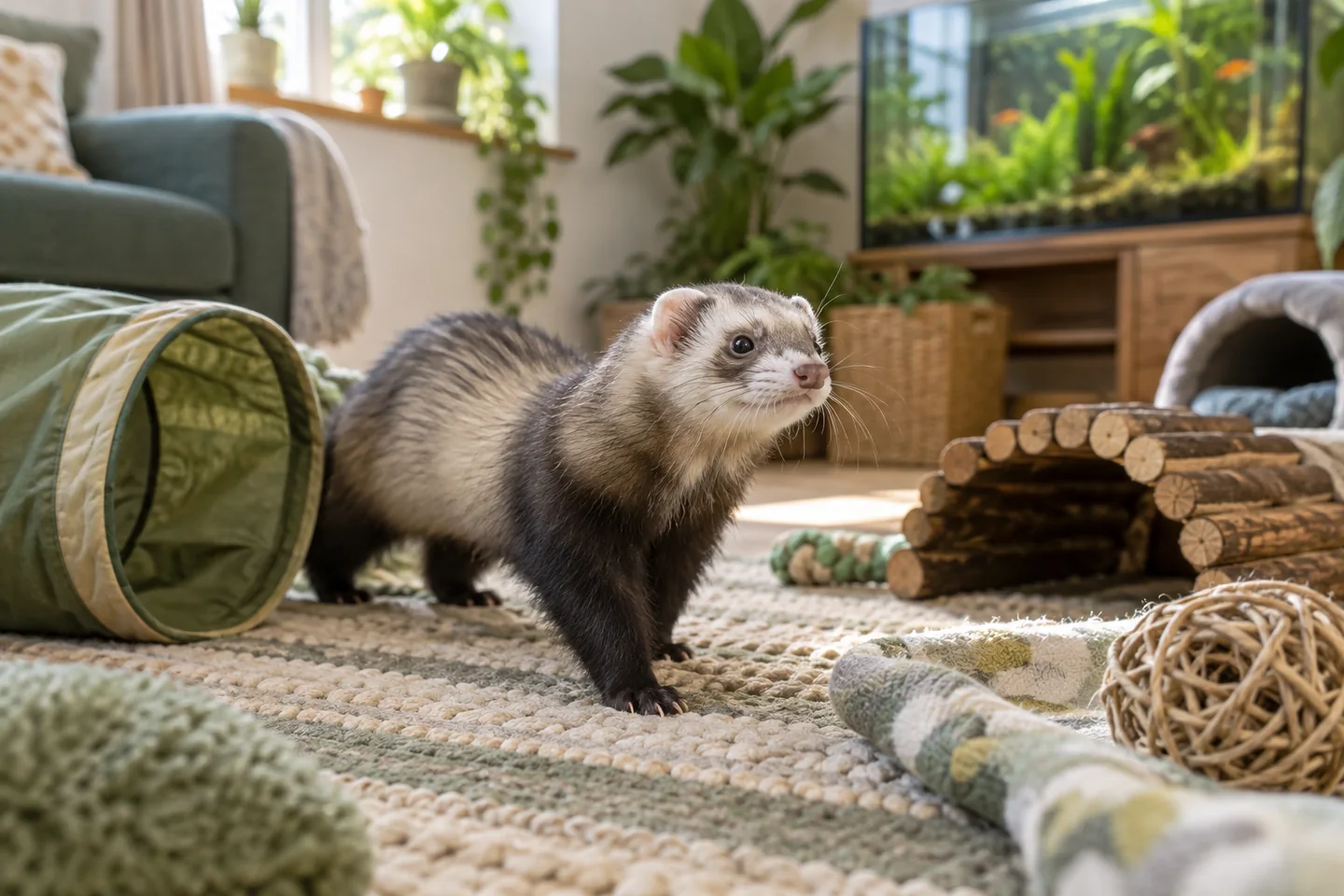
Smaller pets still need proper care and proper vets
Small mammals, ferrets and fish are often treated as beginner pets, but each has its own housing, diet, company and health needs. They are also easy to overlook, because they are quiet and rarely leave the house.
This page is divided into small mammals, ferrets, fish and aquatic animals, and unusual or exotic pets. Wildlife is not a pet, and it has its own separate section at the end.
When a small pet or fish needs urgent help
- Not eating or drinking, sitting hunched, or refusing to move
- Laboured or noisy breathing, or breathing with the mouth open
- Bleeding, an obvious wound, a bite from another animal, or a fall from height
- Fitting, collapse, dragging limbs, head tilt or circling
- Straining, a swollen tummy, or a wet, dirty back end
- Heat stress in warm weather: flat out, panting, very weak
- Fish: gasping at the surface, all fish distressed at once, or a sudden change in water quality after a filter or heater failure
Telephone a veterinary practice for advice. Small animals deteriorate quickly, and a small animal that stops eating should be seen the same day.
What every small pet needs
- Housing far larger than the minimum sold in shops, with deep bedding to burrow in.
- The right company: some species must live in groups, others must live alone.
- A complete diet for the species, plus fresh water checked daily.
- Daily checks of eating, droppings, breathing, weight and behaviour.
- Enrichment: tunnels, chew items, digging, climbing and safe exercise.
- A quiet, draught-free place away from direct sun and radiators.
- A veterinary practice that is used to small or exotic species.
Open the section that matches your animal
Each heading row below is a button and opens the information underneath it.
Small mammals: hamsters, gerbils, rats and mice
These species have very different needs from one another, so check the advice for the exact species you keep.
- Rats and mice are highly social and should normally live in same-sex groups or pairs. Rats are intelligent and need daily interaction and space to climb.
- Syrian hamsters must live alone. Housing them together causes serious fighting and injuries. Dwarf hamsters need careful, species-specific advice.
- Gerbils are social, live in pairs or small groups, and need deep substrate to tunnel in rather than plastic tubes alone.
- Hamsters and gerbils are active at night; do not wake them repeatedly during the day.
- Provide a solid-based, suitably sized wheel for hamsters, and no ball toys.
- Check teeth, nails, breathing and weight regularly, and look for lumps in older rats.
- Clean regularly, but keep some familiar bedding so the animal is not distressed.
Ferrets
- Ferrets are playful, curious and strong. They need hours of supervised exercise daily.
- They are social and usually happiest kept in pairs or groups.
- They need a large, secure enclosure with sleeping tunnels, hammocks and litter areas.
- They are obligate meat eaters and need a suitable high-protein, high-fat diet.
- They escape easily and can squeeze through very small gaps — check housing carefully.
- They can suffer badly in heat, so shade and ventilation are essential.
- Ask your vet about vaccination against canine distemper, neutering or hormonal implants, and preventing common conditions in older ferrets.
- Ferrets can bite; supervise children closely and never leave them unsupervised together.
- If you use ferrets for working, follow the law on land access, and never leave a ferret underground or unaccounted for.
Fish and aquatic animals
Fish welfare is mostly water quality. Most problems come from tanks that are too small, not properly matured, or poorly filtered.
- Set up and mature the filter before adding fish, and add fish gradually.
- Test the water regularly and keep a note of the results.
- Match the tank size, temperature and water type to the species, not the shop display.
- Do not keep goldfish in bowls or unfiltered containers.
- Do not mix species that will fight, outgrow the tank or need different water.
- Feed sparingly; uneaten food quickly spoils the water.
- Have a plan for power cuts, and never move all the water at once when cleaning.
- Ponds need shade, oxygenation, protection from freezing over completely, and safety measures if children visit.
- Never release fish, plants or aquatic invertebrates into ponds, rivers or the sea. It is harmful to native wildlife and against the law.
- Some vets treat fish, so ask before assuming nothing can be done.
Unusual or exotic pets
Exotic pets — including amphibians, invertebrates, exotic birds, and small exotic mammals — often have precise environmental needs and few local vets who treat them.
- Research the exact species, its adult size and its full lifespan before taking it on.
- Find a vet with exotic-species experience before you need one urgently.
- Check whether the species needs a licence, and ask your council if you are unsure.
- Keep any paperwork proving the animal was legally bred or imported.
- Check the housing security: escaped exotics can be dangerous and hard to recover.
- Never release an exotic animal into the wild.
- If you are already struggling with an exotic pet, ask a specialist rescue or your vet for advice rather than passing it on privately.
Finding a vet, and what to do in an emergency
- Register with a practice that treats small or exotic species before you need one.
- Telephone first and say clearly what species the animal is.
- Travel in a small, secure, ventilated carrier with familiar bedding.
- Keep the animal warm, dark and quiet on the journey.
- Take a note of the diet, housing and any changes you have noticed.
- For fish, take a fresh water sample and your recent test results if you have them.
Never give human medicines to any animal.
If you cannot afford veterinary treatment
- Tell the practice before treatment starts and ask for an itemised estimate.
- Ask whether treatment can be staged, and about payment arrangements.
- Check PDSA eligibility, and confirm whether the service covers your species.
- Ask local rescues about low-cost clinics in your area.
Food, bedding and essential supplies
- Ask food banks and rescues specifically about small-animal food and bedding.
- Ask about litter, substrate and safe bedding, not only food.
- Change dry food gradually to avoid stomach upsets.
- Fish keepers: prioritise filter media, dechlorinator and heating over decorations.
Temporary care during illness, hospital admission or a crisis
- Write a care sheet: food, water, cleaning, medication, filter or heater checks, vet details.
- Name a main carer and a backup, and show them the routine in advance.
- Tell hospital staff or a support worker that animals are at home.
- The Cinnamon Trust may be able to help older owners and people who are terminally ill, depending on local volunteers.
Planning care if you are older, disabled or struggling
- Keep housing and tanks at a height you can safely reach and clean.
- Ask for help with heavy tasks such as water changes and full cleans.
- Write down who will take each animal and its equipment if you cannot continue.
- Keep species, age, routine and veterinary details written down in one place.
Responsible rehoming and surrender
- Contact a rescue that takes your species, and ask about waiting lists.
- Keep group-living animals together and be honest about any health problems.
- Send housing and equipment with the animal if you can.
- Avoid free-to-good-home adverts, which attract unsuitable homes.
- Never release any pet animal, plant or fish into the wild.
Missing, found, abandoned or neglected animals
- Escaped small mammals usually stay in the same room. Close doors, block gaps, and put food and the open cage on the floor overnight.
- Ferrets can travel further; tell neighbours quickly and check sheds and garages.
- If you find a tame small animal outdoors, contain it safely and contact a vet or rescue.
- Report abandoned animals, including animals dumped in boxes or tanks, to the RSPCA, Scottish SPCA or USPCA.
Reporting a welfare concern
Report animals kept without food, water, space or veterinary care, or in filthy or unsafe conditions. Write down what you saw, when and where. Do not enter private property or confront anyone.
- England and Wales: RSPCA
- Scotland: Scottish SPCA
- Northern Ireland: USPCA and your local council
After a small pet or fish dies
Short-lived animals are often a child’s first experience of death, and adults grieve them too. Support is free and open to anyone.
- Be honest and gentle with children, and let them mark the loss if they wish.
- Your vet can explain burial and cremation options.
- If several fish or animals died together, check housing, heating and water quality before replacing them, and ask your vet for advice.
Your legal responsibilities, explained simply
- You must meet the animal’s welfare needs: suitable environment, suitable diet, the ability to behave normally, appropriate company or solitude, and protection from pain, suffering, injury and disease. Fish are included.
- Causing unnecessary suffering is a criminal offence throughout the UK.
- Selling or giving pets to children under 16 is restricted.
- Some species require a licence from your local council.
- Releasing non-native animals, fish or plants into the wild is an offence.
Trusted UK organisations for these animals
- RSPCA – rodents and small pets (opens in a new tab)
- RSPCA – fish welfare (opens in a new tab)
- RSPCA – ferrets and other pets (opens in a new tab)
- PDSA – small pet care (opens in a new tab)
- National Fancy Rat Society (opens in a new tab)
- Ornamental Aquatic Trade Association (opens in a new tab)
- Woodgreen Pets Charity (opens in a new tab)
- British Veterinary Zoological Society (opens in a new tab)
- RCVS – find a registered veterinary practice (opens in a new tab)
Wildlife is not a pet
Wild animals — including hedgehogs, foxes, squirrels, deer, bats, wild birds, frogs and wild rabbits — must not be kept as pets. Taking a wild animal home is usually harmful and may be against the law. If you find one that appears injured or in distress, the right action is to get advice, not to care for it yourself.
- Watch from a distance first. Many young animals are being cared for by a parent nearby.
- Keep children, dogs and cats away, and do not crowd the animal.
- Do not force food or water, and do not give milk to any wild mammal.
- Telephone a local wildlife rescue, or the RSPCA, Scottish SPCA or USPCA, for advice.
- For an injured bat, do not handle it with bare hands — ask for specialist advice.
- For a deer, seal, large bird of prey or any large animal, do not approach it.
- For an animal loose or injured on a road, telephone the police on 101, or 999 if there is danger.
- Report a dead animal on a public road or pavement to your local council.
Important information
Sixpence Support UK provides general information and signposting. We are not a veterinary service and cannot diagnose or treat animals, pay veterinary bills or guarantee that any organisation can help. Always speak to a veterinary professional about a specific animal, and check each organisation’s current services and eligibility rules directly.