
Rabbits and Guinea Pigs
Everyday care, finding the right vet, what to do in an emergency, help when money is short, and where to turn if you can no longer care for a rabbit or guinea pig.
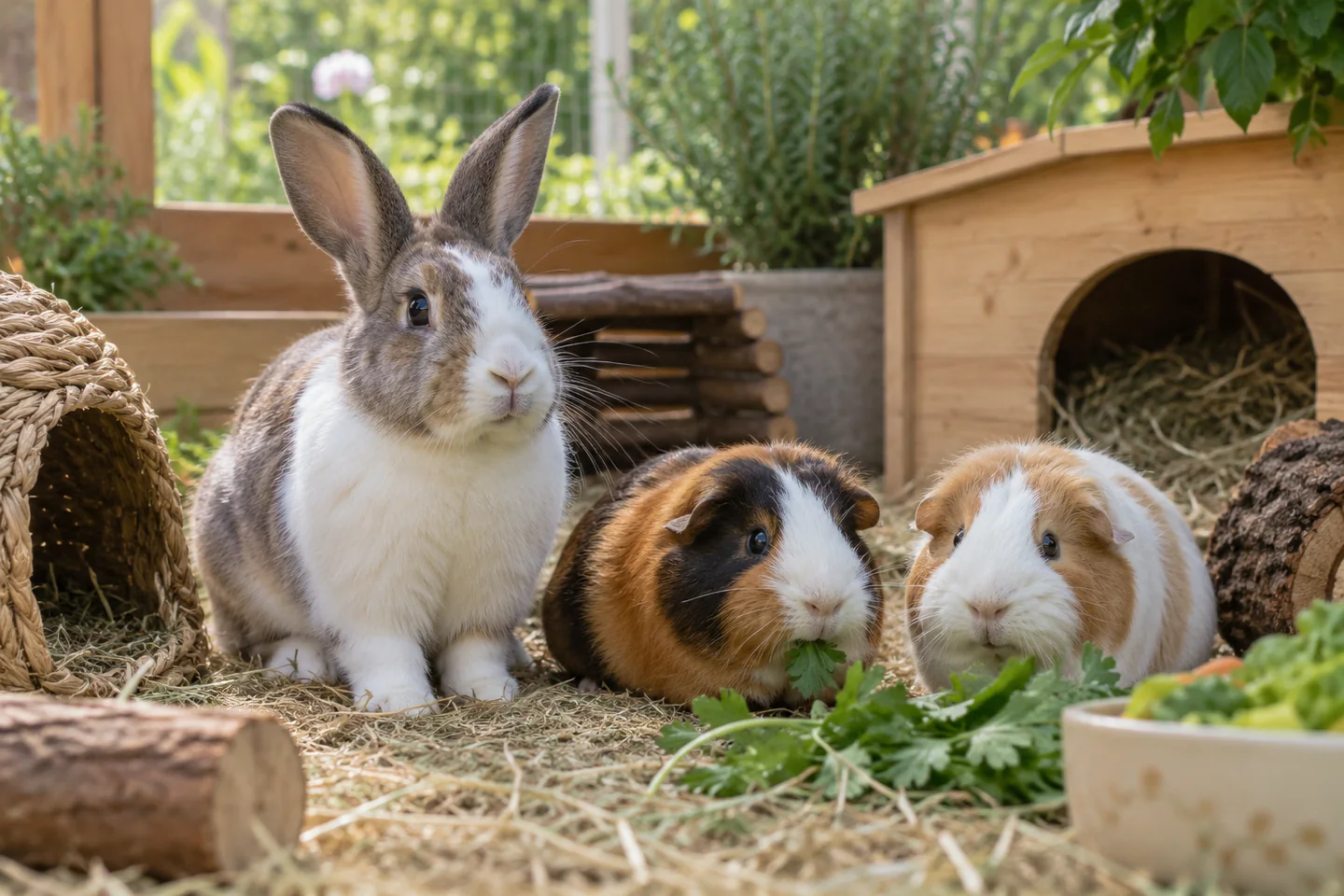
Rabbits and guinea pigs are not low-maintenance pets
Rabbits and guinea pigs are often bought as easy first pets, but both need daily care, plenty of space, constant access to hay or grass, companionship of their own kind and regular health checks. They hide illness very well, so small changes in behaviour can be serious.
This page brings together everyday care, veterinary help, financial support, temporary care and rehoming information in one place. Every organisation named here is a recognised UK body, and every outside link opens in a new tab.
Signs a rabbit or guinea pig needs a vet urgently
- Not eating, or not passing droppings, for 12 hours or more
- Sitting hunched, pressing the tummy to the floor, grinding teeth or refusing to move
- Struggling to breathe, wet or noisy breathing, or breathing with an open mouth
- A wound, fly eggs or maggots around the back end, or a dirty, wet bottom
- Collapse, fitting, head tilt, sudden loss of balance or dragging back legs
- Heat stress: lying flat, panting, very weak, after warm weather
A rabbit or guinea pig that stops eating is an emergency. Contact a veterinary practice straight away — do not wait until the next day.
Everyday care in short
- Unlimited good-quality hay or growing grass every day. This is the main food for both species, not an extra.
- Company: rabbits are usually kept in neutered pairs, and guinea pigs in compatible groups. Rabbits and guinea pigs should not be housed together.
- A large, secure home joined to a run they can use at all times, tall enough for a rabbit to stand up on its back legs and long enough for several hops.
- Fresh water always available, checked twice daily in cold and hot weather.
- Guinea pigs need vitamin C from a suitable diet, because they cannot make their own.
- Daily health checks: eating, droppings, back end, eyes, nose, breathing, weight and behaviour.
- Shade, ventilation and shelter — both species suffer badly in heat and damp cold.
Open the section that matches your situation
Each section below opens and closes. The heading row is the button, so you can tap anywhere along it.
Everyday care and welfare needs
Both species are prey animals. They feel safest with hiding places, predictable routines, gentle handling and a companion of their own kind.
- Clean the toilet area daily and the whole home regularly to prevent flystrike.
- Check nails and teeth regularly, and ask a vet if teeth look overgrown or uneven.
- Long-coated guinea pigs and rabbits need grooming to prevent painful matting.
- Weigh weekly if you can — weight loss is often the first sign of a problem.
- Provide safe chew items and forage to keep teeth worn down and minds occupied.
- Never keep either species permanently in a small hutch or cage.
Finding a vet who is used to rabbits and guinea pigs
Not every practice sees many rabbits or guinea pigs. These species need different anaesthetic care, dental care and pain relief from cats and dogs, so it is worth finding a practice with real experience before you need one urgently.
- Ask a practice how many rabbits and guinea pigs it treats each week.
- Ask whether it has dental equipment suitable for these species.
- Ask who covers nights and weekends, and where that service is based.
- Register before there is a problem, and keep the number where you can find it.
- All UK vets must be registered with the Royal College of Veterinary Surgeons. You can check a practice on the RCVS register.
What to do in a veterinary emergency
- Telephone your usual practice first. Its recorded message gives out-of-hours details.
- Say clearly what species the animal is and that it has stopped eating, if that is the case.
- Ask what to bring, and ask about the likely cost before you set off if you can.
- Move the animal in a secure carrier with familiar bedding and some of its usual hay.
- Keep it warm but not hot, and quiet, on the journey.
Do not give human medicines. Many are dangerous to small animals, and some pain relief sold for people can be fatal.
If you cannot afford veterinary treatment
Tell the practice before treatment starts that money is a problem. Practices can often discuss options, priorities and payment arrangements, and some areas have charity clinics.
- PDSA provides free or reduced-cost treatment for eligible owners on certain benefits, where a Pet Hospital or Pet Care Practice covers your area.
- Blue Cross runs animal hospitals and clinics in some parts of the UK.
- RSPCA and other local branches sometimes run their own low-cost schemes.
- Ask about payment plans, itemised estimates and whether treatment can be staged.
Eligibility rules and locations change, so always check directly.
Food, bedding and essential supplies
Hay is the most important item, and running short of it is a welfare problem rather than an inconvenience. Pet food banks and local animal organisations sometimes hold small-animal food, hay and bedding.
- Ask specifically for hay, small-animal pellets and bedding, not only dog and cat food.
- Ask your vet, local rescue, food bank or council about local schemes.
- Change dry food gradually, and never stop hay to save money.
Temporary care during illness, hospital admission or a crisis
If you are admitted to hospital, become unwell or face a personal crisis, arrange care early and write down what your animals need. Small animals are easy to overlook because they are quiet.
- Leave a written care sheet: hay, food amounts, water, cleaning, medication, vet details.
- Ask a trusted neighbour, friend or family member, and name a backup.
- The Cinnamon Trust helps older people and people who are terminally ill with pet care, including small animals, subject to local volunteers.
- Tell hospital staff or your support worker that animals are at home alone.
Planning care if you are older, disabled or struggling to cope
Cleaning a hutch, lifting a run or carrying hay can become difficult. Planning ahead usually keeps animals with the people who love them.
- Move housing to a level, sheltered spot that is easy to reach.
- Ask about smaller hay bales and lighter bedding that you can lift.
- Arrange regular help with heavy cleaning before it becomes urgent.
- Write a plan naming who will care for the animals if you cannot.
Responsible rehoming and giving up an animal
If you can no longer care for a rabbit or guinea pig, contact a reputable rescue organisation rather than passing the animal to a stranger or setting it free. Rabbits and guinea pigs cannot survive released into the wild.
- Ask rescues about waiting lists, and be honest about health and behaviour.
- Keep bonded pairs together wherever possible.
- Hand over vet records, food details and the animal’s history.
- Be cautious of free-to-good-home adverts, which attract unsuitable homes.
Missing, found, abandoned or neglected animals
Escaped rabbits and guinea pigs are usually close by and hiding. Search low down, under sheds, hedges and decking, at dawn and dusk, and leave familiar food and bedding out.
- Tell neighbours, local social-media groups and nearby veterinary practices.
- If you find a tame rabbit or guinea pig outdoors, contain it safely and contact a vet or rescue.
- If an animal appears abandoned in a garden, empty property or dumped in a box, report it.
Reporting a welfare concern
If you believe a rabbit or guinea pig is suffering, being neglected or kept in unsafe conditions, report it to the organisation that covers your part of the UK. Note what you saw, when and where, and do not enter private property or confront anyone.
- England and Wales: RSPCA
- Scotland: Scottish SPCA
- Northern Ireland: USPCA and your local council
After a rabbit or guinea pig dies
Grief for a small animal is just as real as grief for a dog or cat, and other people sometimes underestimate it. Support is available and free to use.
- A surviving bonded companion may grieve; ask your vet or a rescue for advice.
- Your vet can explain home burial rules and cremation options.
- Blue Cross runs a pet loss support service.
Your legal responsibilities, explained simply
Across the UK, anyone responsible for an animal must meet its welfare needs: a suitable environment, a suitable diet, the ability to behave normally, appropriate company, and protection from pain, suffering, injury and disease.
- Causing unnecessary suffering, and failing to meet these needs, are offences.
- Neglect can lead to prosecution, a fine, a ban on keeping animals or imprisonment.
- Selling or giving pets to children under 16 is restricted.
- Releasing pet rabbits or guinea pigs into the wild is never acceptable.
Trusted UK organisations for rabbits and guinea pigs
- Rabbit Welfare Association and Fund (opens in a new tab)
- RSPCA – rabbit advice (opens in a new tab)
- RSPCA – advice for guinea pigs and other rodents (opens in a new tab)
- PDSA – rabbit care (opens in a new tab)
- PDSA – small pet care (opens in a new tab)
- Blue Cross – pet advice (opens in a new tab)
- Woodgreen Pets Charity – pet advice (opens in a new tab)
- RCVS – find a registered veterinary practice (opens in a new tab)
- The Cinnamon Trust (opens in a new tab)
Important information
Sixpence Support UK provides general information and signposting. We are not a veterinary service and cannot diagnose or treat animals, pay veterinary bills or guarantee that any organisation will be able to help. Always speak to a veterinary professional about a specific animal, and check each organisation’s current services and eligibility rules directly.