
Rape, Sexual Assault and Sexual Abuse Support
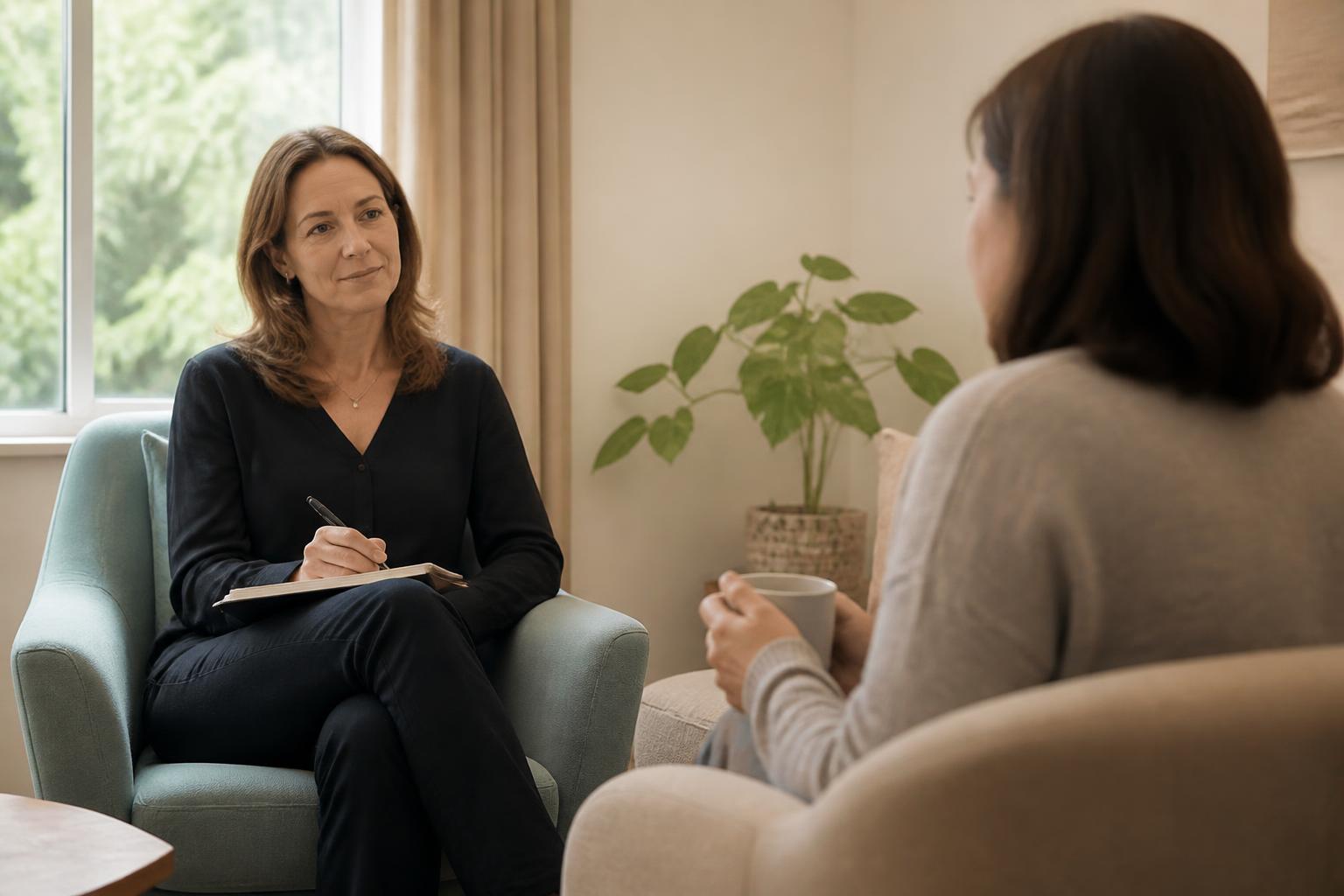
Rape, sexual assault and sexual abuse can happen to anyone, regardless of their age, sex, gender, sexuality, disability, background or relationship to the person responsible.
It may have happened recently or many years ago. Whatever happened, it was not your fault. Free, confidential medical care and specialist support are available, and you do not have to report to the police to ask for help.
Using this page safely
If you need to move away from this page quickly, this button will take you to the BBC Weather website.
Please know that a button of this kind does not remove this page from your browsing history, and it cannot undo anything already saved on the device.
If somebody may be monitoring your device, they may be able to see your browsing history, messages, calls or location. Sudden changes to settings can sometimes be noticed too. Refuge's technology safety service explains how to think this through, and a device belonging to a trusted friend, a library, a GP surgery or an advice centre may be safer than one somebody else can check.
If you are in immediate danger
Call 999 now if you are in immediate danger, or if someone else is.
If you are calling 999 from a mobile and cannot speak, listen to the operator and press 55 when prompted. This tells the operator that you need the police and cannot talk. It does not automatically trace or reveal the location of every silent call.
If urgent medical treatment is needed, call 999 or go to your nearest hospital accident and emergency (A&E) department. Please do not delay urgent treatment for any reason.
Specialist help now: Sexual Assault Referral Centres
A Sexual Assault Referral Centre, often called a SARC, can provide specialist medical care, emotional support and information after rape or sexual assault. You can contact a SARC without first reporting to the police. Staff can explain the available choices and allow the person to decide what happens next.
England — NHS Sexual Assault Referral Centres
The NHS keeps a search tool for centres in England, and its guidance explains what happens when you contact one. If you are not sure what to do first, you can also call 111 at any hour.
Scotland — NHS Scotland sexual assault self-referral service
Telephone 0800 148 88 88 — Scotland only. NHS inform states that this service is open 24 hours a day, 7 days a week, and that calls are free from landlines and mobiles. It can refer you to a Sexual Assault Response Co-ordination Service (SARCS), where a healthcare professional will phone you back to arrange your care. It is a referral line rather than a counselling or listening service.
Northern Ireland — The Rowan Sexual Assault Referral Centre
The Rowan is Northern Ireland's regional SARC and, according to its own website and nidirect, provides services 24 hours a day, 365 days a year to children, young people, women and men. Its freephone advice and information line is 0800 389 4424. Calls to 0800 numbers are free from UK consumer landlines and mobile phones. You can contact The Rowan yourself, or through the police.
Wales — NHS Wales sexual assault services
NHS sexual assault services and regional SARCs are available across Wales, co-ordinated through the Wales Sexual Assault Services network. Its "Access a SARC" pages explain how to reach the centre for your area. The England search tool does not cover every Welsh service, so please use the Wales route below.
Contacting a SARC does not commit you to a police report, an examination or anything else. You can ask questions first.
- 1 in 4
Rape Crisis England & Wales reports that 1 in 4 women have been raped or sexually assaulted since the age of 16. This figure is for England and Wales.
- 1 in 18
Rape Crisis England & Wales reports that 1 in 18 men have been raped or sexually assaulted since the age of 16. This figure is for England and Wales.
- 1 in 6
Rape Crisis England & Wales reports that 1 in 6 children have been sexually abused. This figure is for England and Wales.
- 217,567
Sexual offences recorded by the police in England and Wales in the year ending March 2026. This is a police-recorded figure, not an estimate of the total number of people affected.
Source: Office for National Statistics
- 74,727
Rape offences recorded by the police in England and Wales in the year ending March 2026. This is a police-recorded figure, not an estimate of the total number of people affected.
Source: Office for National Statistics
- 34%
Rape accounted for approximately 34% of recorded sexual offences in England and Wales in the year ending March 2026. This is a police-recorded figure.
Source: Office for National Statistics
Many sexual offences are never reported to the police. Police-recorded figures do not show the full prevalence of sexual violence.
Important medical information
Open any heading below. These sections explain what care is available and who can arrange it. This page gives general information only and is not medical advice, and it does not include medicine doses. A doctor, nurse or SARC clinician will explain the options that apply to you.
1. What to do immediately after an assault — the choices you have
There is no single right thing to do, and nothing you did or did not do makes what happened your fault.
- If you are in danger or badly hurt, call 999.
- If you want specialist care and information, contact a SARC (see the panel above). You do not need to report to the police first.
- If you are unsure who to contact, call 111 in England, Wales or Scotland at any hour, or use NHS 111 online.
- You can ask somebody you trust to make the first call, or to sit with you while you make it.
2. Getting treatment for injuries
Injuries should be treated as soon as possible. For serious injuries, heavy bleeding, breathing difficulty, head injury or loss of consciousness, call 999 or go to A&E. For injuries that are not an emergency, a SARC, a GP, an urgent treatment centre or NHS 111 can help.
Please never delay urgent medical treatment for any other reason. Health comes first, and clinicians are used to caring for people in this situation.
3. Emergency contraception
Emergency contraception can be arranged if there is a risk of pregnancy. It is more effective the sooner it is started, and different methods have different time windows, so it is worth asking quickly even if you are unsure.
It can be arranged by a SARC, a sexual health clinic, many pharmacies, a GP surgery or, out of hours, by NHS 111 or A&E. A clinician will explain which options are suitable — we do not give medicine names or doses here.
4. Testing and treatment for sexually transmitted infections
Testing and treatment for sexually transmitted infections (STIs) are free and confidential. A SARC or a sexual health clinic can arrange them.
NHS inform explains that most infections take a few weeks to show up in a test, so a clinician may offer treatment straight away and testing later, and will explain what further tests may be needed and when.
5. HIV post-exposure treatment (PEP) and why an urgent assessment matters
PEP, or post-exposure prophylaxis, is emergency medication that may reduce the chance of HIV after a possible exposure. NHS inform states that PEP should be taken as soon as possible and can be taken up to 72 hours after exposure, and that the earlier it is taken the more effective it is.
Only a clinician can decide whether PEP is appropriate, so an early assessment matters. It can be arranged by a SARC, a sexual health service or, out of hours, by A&E. If you are past 72 hours, please still ask for an assessment — other care and testing are available.
6. Pregnancy testing and follow-up care
A pregnancy test can be arranged by a SARC, sexual health service or GP, and repeated later if needed. If a pregnancy is confirmed, you are entitled to unhurried, non-judgemental information about all of your options, and to support with whatever you decide.
Follow-up appointments are normally offered for testing, vaccination where appropriate, and emotional support. You can accept or decline any part of this.
7. What a SARC can provide
A SARC is a dedicated NHS or NHS-commissioned service. Depending on where you are, it may offer:
- a private, calm place to talk with specially trained staff
- medical care, including treatment for injuries
- emergency contraception, STI testing and HIV risk assessment
- a forensic medical examination, if you choose to have one
- information about reporting to the police, without pressure either way
- referral to counselling and to an adviser or advocate who can support you afterwards
You can contact a SARC whether or not you want to involve the police, and you can change your mind later.
8. Having a forensic medical examination — your choice and your consent
A forensic medical examination is a careful health check during which samples may be taken. It is entirely your choice. Nothing happens without your consent, you can ask what each step involves, you can ask for a pause or a break, and you can stop at any point or change your mind.
In Scotland, NHS inform explains that people aged 16 and over can self-refer for an examination without reporting to the police, and that samples are stored for 26 months (two years and two months) so there is time to decide whether to report. Samples are not tested unless a report is made. Arrangements in England, Wales and Northern Ireland are explained by the SARC you contact.
You can ask about the sex or gender of the examining clinician and about accessibility or communication support. Services try hard to meet these requests, but no service can promise every preference at every hour, so please ask what is possible.
9. If you have washed, changed your clothes, eaten, drunk or cleaned your teeth
You can still receive care and support. Washing, showering, changing clothes, going to the toilet, eating, drinking, brushing your teeth or sleeping are ordinary human things to do, and none of them was wrong.
Medical care, testing, emotional support and specialist advice do not depend on any of this. A clinician can also explain what forensic options may still be possible — different types of sample and different treatments have different timescales, and there is no single deadline. The only thing we would ask is not to delay urgent medical care.
10. Getting help when it happened days, months or years ago
Help is available however long ago it happened. Many people first look for support years later, often after something brings it back, and that is a very common experience.
Specialist services support people for non-recent abuse: Rape Crisis centres, The Survivors Trust member services, SurvivorsUK, NAPAC for adults abused in childhood, Nexus in Northern Ireland and Rape Crisis Scotland's local centres. A GP or sexual health service can also arrange a health check. Reporting to the police remains possible at any time, and there is no time limit for reporting a sexual offence.
Understanding sexual violence
These sections explain terms people may hear from the police, health services or a solicitor. They are general explanations, not legal advice or a conclusion about any particular situation. Criminal law and court procedure differ between England and Wales, Scotland, and Northern Ireland.
11. What rape means
In everyday use, rape means non-consensual penetration of a person's body. The precise legal definition, the acts it covers and the way an offence is charged differ between England and Wales, Scotland, and Northern Ireland, and there are separate offences such as assault by penetration.
You do not need to know whether what happened meets a legal definition before asking for help. Support services and SARCs do not ask you to label it.
12. What sexual assault means
Sexual assault generally means intentional sexual touching of another person without their consent. It covers a wide range of acts, and it does not need to involve injury, force or penetration to be a serious crime and to deserve support.
13. What sexual abuse means
Sexual abuse describes sexual behaviour towards a person without their consent, or towards a child, often over a period of time and often by somebody known to them. It can involve touching, non-contact acts, being made to watch or take part in sexual activity, or online abuse. A child cannot consent to their own abuse.
14. Sexual harassment
Sexual harassment means unwanted sexual behaviour that violates a person's dignity or makes them feel intimidated, degraded or humiliated. It may include comments, messages, images, gestures or persistent unwanted attention, and it can happen at work, at school, in public or online. Some sexual harassment is also a criminal offence.
Employers and schools have duties to act on it, and a complaint can be made even if you do not want to involve the police.
15. Consent
Consent means agreeing by choice, with the freedom and the capacity to make that choice. It is specific to each act and each occasion, and it can be withdrawn at any time.
Agreeing to one thing is not agreement to another. Past consent, being in a relationship, being married, having been on a date, having flirted, having drunk alcohol, what somebody was wearing and whether they had sent messages earlier are not consent.
16. When someone cannot consent
A person cannot consent if they do not have the freedom or capacity to choose — for example where there is force, threat, fear, deception, or where a person is unconscious, asleep, severely affected by alcohol or drugs, or lacks the mental capacity to agree. Children cannot consent, and there are additional protections where somebody holds a position of trust or care.
17. Being asleep or unconscious
A person who is asleep or unconscious cannot consent. This is true in a relationship, in a marriage, after a night out and in any other situation. What happened was not your fault, and not remembering all of it does not weaken what you say.
18. Alcohol and drugs
Drinking or taking drugs never means somebody consented, and never makes what happened their fault. Responsibility rests with the person who chose to act.
You will not be judged for saying that you had been drinking or using drugs, and it does not prevent you from getting medical care, specialist support or reporting. If you would like help with alcohol or drug use, our substance use guide lists services.
19. Spiking and suspected drug-facilitated assault
Spiking means giving somebody alcohol or drugs without their knowledge or agreement. Signs can include sudden confusion, sickness, memory gaps, unusual drowsiness or waking with no clear memory of how you got somewhere.
If somebody is very unwell, unconscious or having a seizure, call 999 straight away. Otherwise tell a SARC, NHS 111 or a doctor that you think you may have been spiked — some substances leave the body quickly, so an early conversation gives a clinician more options, but tests and care are still worth asking about later.
20. Assault by a partner, spouse, date, relative, carer or somebody you know
Most sexual violence is committed by somebody the person knows. Rape and sexual assault within a marriage, a relationship or a family are crimes, and being in a relationship is never consent.
This can be especially hard to talk about, particularly where you live with the person, depend on them, share children or care responsibilities, or fear not being believed. Specialist services understand this and will not push you into any decision. If you are frightened of somebody at home, our guides to abuse and to refuges and safe accommodation may help.
21. Abuse involving disabled people and people who depend on care
Disabled people, people with learning disabilities and people who rely on others for personal care are at greater risk of sexual abuse, and may face extra barriers to being heard — including not being given accessible information or being disbelieved.
You can ask for communication support: an interpreter, a British Sign Language interpreter, an advocate, easy-read information, extra time or a supporter present. If an adult is at risk of abuse or neglect, the local council's adult safeguarding team can be contacted, and in Northern Ireland the Health and Social Care Trust.
22. Online sexual abuse and intimate images shared without consent
Sexual abuse can happen online: pressure to send images, threats to share them, sexual messages to a child, secretly recorded images, and images shared or threatened to be shared without consent. Sharing or threatening to share intimate images without consent is a criminal offence.
For adults, the Revenge Porn Helpline supports people whose intimate images have been shared or threatened, and Report Harmful Content explains how to report material to platforms. Where a child or young person is involved, Childline and the NSPCC can help, and our guide to child sexual exploitation and grooming has more detail.
23. Non-recent or historical sexual abuse
Non-recent abuse means abuse that happened in the past, often in childhood. There is no time limit on reporting a sexual offence to the police, and specialist counselling and advocacy are available whether or not you report.
Some people want to talk before deciding anything at all. NAPAC supports adults abused in childhood, and The Survivors Trust directory lists local services.
24. Common responses to trauma
People respond to frightening events in many different ways, and the body often reacts in ways the person cannot control.
Freezing, becoming unable to speak or move, complying through fear, going along with something to stay safe, disconnecting from what is happening, feeling detached from your own body, or having incomplete or out-of-order memories can all be trauma responses. None of these means that consent was given.
Nobody should ask why you did not fight back, shout, leave or tell somebody sooner. You survived, and how you survived was not a choice you can be blamed for.
Reporting and the decisions that are yours
Medical care and specialist emotional support are available whether or not you report to the police. Reporting is your decision, and you can take time over it.
25. Reporting an emergency to 999
Call 999 if a crime is happening now, if you are in danger, or if somebody needs urgent medical help. If you cannot speak, listen to the operator and press 55.
26. Reporting a non-emergency on 101
Where there is no immediate danger, you can call the police on 101 in England, Wales, Scotland and Northern Ireland, or report online through your local force. You can ask to speak to an officer trained in sexual offences, and you can ask for a female or male officer — services will try to meet a request like this, although it cannot be guaranteed at every hour.
27. Contacting a SARC before deciding whether to report
You can contact a SARC first and decide about the police later. Staff will explain what a police report would involve, what an examination involves, and what happens to any samples if you have not decided. Asking questions does not start a police investigation.
28. What may happen after a police report
Usually you will be asked to describe what happened, sometimes in a recorded interview, and you may be offered a medical examination. The police may take clothing or a device, ask about messages, and speak to other people. An investigation can take a long time.
In England and Wales the Crown Prosecution Service decides whether to charge somebody; in Scotland this is done by the Crown Office and Procurator Fiscal Service, and in Northern Ireland by the Public Prosecution Service. We cannot promise that a particular officer will handle your case, that anybody will be charged, or that a case will go to court.
29. Asking for communication or accessibility support
You can ask for an interpreter, a British Sign Language interpreter, easy-read information, written rather than spoken contact, breaks, a supporter or advocate with you, or a different venue. Tell the police, the SARC or the support service what you need, and ask them to record it so you do not have to explain it repeatedly.
30. Independent Sexual Violence Advisers and other specialist advocacy
An Independent Sexual Violence Adviser (ISVA) is a specialist worker who is independent of the police. An ISVA can explain the process, help you prepare, come with you to appointments and keep asking questions on your behalf. Similar roles exist across the UK, with different names and local arrangements.
A SARC, a Rape Crisis centre, Victim Support, Nexus or The Survivors Trust directory can tell you what is available where you live. Availability and waiting times vary locally.
31. Being kept informed about a case
In England and Wales the Victims' Code sets out what you should expect, including information about the progress of a case and the right to make a Victim Personal Statement. Scotland and Northern Ireland have their own victims' standards. You can ask for a single named contact and for updates in writing, and a support worker can chase this for you.
32. Deciding not to report
Choosing not to report is a legitimate decision, and nobody should pressure you either way. You can still have medical care, testing, counselling and advocacy. Some services can also record what you tell them, with your consent, in case you want it later.
33. Reporting later
There is no time limit for reporting a sexual offence in the UK. People report weeks, years or decades afterwards, and the police are used to non-recent reports. Reporting later does not mean you will not be taken seriously.
34. If you no longer want to support an investigation
You can tell the police that you do not wish to continue. In some circumstances a case may still be considered, particularly where there is a risk to others, and the police should explain this to you honestly. Support does not stop because you have withdrawn, and an ISVA or specialist service can help you think it through first.
35. Complaining about how a case was handled
If you were treated badly, you can complain. Complaints about the police normally start with the force's own professional standards department, with independent oversight bodies in each nation. Complaints about NHS care start with the service or its complaints team. An advocate or support worker can help, and Sixpence Support UK may be able to help you put a complaint in writing.
36. Victims' Right to Review, where it applies
In England and Wales, the Crown Prosecution Service operates a Victims' Right to Review scheme. Where it applies, a victim can ask for certain decisions not to charge, or to stop a case, to be looked at again. There are time limits, and the scheme does not cover every decision. Scotland and Northern Ireland have their own review arrangements through their prosecution services.
37. Criminal Injuries Compensation and time limits
The Criminal Injuries Compensation Authority (CICA) may pay compensation to people injured by a violent crime, including sexual offences, in England, Wales and Scotland. Northern Ireland has its own separate compensation scheme.
Time limits apply. GOV.UK guidance explains that an adult application is normally expected within two years of the incident, with different arrangements for childhood sexual abuse and a discretion to extend a limit in some circumstances. The rules are detailed and do change, so please check the current guidance, and remember that an application is never guaranteed to succeed. An ISVA, Victim Support or a solicitor can help you apply.
38. Protection of your identity
In the UK, a person who reports a sexual offence has lifelong legal protection from being identified in the media in connection with that allegation. You can also ask the police, the court and support services how your details will be handled and who will see them.
39. Court support and special measures
If a case reaches court, measures may be available to make giving evidence less distressing — such as screens so you cannot see the defendant, giving evidence by live link, pre-recorded evidence, a supporter with you, or clearing the public gallery. What is available depends on the court and the nation, and decisions are made by the court.
A witness care unit, a court-based support service or an ISVA can arrange a pre-trial visit and explain what will happen on the day.
Support in England and Wales
24/7 Rape and Sexual Abuse Support Line
Confidential support by phone or free online chat, run for Rape Crisis England & Wales. Interpreters can be arranged once you are through. It is for anyone affected by rape, sexual assault or sexual abuse, whenever it happened.
Telephone: 0808 500 2222 — free, 24 hours a day, every day; for people aged 16 and over
Rape Crisis England & Wales
Independent local centres offer counselling, groups and advocacy. Centres differ in the ages and genders they can support and in their waiting times, so please check the details of the individual service.
NHS Sexual Assault Referral Centres
Specialist medical care, forensic options and onward referral, with or without a police report. NHS guidance explains what to expect.
Victim Support
Free, independent help for anyone affected by crime, reported or not, including practical help, emotional support and information about the justice process.
Telephone: 0808 1689 111 — free, 24 hours a day (England and Wales)
The Survivors Trust
The umbrella body for specialist sexual violence services across the UK and Ireland, with a searchable directory of local member services.
Telephone: 0808 801 0818 — opening hours vary through the week — please check the website before calling
SurvivorsUK
National support for men, boys, trans and non-binary people affected by sexual violence at any time in their lives, and for people supporting them. Text or WhatsApp 07860 031252.
Telephone: 0808 801 0332 — telephone currently listed as Monday to Friday 10am to midday; webchat, text and WhatsApp daily midday to 8pm — check the website, as sessions are sometimes closed
Galop
The National LGBT+ Abuse and Violence Helpline, for lesbian, gay, bisexual, trans, queer, intersex and questioning people. Email help@galop.org.uk.
Telephone: 0800 999 5428 — weekday hours vary and have changed — please check the website before calling
Childline
For children and young people, by phone, online chat with a counsellor or email. Childline also has a Deaf Zone with BSL support.
Telephone: 0800 1111 — free and confidential, 24 hours a day
NSPCC helpline
For adults worried about a child. You can share a concern even if you are not certain, and you do not have to give your name.
Telephone: 0808 800 5000 — currently listed as 10am to 4pm, Monday to Friday — please check before calling
Live Fear Free (for people in Wales)
Wales-wide support for anyone affected by sexual violence or domestic abuse. See the Wales section below for text and language details.
Telephone: 0808 80 10 800 — 24 hours a day, 7 days a week
Support in Wales
People in Wales can use the England and Wales services above, and also these Wales-specific routes.
Live Fear Free
The Welsh Government helpline for people affected by domestic abuse and sexual violence, and for friends, relatives and professionals. Text 07860 077333. The Welsh Government's contact page states that calls are welcomed in Welsh as well as English, and lists email and webchat options — please use that page for the current email address and chat times.
Telephone: 0808 80 10 800 — 24 hours a day, 7 days a week
NHS Wales sexual assault services
Regional Sexual Assault Referral Centres across Wales, co-ordinated through the Wales Sexual Assault Services network. The pages explain how to reach the centre covering your area, with or without a police report.
Support in Scotland
NHS Scotland sexual assault self-referral service
Scotland only. This line can refer you to a Sexual Assault Response Co-ordination Service (SARCS), where a healthcare professional will phone you back to arrange your care. People aged 16 and over can self-refer for a forensic medical examination without reporting to the police.
Telephone: 0800 148 88 88 — 24 hours a day, 7 days a week; free from landlines and mobiles
Rape Crisis Scotland helpline
Free, confidential support by phone, text, email or webchat for anyone affected by sexual violence at any time. Text 07537 410 027. Rape Crisis Scotland states that calls to the helpline do not show on an itemised phone bill.
Telephone: 08088 01 03 02 — any day, 5pm to midnight
Local Rape Crisis centres in Scotland
Local centres provide longer-term support and advocacy, including advocacy workers who can help with the justice process. Age and gender eligibility varies between centres, so please check the service you contact.
Police Scotland
Victim Support Scotland
Free, confidential support and information for people affected by crime in Scotland, whether or not it has been reported.
Telephone: 0800 160 1985 — please check the current opening hours on the website
Support in Northern Ireland
Domestic and Sexual Abuse Helpline
Support for anyone in Northern Ireland affected by domestic or sexual abuse, and for people worried about somebody else. The helpline lists other contact options, including email and webchat, on its own website — please check there for current details.
Telephone: 0808 802 1414 — free, confidential, 24 hours a day, 365 days a year; for people aged 18 and over
The Rowan Sexual Assault Referral Centre
Northern Ireland's regional SARC, for children, young people, women and men. You can contact The Rowan directly or through the police, and someone else can make the first call for you if you prefer.
Telephone: 0800 389 4424 — 24 hours a day, 365 days a year (calls may be charged from a mobile)
Nexus NI
Specialist counselling, therapy and advocacy across Northern Ireland for people affected by sexual abuse and sexual violence, including non-recent abuse.
Telephone: 028 9032 6803 — please check the current opening hours on the website
Victim Support NI
Free support and information for people affected by crime in Northern Ireland, including help understanding the justice process.
Telephone: 028 9024 3133 — Belfast office; other regional offices and current hours are listed on the website
Support for particular groups of people
Everybody is welcome at the general services above. These sections explain where more specific support may be found. Eligibility differs between local services, so please check with the one you contact.
40. Women and girls
Rape Crisis centres across England, Wales and Scotland, and specialist services in Northern Ireland, offer counselling and advocacy for women and girls, often with women-only spaces and women workers. The 24/7 Rape and Sexual Abuse Support Line, Live Fear Free, Rape Crisis Scotland and the Northern Ireland Domestic and Sexual Abuse Helpline are all available.
41. Men, boys and non-binary people
Sexual violence against men and boys is more common than many people realise, and it is never a reflection on somebody's strength, sexuality or gender. Physical responses during an assault do not mean consent.
SurvivorsUK supports men, boys, trans and non-binary survivors nationally, and The Survivors Trust directory lists local male-focused services.
42. LGBT+ people
Galop runs the National LGBT+ Abuse and Violence Helpline for LGBT+ people experiencing abuse or violence, including sexual violence, and can help people who are worried about being outed or not being believed. Its weekday hours have changed recently, so please check the website.
43. Disabled people and people who need communication support
You can ask any service for accessible information, a BSL interpreter, easy-read materials, a quieter appointment, extra time, or an advocate to speak alongside you. Childline has a Deaf Zone, and many SARCs and Rape Crisis centres have accessibility information on their websites.
44. Children and young people
Childline is free and confidential for children and young people on 0800 1111, 24 hours a day, with online chat and email too. Adults worried about a child can contact the NSPCC on 0808 800 5000, the local council's children's services, a school safeguarding lead or, in Northern Ireland, the Health and Social Care Trust. If a child is in immediate danger, call 999.
45. Adults who experienced sexual abuse in childhood
NAPAC supports adults abused in childhood on 0808 801 0331. Its website currently lists the support line as open Monday to Thursday 10am to 9pm and Friday 10am to 6pm, closed at weekends — please check before calling, as hours can change.
Rape Crisis centres, The Survivors Trust member services, SurvivorsUK and Nexus in Northern Ireland also support people for non-recent abuse.
46. People from Black, Asian and minoritised communities
Specialist "by and for" organisations support Black and minoritised survivors, including where there are concerns about family, community, faith, language or so-called honour-based abuse. Imkaan works UK-wide on violence against Black and minoritised women and girls, and The Survivors Trust directory and Rape Crisis centres can point to local specialist services. Interpreters can be arranged by SARCs, the police and national helplines.
47. Migrants, refugees and people worried about immigration status
Medical care after rape or sexual assault, and support from specialist services, are available whatever somebody's immigration status. Worry about status is something exploiters and abusers often use to frighten people.
Immigration questions should go to a regulated immigration adviser or a solicitor, and never to an unregulated adviser. Sixpence Support UK cannot give immigration advice.
48. People involved in prostitution or affected by sexual exploitation
Anybody can be raped or sexually assaulted, including people selling or exchanging sex, and it is still a crime. Specialist services support people who want help to stay safer, to report, to get health care, or to leave a situation, without judgement or pressure.
49. Partners, relatives and friends supporting a survivor
Supporters matter, and it can be hard on you too. The national helplines listed on this page also take calls from friends and family, and many local services offer support to people close to a survivor.
If somebody has told you what happened to them
- Listen, and believe them.
- Thank them for telling you. It may have taken great courage.
- Never ask why they did not fight back, shout, leave or tell somebody sooner.
- Do not press for details they have not offered. They do not owe anybody an account.
- Do not touch or hug them without asking first.
- Help them look at the choices available, and let them make the decisions.
- Offer to go with them to an appointment or a call, if that is what they would like.
- Respect their privacy, unless a child or another person may be at immediate risk — then be honest about what you need to do and why.
- Get support for yourself. You can speak to a helpline about how you are feeling without giving their name or unnecessary details.
Emotional and longer-term effects
People react in very different ways, and there is no correct way to feel. Some people notice shock, numbness, anxiety, low mood, anger, shame, sleep problems, nightmares, flashbacks, difficulty concentrating, changes in relationships or difficulty feeling safe. Others feel little at first, and more later. None of this is inevitable, and none of it means something is wrong with you.
This page cannot diagnose anything. If feelings are affecting your daily life, a GP, a specialist counselling service or an NHS talking therapies service can help, and a Rape Crisis centre or other specialist service can offer counselling designed for this.
If you are struggling to keep yourself safe, please talk to somebody now: Samaritans on 116 123 at any hour, or text SHOUT to 85258. In an emergency, call 999.
More Sixpence Support UK guides
Free Letter and Complaint Support
Sixpence Support UK may be able to help you organise or draft a letter, email or complaint — for example about how a service treated you, to ask an organisation for information, to request an interpreter or accessible communication, to follow up something nobody has answered, or to set out dates and events as a clear written timeline.
Sixpence Support UK cannot:
- investigate an allegation;
- provide emergency intervention;
- give legal advice;
- represent someone in court;
- contact the police or a support service on their behalf;
- guarantee a response or outcome.
Please do not write to a person you believe has harmed you. A specialist service or an adviser can help you think about safer ways forward.
Important note
Sixpence Support UK provides general information and links to established services. This page is not medical or legal advice, and it is not a substitute for speaking to a clinician, the police or a specialist service. We cannot investigate what happened, provide emergency help or treatment, represent anybody, or guarantee an outcome. Laws, services and opening hours differ across the UK and can change, so please check details with the organisation before you rely on them. If you are in immediate danger, call 999.
Information and links checked: September 2026
Police-recorded offences do not show how often sexual violence happens, because many experiences are never reported. The Office for National Statistics publishes the fuller picture for England and Wales.
- [1] NHS. Help after rape and sexual assault · 2026
- [2] NHS. Find a rape and sexual assault referral centre (England) · 2026
- [3] NHS 111. Get urgent NHS advice online or by phone · 2026
- [4] NHS. Find a sexual health clinic · 2026
- [5] NHS inform (Scotland). Help after a rape or sexual assault: SARCS · 2026
- [6] NHS inform (Scotland). About the sexual assault self-referral phone service: 0800 148 88 88, 24 hours a day, 7 days a week · 2026
- [7] NHS inform (Scotland). If the assault happened more than 7 days ago · 2026
- [8] NHS inform (Scotland). STI testing and preventative treatment for HIV (PEP within 72 hours) · 2026
- [9] NHS inform (Scotland). What happens to evidence from a forensic medical examination (26-month retention) · 2026
- [10] nidirect. The Rowan Sexual Assault Referral Centre · 2026
- [11] The Rowan. Northern Ireland's regional SARC: 0800 389 4424, 24 hours a day, 365 days a year · 2026
- [12] Domestic and Sexual Abuse Helpline (Northern Ireland). Free, confidential, 24/7 support for anyone aged 18 and over: 0808 802 1414 · 2026
- [13] Nexus NI. Specialist therapy and advocacy after sexual abuse in Northern Ireland: 028 9032 6803 · 2026
- [14] Victim Support NI. Contact details for regional offices · 2026
- [15] PSNI. Contact the Police Service of Northern Ireland: 999 and 101 · 2026
- [16] NHS Wales. Access a SARC: the Wales Sexual Assault Services network · 2026
- [17] Welsh Government. Contact Live Fear Free: 0808 80 10 800, text 07860 077333, 24 hours a day, calls welcomed in Welsh · 2026
- [18] Rape Crisis England & Wales. Information, local centres and campaigning · 2026
- [19] 24/7 Rape and Sexual Abuse Support Line. 0808 500 2222 and online chat, free, 24 hours a day, for people aged 16 and over · 2026
- [20] Rape Crisis England & Wales. Statistics about sexual violence in England and Wales · 2026
- [21] Rape Crisis England & Wales. Find a Rape Crisis centre · 2026
- [22] Rape Crisis Scotland. Information and support in Scotland · 2026
- [23] Rape Crisis Scotland. Helpline 08088 01 03 02 and text 07537 410 027, any day 5pm to midnight · 2026
- [24] Rape Crisis Scotland. Find a local Rape Crisis centre in Scotland · 2026
- [25] Police Scotland. Advice and information about sexual crime · 2026
- [26] Victim Support Scotland. Helpline 0800 160 1985 and local services · 2026
- [27] The Survivors Trust. Umbrella body for specialist sexual violence services: helpline 0808 801 0818 · 2026
- [28] The Survivors Trust. Find specialist support in your area · 2026
- [29] SurvivorsUK. Support for men, boys, trans and non-binary survivors: 0808 801 0332, text or WhatsApp 07860 031252 · 2026
- [30] Galop. National LGBT+ Abuse and Violence Helpline: 0800 999 5428 · 2026
- [31] NAPAC. Support line for adults abused in childhood: 0808 801 0331 · 2026
- [32] Childline. Free, confidential support for children and young people: 0800 1111, 24 hours · 2026
- [33] NSPCC. Helpline for adults worried about a child: 0808 800 5000 · 2026
- [34] Victim Support. Free 24/7 Supportline in England and Wales: 0808 1689 111 · 2026
- [35] Samaritans. Free listening support at any hour: 116 123 · 2026
- [36] Shout. Free 24/7 text support: text SHOUT to 85258 · 2026
- [37] Imkaan. UK-wide organisation addressing violence against Black and minoritised women and girls · 2026
- [38] Crown Prosecution Service. Rape and serious sexual assault: a guide for victims (England and Wales) · 2026
- [39] Crown Prosecution Service. Victims' Right to Review scheme (England and Wales) · 2026
- [40] GOV.UK. Code of Practice for Victims of Crime (the Victims' Code) · 2026
- [41] GOV.UK. Criminal Injuries Compensation: a guide, including time limits · 2026
- [42] Police.uk. Contact the police: 999 and 101 · 2026
- [43] Rape Crisis England & Wales. What is an Independent Sexual Violence Adviser (ISVA)? · 2026
- [44] Independent Office for Police Conduct. Silent Solution: pressing 55 on a 999 call · 2026
- [45] Refuge. Technology safety: online and device safety guidance · 2026
- [46] Revenge Porn Helpline. Support with intimate images shared without consent (adults) · 2026
- [47] Report Harmful Content. Help reporting harmful material online · 2026
- [48] Office for National Statistics. Crime in England and Wales: year ending March 2026 · 2026