
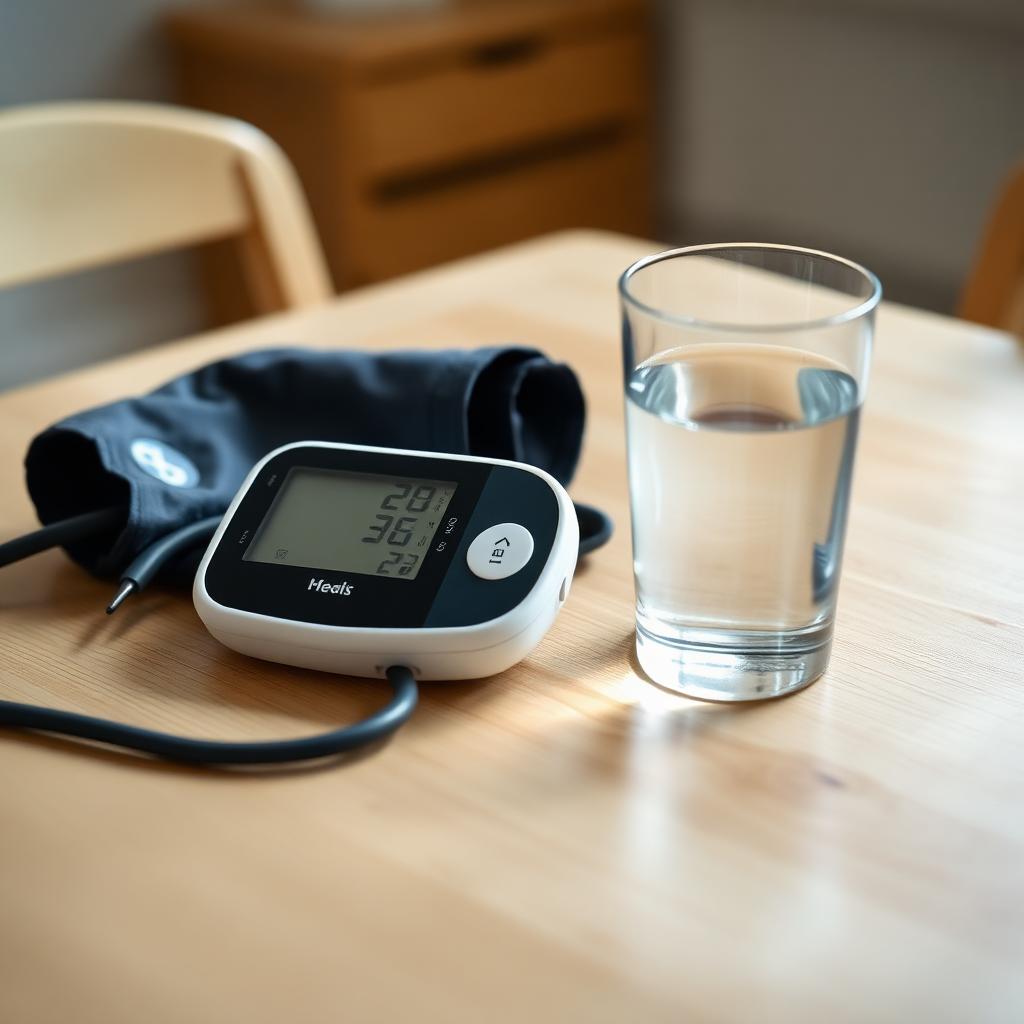
High Blood Pressure
A plain-English guide to high blood pressure (hypertension): what the two numbers mean, which readings matter, why one reading rarely settles anything, how blood pressure is measured properly at home and in clinic, what treatment involves, and when to get urgent help.
Who this page is for
This page is for anyone who has been told their blood pressure is high, anyone trying to understand a reading from a pharmacy, a home monitor or a GP appointment, and anyone already taking blood pressure medicine. It is also for people who are pregnant, older people worried about dizziness and falls, and relatives or carers helping someone else keep track.[1]NHS — high blood pressure
Key points
- Blood pressure is written as two numbers, such as 128/78 mmHg. The first is the pressure as the heart pumps, the second is the pressure as it rests between beats.
- High blood pressure usually causes no symptoms at all. Most people find out through a routine check.
- A single high reading does not usually confirm anything. Diagnosis normally needs readings repeated over time, often with a home or 24-hour monitor.[14]NICE NG136
- Home and ambulatory averages run slightly lower than clinic readings, which is why the thresholds differ (140/90 in clinic, 135/85 at home).
- Treating high blood pressure lowers the risk of stroke, heart attack, kidney disease, heart failure and some forms of dementia.
- Lifestyle changes help, and so do medicines. Needing tablets is not a personal failure — blood pressure is strongly influenced by age, family history and other conditions.
- Never stop or change prescribed medicine because of one home reading. Speak to your GP, practice nurse or pharmacist first.
- Free checks are widely available at GP practices and many community pharmacies in England for adults aged 40 and over.[10]NHS — your pharmacy team
- Sixpence Support UK gives information and starting points. We do not diagnose anyone.
When to call 999 now
Call 999 immediately if you or someone else has:
- Signs of a stroke — face drooping on one side, arm weakness, slurred or confused speech, or sudden loss of vision. Act FAST and call 999 even if the symptoms pass.[7]NHS — stroke
- Chest pain or tightness lasting more than 15 minutes, or pain spreading to the arm, jaw, neck, back or stomach, especially with sweating, sickness or breathlessness.[8]NHS — heart attack
- Sudden severe breathlessness, or breathlessness that stops you speaking in full sentences.
- A sudden, severe headache unlike any you have had before, sometimes described as a thunderclap.
- Sudden confusion, a seizure, fainting with injury, or collapse.
- Sudden blurred or lost vision, or vomiting alongside a very severe headache.
These are emergencies because of the symptoms, whatever the number on a monitor. Do not wait to take another reading first.
What blood pressure is and what the two numbers mean
Every time your heart beats it pushes blood through your arteries. Blood pressure is a measure of the force of that blood against the artery walls. It is recorded in millimetres of mercury, written as mmHg.
- The top number (systolic) is the highest pressure, as your heart contracts and pushes blood out.
- The bottom number (diastolic) is the lowest pressure, as your heart relaxes and refills between beats.
- A reading of 128/78 is said aloud as "128 over 78".
- Blood pressure is never a fixed figure. It rises and falls through the day with activity, stress, pain, caffeine, sleep, temperature and even the conversation you have just had.
- Because of that, clinicians look at the pattern of readings over time rather than any one figure.[1]NHS
ThresholdsWhat counts as high blood pressure in the UK
UK practice separates clinic readings (taken by a health professional) from home or ambulatory averages. People are often more tense in a clinic, so the same person typically records slightly lower numbers at home. The thresholds are set accordingly.[14]NICE NG136
| Category | Clinic reading | Home or ambulatory average |
|---|---|---|
| Normal range | around 90/60 up to 120/80 mmHg | usually a little lower than the clinic figure |
| Slightly raised | between 120/80 and 140/90 mmHg | between 120/80 and 135/85 mmHg |
| Stage 1 high blood pressure | 140/90 mmHg or higher | 135/85 mmHg or higher |
| Stage 2 high blood pressure | 160/100 mmHg or higher | 150/95 mmHg or higher |
| Severe (stage 3) clinic reading | systolic 180 mmHg or higher, or diastolic 120 mmHg or higher | needs prompt clinical assessment rather than watchful waiting |
Ranges follow NHS information and NICE NG136. Your own target may be different — for example if you are over 80, frail, pregnant, or living with diabetes or kidney disease. Always use the target your clinical team has agreed with you.
High blood pressure is generally considered to be a clinic reading of 140/90 mmHg or higher confirmed by a home or ambulatory average of 135/85 mmHg or higher. Only one of the two numbers needs to be raised for the reading to count as high.
ImportantWhy one reading does not usually confirm a diagnosis
- Blood pressure varies naturally from minute to minute and hour to hour.
- "White coat" effect — some people read consistently higher in a clinic than they do in everyday life. This is common and is not the person being dramatic.
- Masked hypertension works the other way: normal in clinic, raised at home. This is one reason home readings are useful.
- A wrong cuff size, talking during the reading, a full bladder, crossed legs or an unsupported arm can all push a reading up noticeably.
- So a single high number is a prompt to check properly, not a diagnosis and not usually an emergency on its own.
- NICE recommends confirming suspected hypertension with ambulatory monitoring, or home monitoring if ambulatory monitoring is unsuitable or declined.[14]NICE NG136
SymptomsSymptoms — and why there usually are none
High blood pressure is often called a silent condition because it rarely causes anything you can feel. You cannot judge your blood pressure by how well you feel, and headaches, tiredness or a flushed face are not reliable signs of it.[1]NHS
- Most people with high blood pressure feel completely well.
- Very high blood pressure can occasionally cause headaches, blurred vision, nosebleeds, chest pain or breathlessness — but these symptoms have many other causes too.
- Feeling fine is not a reason to skip checks, and feeling unwell is not proof that your blood pressure is the cause.
- This is why routine checks matter: they find a problem long before it does harm.[9]NHS Health Check
When to contact NHS 111 or ask for a same-day GP appointment
Contact NHS 111 or your GP the same day if you have:
- A very high reading (for example around 180/120 mmHg or higher) taken correctly and repeated after a few minutes of quiet rest — even without symptoms.
- A headache, blurred or disturbed vision, nosebleeds that will not settle, or new confusion.
- New or worsening breathlessness, chest discomfort or swollen ankles.
- Repeated readings that are much higher than your usual pattern.
- Side effects that are frightening or unmanageable after starting or changing a medicine.
- Dizziness or fainting when standing, especially if you have already had a fall.
If any of the 999 symptoms above appear at any point, call 999 instead of waiting.
Getting checkedWhen to arrange a routine GP or pharmacy check
- Adults should have their blood pressure checked at least every five years, and more often if it has been borderline before.[4]NHS — blood pressure test
- In England, adults aged 40 to 74 without certain existing conditions are invited for an NHS Health Check every five years, which includes blood pressure.[9]NHS Health Check
- Many community pharmacies offer free blood pressure checks to adults aged 40 and over, with no appointment and no referral needed.[10]NHS pharmacy services
- Ask sooner if you have diabetes, kidney disease, heart disease, a family history of high blood pressure or early stroke, or if you are of Black African or African-Caribbean family origin, where high blood pressure is more common.
- Ask sooner if you are pregnant or planning pregnancy, or if you are taking a medicine that can raise blood pressure.
How blood pressure is measured correctly
- Sit quietly for about five minutes first, with no rush, no caffeine and no cigarette beforehand.
- Empty your bladder if you need to — a full bladder can raise the reading.
- Sit with your back supported, feet flat on the floor and legs uncrossed.
- Rest your arm on a table so the cuff sits level with your heart.
- Place the cuff on bare skin, not over a thick sleeve.
- Use the correct cuff size. A cuff that is too small for the arm can give a falsely high reading, which is a common cause of an alarming number.
- Do not talk, scroll on your phone or watch television while the machine is inflating.
- Take two or three readings a minute apart and use the pattern, not the single highest figure.[14]NICE NG136
- Readings can differ between arms. A clinician may check both and then use the arm with the higher reading from then on.
Home monitoring — doing it usefully rather than anxiously
- Choose an upper-arm monitor that has been clinically validated. Wrist and finger devices are less reliable.[24]NHS — diagnosis and monitoring
- Check the cuff fits your arm size; larger cuffs are available and often needed.
- The usual pattern for diagnosis or review is two readings, twice a day (morning and evening), for four to seven days. The first day is normally discarded and the rest are averaged.[14]NICE NG136
- Write down every reading with the date and time, including the ones you do not like.
- Do not check many times a day. Frequent checking tends to raise anxiety, and anxiety raises blood pressure.
- Take your monitor or record to appointments. Your team can compare it with their own device.
- One unusually high home reading is a reason to rest and repeat later — not a reason to double a dose or go to A&E, unless you also have the emergency symptoms listed above.
Ambulatory monitoring (the 24-hour monitor)
- Ambulatory blood pressure monitoring (ABPM) uses a small cuff and recorder worn for about 24 hours during normal daily life.
- It usually takes at least two readings an hour during waking hours, and some overnight.
- At least 14 daytime readings are averaged to give the result used for diagnosis.[14]NICE NG136
- It is the most reliable way to sort out white coat effect from genuine hypertension.
- Carry on with your usual day. Keep your arm still and relaxed when the cuff inflates, and note anything unusual such as poor sleep.
- Some people find it uncomfortable, especially at night. If ABPM is not tolerated, home monitoring is the accepted alternative.
CausesCauses and risk factors
For most people no single cause is found. This is called primary or essential hypertension and it builds slowly with age as arteries stiffen. A smaller group has a specific underlying cause, known as secondary hypertension.[2]NHS — causes
- Getting older — very common, and not a sign you have done anything wrong.
- A close family history of high blood pressure.
- Being of Black African or African-Caribbean family origin.
- Carrying extra weight, particularly around the middle.
- A diet high in salt, and one low in fruit and vegetables.
- Regularly drinking more alcohol than the UK guideline of 14 units a week.
- Smoking, and long-term stress, poor sleep or untreated sleep apnoea.
- Low physical activity, and long periods of sitting.
- Kidney disease, diabetes, thyroid problems and some hormone conditions.
- Some medicines and substances, including certain contraceptive pills, steroids, some antidepressants, regular anti-inflammatory painkillers, decongestants, herbal remedies such as liquorice, and cocaine or other stimulants. Never stop a prescribed medicine on your own — ask for a review.
Tests and checks after high blood pressure is found
Once raised blood pressure is confirmed, the aim is to look for causes, check for any damage already done, and estimate your overall cardiovascular risk.[14]NICE NG136
- Blood tests — kidney function (creatinine and eGFR), electrolytes, HbA1c for diabetes and a cholesterol profile.
- Urine test — an albumin-to-creatinine ratio (ACR) and a check for blood in the urine, to look for kidney involvement.
- ECG — a heart tracing to look for strain, thickening of the heart muscle or an irregular rhythm.
- Eye examination — the small vessels at the back of the eye can show the effects of high pressure.
- Cardiovascular risk score (such as QRISK) — combines age, sex, ethnicity, cholesterol, smoking and other factors to estimate risk over the next ten years.[16]NICE NG238
- Further tests or a specialist referral may follow if a secondary cause is suspected, if you are young when diagnosed, or if blood pressure stays high despite several medicines.
Everyday changesLifestyle changes that genuinely help
Lifestyle changes can make a real difference, and they work alongside medicines rather than instead of them. No single change guarantees a particular drop, and blood pressure is not simply a matter of willpower — age, genetics and other conditions all play a part.[3]NHS — treatment
- Salt — UK adults are advised to have no more than 6g a day, about a teaspoon. Most of it comes from bread, sauces, processed meat and ready meals rather than the salt cellar.[18]NHS — salt in your diet
- Food — more vegetables, fruit, beans, wholegrains and unsalted nuts; less processed meat and fewer ready meals. Some people are advised to be careful with potassium-rich salt substitutes, particularly with kidney disease or certain medicines, so check first.
- Movement — aim towards 150 minutes of moderate activity a week, built up gradually. Walking, cycling, swimming and gardening all count.
- Weight — if you are carrying extra weight, even a modest loss can lower blood pressure. Small, sustainable changes beat crash diets.
- Alcohol — keeping within 14 units a week, spread over three or more days, helps. Cutting back from heavy drinking often lowers readings noticeably.
- Smoking — stopping does not lower resting blood pressure much on its own, but it sharply reduces the risk of stroke and heart attack. Free NHS stop-smoking support is available.
- Caffeine — very high intakes can push readings up. There is no need to give up tea or coffee entirely for most people.
- Sleep and stress — poor sleep, shift work and untreated sleep apnoea are all linked to higher blood pressure. Loud snoring with pauses in breathing is worth mentioning to your GP.
Medicines for high blood pressure
Medicine is offered when readings stay high, or sooner where the overall risk of stroke or heart attack is raised. It is very common to need more than one tablet — that is expected, not a sign of failure.[14]NICE NG136
- ACE inhibitors and ARBs (names often ending in "-pril" or "-sartan") relax blood vessels and protect the kidneys in some conditions.
- Calcium channel blockers (often ending in "-dipine") widen blood vessels; ankle swelling is a common side effect.
- Thiazide-like diuretics help the body clear extra salt and water, and need periodic blood tests.
- Other options, including spironolactone, beta blockers and alpha blockers, are used where blood pressure stays high or where another condition makes them suitable.
- Which one is offered first depends on your age, ethnicity, other conditions and whether you might become pregnant.
- This page gives no doses. Dose decisions belong to your prescriber and are personal to you.
Monitoring, side effects and common practical problems
- Expect blood tests when starting or increasing an ACE inhibitor, ARB, diuretic or spironolactone, to check kidney function and potassium.
- A dry cough is a well-known effect of ACE inhibitors; an alternative is usually available, so mention it rather than putting up with it.
- Ankle swelling, dizziness, tiredness or passing more urine are worth reporting at review.
- Ask your pharmacist before using anti-inflammatory painkillers, decongestants or herbal remedies.
- If you miss a dose, take it when you remember unless it is nearly time for the next one — do not double up. Ask your pharmacist if you are unsure.
- If you are unwell with vomiting, diarrhoea or a fever, some medicines may need temporary adjustment. Ask whether personalised "sick day" guidance applies to you, rather than assuming it does.
- Blister packs, repeat prescription reminders and annual medicine reviews all help. Free NHS prescription exemptions apply to some groups.
- Do not stop or reduce prescribed medicine because your readings look good. Good readings usually mean the medicine is working.
Pregnancy: pre-eclampsia warning signs
Blood pressure in pregnancy is monitored closely at every antenatal appointment. Contact your midwife, maternity unit or GP straight away — day or night — if you are pregnant, or have given birth in the last six weeks, and have any of the following:[6]NHS — pre-eclampsia
- A severe headache that will not go away.
- Problems with your vision — blurring, flashing lights or spots.
- Severe pain just below the ribs, usually on the right side.
- Vomiting, or feeling suddenly and severely unwell.
- Sudden swelling of the face, hands or feet.
- Reduced or changed baby movements.
Call 999 for a fit or seizure, collapse, severe breathlessness, or if you cannot rouse someone. Pre-eclampsia can develop without any symptoms, which is why routine blood pressure and urine checks matter so much.
Pregnancy and high blood pressure — more detail
- Some people already have high blood pressure before pregnancy; others develop gestational hypertension after 20 weeks.
- Pre-eclampsia involves high blood pressure together with signs such as protein in the urine or effects on the liver, kidneys or blood. It needs close monitoring.[15]NICE NG133
- Some blood pressure medicines are not suitable in pregnancy and are usually changed before or as soon as pregnancy is confirmed — do not simply stop them, arrange an urgent review.
- People at higher risk are often advised to take low-dose aspirin from 12 weeks. That advice comes from your maternity team.
- Urine and blood pressure checks at every appointment are the main way problems are caught early.
- Blood pressure can stay high for some weeks after birth, and pre-eclampsia can even begin after delivery, so postnatal checks matter.
- Having had pre-eclampsia raises long-term cardiovascular risk, so later blood pressure checks matter too.
Older people, frailty, falls and dizziness on standing
- Blood pressure tends to rise with age as arteries become stiffer. This is very common.
- Treatment still helps in later life, but targets are often set a little differently for people over 80 or living with frailty — your team will agree a target with you.[14]NICE NG136
- Postural (orthostatic) hypotension is a drop in blood pressure on standing, causing dizziness, light-headedness or fainting. It increases the risk of falls.[5]NHS — low blood pressure
- Tell your GP or pharmacist if you feel dizzy when you stand. They can check lying and standing readings and review your medicines.
- Stand up slowly, sit on the edge of the bed first, and keep well hydrated unless told otherwise.
- Good lighting, sensible footwear, removing trip hazards and strength and balance exercises all help.
- A yearly medicine review is worth asking for, especially if you take several tablets.[13]NHS — falls
ConnectionsKidneys, diabetes, stroke and heart disease
- Kidneys — high blood pressure damages the small vessels in the kidneys, and kidney disease in turn pushes blood pressure up. Each makes the other worse, so both are treated together.
- Diabetes — high blood pressure is common alongside diabetes, and controlling both lowers the risk of eye, kidney, nerve and heart complications.
- Stroke — high blood pressure is the single biggest treatable risk factor for stroke, both the clot type and the bleeding type.[7]NHS — stroke
- Heart — sustained high pressure thickens the heart muscle and contributes to angina, heart attack, atrial fibrillation and heart failure.
- Eyes and brain — the small vessels in the retina and brain are also affected, which is why high blood pressure is linked to vision damage and to vascular dementia.
- Treatment is not just about the number. It is about lowering all of these risks together, which is why cholesterol, smoking and diabetes are usually addressed at the same time.[16]NICE NG238
PracticalWork, driving, travel and everyday life
- Most people with high blood pressure work normally. If side effects such as tiredness or dizziness are a problem, ask about a medicine review before assuming you must simply cope.
- Reasonable adjustments — flexible hours, rest breaks, help with shift patterns — can be discussed with an employer or occupational health.
- Driving: car and motorcycle drivers usually do not need to tell the DVLA about high blood pressure alone, but you must not drive if symptoms such as dizziness affect your driving. Stricter rules apply to bus, coach and lorry licences. Always check the current GOV.UK guidance for your circumstances.[17]GOV.UK — health conditions and driving
- Travel: carry medicines in hand luggage with a copy of your prescription list, take more than you need, and declare the condition to your travel insurer. Hot weather and dehydration can lower blood pressure and cause dizziness.
- Keep an up-to-date medicine list on your phone or in your wallet.
- If cost is a barrier — prescriptions, heating, food or transport to appointments — there is practical help available and it is worth asking.
SupportWellbeing, anxiety about readings, and support for carers
- Being told you have high blood pressure can be unsettling, particularly if a relative had a stroke or heart attack.
- Some people become very anxious about home readings and check repeatedly. That usually raises the numbers and the worry. Agree a checking routine with your practice and stick to it.
- Low mood, stress and poor sleep affect both blood pressure and the energy to manage it.
- Carers and relatives often do the remembering, the prescriptions and the lifts to appointments. That deserves support too.
- If you are struggling to keep yourself safe, get help now through our crisis page or by calling 999 in an emergency.
Practical checklist
- Know your last reading, and the date it was taken.
- Ask your GP or nurse what your personal target is.
- Book a free check if you have not had one in the last five years.
- If you monitor at home, use a validated upper-arm monitor with the right cuff size.
- Rest five minutes, sit properly and do not talk during a reading.
- Record readings twice a day for a week when asked, and bring the record with you.
- Do not judge anything on one reading alone.
- Keep an up-to-date list of all your medicines, including anything bought over the counter.
- Report side effects rather than quietly stopping tablets.
- Attend blood, urine and review appointments when invited.
- Tell your midwife or GP immediately about pre-eclampsia warning signs in pregnancy.
- Mention dizziness on standing, especially if you have had a fall.
- Learn the FAST stroke signs and the heart attack signs, and call 999 without hesitating.
Official helpOfficial help and information
Across the UK: NHS 111 online covers England. Elsewhere, start here:
In a life-threatening emergency, always call 999.
RelatedOther pages that may help
Please speak to a healthcare professional
Sixpence Support UK provides general information only. We cannot examine anyone, give a diagnosis, or recommend medicines or doses, and this page is not a substitute for advice from a qualified healthcare professional. Please do not start, stop or change prescribed treatment on the basis of information found online. If symptoms are severe, worsening or worrying you, contact your GP, pharmacist, midwife or NHS 111 — and call 999 in an emergency.
- [1] NHS. High blood pressure (hypertension) · 2026
- [2] NHS. High blood pressure — causes · 2026
- [3] NHS. High blood pressure — treatment · 2026
- [4] NHS. Blood pressure test · 2026
- [5] NHS. Low blood pressure (hypotension) · 2026
- [6] NHS. Pre-eclampsia · 2026
- [7] NHS. Stroke · 2026
- [8] NHS. Heart attack · 2026
- [9] NHS. NHS Health Check · 2026
- [10] NHS. Pharmacy services, including blood pressure checks · 2026
- [11] NHS. Better Health — healthy lifestyle tools · 2026
- [12] NHS 111. Get help with your symptoms (England) · 2026
- [13] NHS. Falls · 2026
- [14] NICE. Hypertension in adults: diagnosis and management (NG136) · 2019, updated 2023
- [15] NICE. Hypertension in pregnancy: diagnosis and management (NG133) · 2019, updated 2023
- [16] NICE. Cardiovascular disease: risk assessment and reduction, including lipid modification (NG238) · 2023
- [17] GOV.UK / DVLA. Health conditions and driving · 2026
- [18] NHS. Salt in your diet · 2026
- [19] NHS inform (Scotland). High blood pressure · 2026
- [20] NHS 111 Wales. Health advice and symptom checkers (Wales) · 2026
- [21] nidirect (Northern Ireland). Illnesses and conditions information · 2026
- [22] British Heart Foundation. High blood pressure (charity, not an NHS service) · 2026
- [23] Blood Pressure UK. Information and support (charity, not an NHS service) · 2026
- [24] NHS. High blood pressure — diagnosis and monitoring · 2026